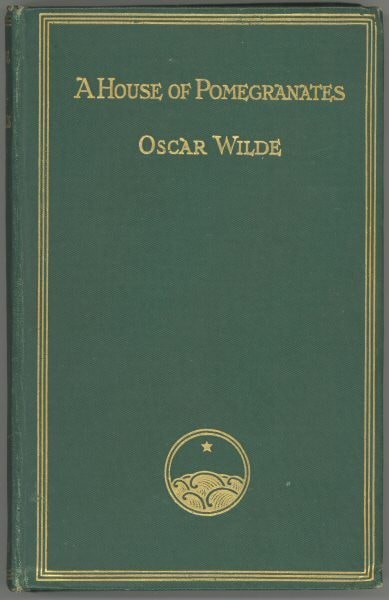
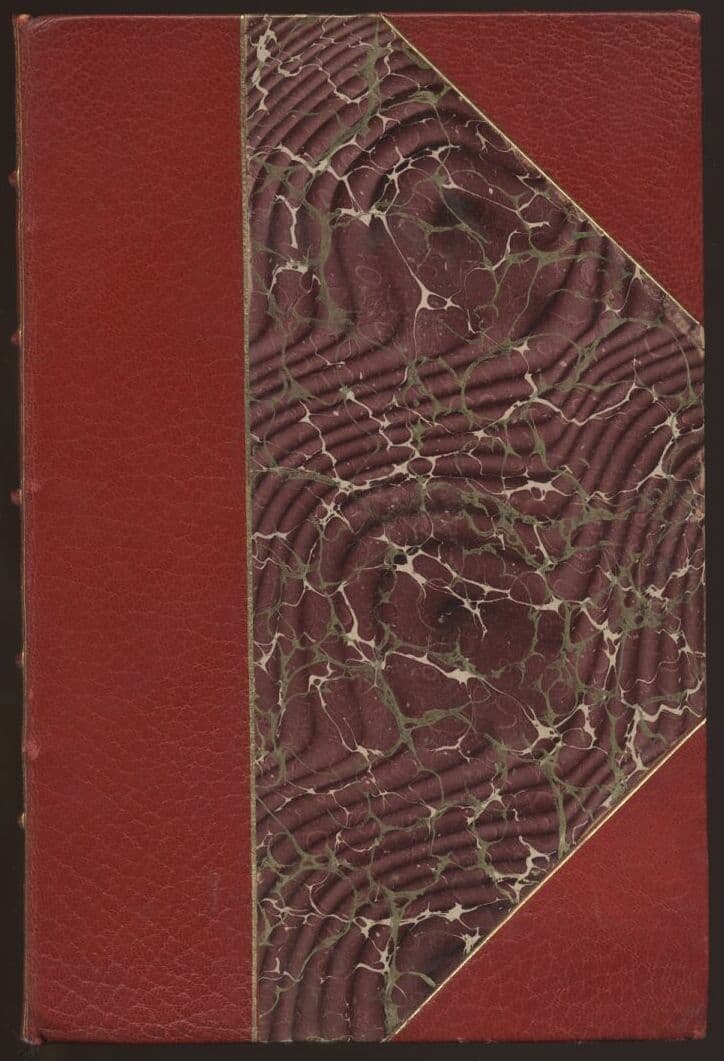
A House of Pomegranates
1891
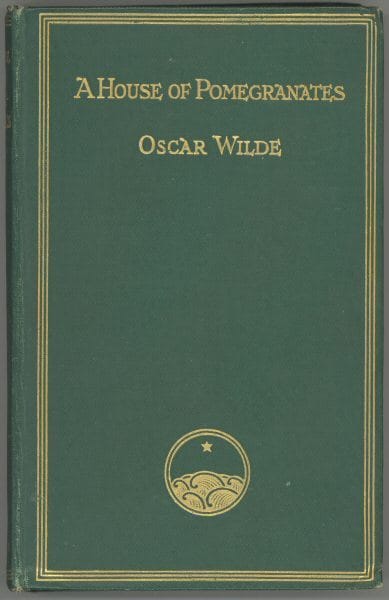
These are not children's tales. Oscar Wilde's second collection of fairy stories, written for 'neither the British child nor the British public,' wraps its unsettling moral parables in prose so luminous it almost hurts. The four stories here, The Young King, The Birthday of the Infanta, The Fisherman and His Soul, and The Star-Child, operate in that space between beauty and horror where Wilde lived most comfortably: a young ruler dreams of the suffering woven into his royal robes; a dwarf dances for a princess who has never known sadness; a fisherman cuts away his soul to win a mermaid's love, only to discover what he's lost. The book reads like a fever dream in a silk room, gorgeous and wrong in equal measure. What makes these tales endure is their refusal to offer easy comfort. Wilde takes the fairy tale form and loads it with the weight of genuine moral consequence. There are no happy endings here, only beautiful ones, and even that beauty often comes at a terrible price. This is dark romanticism for readers who have outgrown simple lessons.
Editions
X-Ray
“What men call the shadow of the body is not the shadow of the body, but is the body of the soul.””
— Oscar Wilde
“He is really not so ugly after all, provided, of course, that one shuts one's eyes, and does not look at him.””
— Oscar Wilde
“The burden of this world is too great for one man to bear, and the world’s sorrow too heavy for one heart to suffer.””
— Oscar Wilde
“They did not understand a single word of what he was saying, but that made no matter, for they put their heads on one side, and looked wise, which is quite as good as understanding a thing, and very much easier.””
— Oscar Wilde
“the secrets of art are best learned in secret, and that Beauty, like Wisdom, loves the lonely worshipper.””
— Oscar Wilde
“In war,’ answered the weaver, ‘the strong make slaves of the weak, and in peace the rich make slaves of the poor. ””
— Oscar Wilde
“I know a flower that grows in the valley, none knows it but I. It has purple leaves, and a star in its heart, and its juice is as white as milk. Should’st thou touch with this flower the hard lips of the Queen, she would follow thee all over the world. Out of the bed of the King she would rise, and over the whole world she would follow thee. And it has a price, pretty boy, it has a price. What d’ye lack? What d’ye lack? I can pound a toad in a mortar, and make broth of it, and stir the broth with a dead man’s hand. Sprinkle it on thine enemy while he sleeps, and he will turn into a black viper, and his own mother will slay him. With a wheel I can draw the Moon from heaven, and in a crystal I can show thee Death. What d’ye lack? What d’ye lack? Tell me thy desire, and I will give it thee, and thou shalt pay me a price, pretty boy, thou shalt pay me a price.””
— Oscar Wilde
“The walls were hung with rich tapestries representing the Triumph of Beauty. A large press, inlaid with agate and lapis-lazuli, filled one corner, and facing the window stood a curiously wrought cabinet with lacquer panels of powdered and mosaiced gold, on which were placed some delicate goblets of Venetian glass, and a cup of dark-veined onyx. Pale poppies were broidered on the silk coverlet of the bed, as though they had fallen from the tired hands of sleep, and tall reeds of fluted ivory bare up the velvet canopy, from which great tufts of ostrich plumes sprang, like white foam, to the pallid silver of the fretted ceiling. A laughing Narcissus in green bronze held a polished mirror above its head. On the table stood a flat bowl of amethyst.””
— Oscar Wilde
“The Lizards were extremely philosophical by nature, and often sat thinking for hours and hours together,””
— Oscar Wilde
Link to this book
Add a free, dofollow link to Lex on your blog, forum, syllabus, or reading list.

<a href="https://lex-books.com/book/a-house-of-pomegranates-cf063b61-d502-4148-a8bf-34cd7605c461"><img src="https://lex-books.com/badges/read-on-lex.svg" alt="Read A House of Pomegranates by Oscar Wilde free on Lex" width="160" height="40"></a>[](https://lex-books.com/book/a-house-of-pomegranates-cf063b61-d502-4148-a8bf-34cd7605c461)[url=https://lex-books.com/book/a-house-of-pomegranates-cf063b61-d502-4148-a8bf-34cd7605c461][img]https://lex-books.com/badges/read-on-lex.svg[/img][/url]Read A House of Pomegranates by Oscar Wilde free on Lex: https://lex-books.com/book/a-house-of-pomegranates-cf063b61-d502-4148-a8bf-34cd7605c461Cite this book
Reading this edition for a paper or guide? Copy a citation.
Wilde, Oscar. A House of Pomegranates. Lex, lex-books.com/book/a-house-of-pomegranates-cf063b61-d502-4148-a8bf-34cd7605c461.Wilde, O. (1891). A House of Pomegranates. Lex. https://lex-books.com/book/a-house-of-pomegranates-cf063b61-d502-4148-a8bf-34cd7605c461Wilde, Oscar. A House of Pomegranates. Lex. https://lex-books.com/book/a-house-of-pomegranates-cf063b61-d502-4148-a8bf-34cd7605c461.