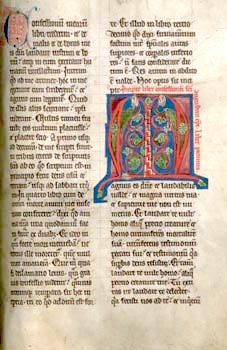
The Imitation of Christ
1418
The Imitation of Christ
1418
Translated by William Benham
For six hundred years, this unassuming volume has been the companion of rulers, saints, and anyone who has ever craved silence in a chaotic world. Thomas à Kempis, an Augustinian monk writing in a quiet Dutch monastery around 1420, set down something radical: that the divine is not found in grand ceremonies or worldly achievement, but in the quiet cultivation of an interior life. The Imitation of Christ is not a theology textbook. It is a manual for the soul, offering blunt, intimate counsel on mortifying pride, resisting the seductions of honor and wealth, and learning to walk alongside Christ through suffering rather than around it. Its four books move from practical discipline to deep mysticism, culminating in a meditation on the Eucharist that has shaped Catholic spirituality for centuries. What makes this text endure is its fearlessness about human weakness, paired with its unshakable conviction that transformation is possible. It is for the person sitting alone at midnight, wondering if there is something beyond the noise.
Editions
X-Ray
“Be not angry that you cannot make others as you wish them to be, since you cannot make yourself as you wish to be.””
— Kempis Thomas
“If God were our one and only desire we would not be so easily upset when our opinions do not find outside acceptance.””
— Kempis Thomas
“At the Day of Judgement we shall not be asked what we have read but what we have done.””
— Kempis Thomas
“All men desire peace, but very few desire those things that make for peace.””
— Kempis Thomas
“A wise lover values not so much the gift of the lover as the love of the giver.””
— Kempis Thomas
“Wherever you go, there you are.””
— Kempis Thomas
“Jesus has now many lovers of the heavenly kingdom but few bearers of His cross.””
— Kempis Thomas
“As long as you live, you will be subject to change, whether you will it or not - now glad, now sorrowful; now pleased, now displeased; now devout, now undevout; now vigorous, now slothful; now gloomy, now merry. But a wise man who is well taught in spiritual labor stands unshaken in all such things, and heeds little what he feels, or from what side the wind of instability blows.””
— Kempis Thomas
“Fight like a man. Habit is overcome by habit.””
— Kempis Thomas
Link to this book
Add a free, dofollow link to Lex on your blog, forum, syllabus, or reading list.

<a href="https://lex-books.com/book/the-imitation-of-christ-86f42652-9014-458b-a040-1e58a9e81b22"><img src="https://lex-books.com/badges/read-on-lex.svg" alt="Read The Imitation of Christ by Kempis Thomas free on Lex" width="160" height="40"></a>[](https://lex-books.com/book/the-imitation-of-christ-86f42652-9014-458b-a040-1e58a9e81b22)[url=https://lex-books.com/book/the-imitation-of-christ-86f42652-9014-458b-a040-1e58a9e81b22][img]https://lex-books.com/badges/read-on-lex.svg[/img][/url]Read The Imitation of Christ by Kempis Thomas free on Lex: https://lex-books.com/book/the-imitation-of-christ-86f42652-9014-458b-a040-1e58a9e81b22Cite this book
Reading this edition for a paper or guide? Copy a citation.
Thomas, Kempis. The Imitation of Christ. Lex, lex-books.com/book/the-imitation-of-christ-86f42652-9014-458b-a040-1e58a9e81b22.Thomas, K. (1418). The Imitation of Christ. Lex. https://lex-books.com/book/the-imitation-of-christ-86f42652-9014-458b-a040-1e58a9e81b22Thomas, Kempis. The Imitation of Christ. Lex. https://lex-books.com/book/the-imitation-of-christ-86f42652-9014-458b-a040-1e58a9e81b22.