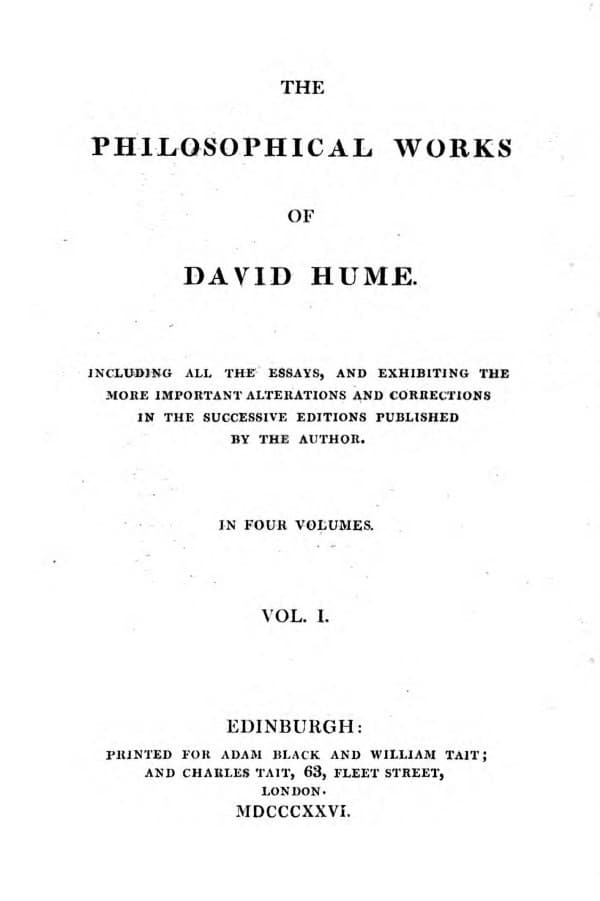
The History of England, Volume I: From the Invasion of Julius Caesar to the Revolution in 1688
The History of England, Volume I: From the Invasion of Julius Caesar to the Revolution in 1688
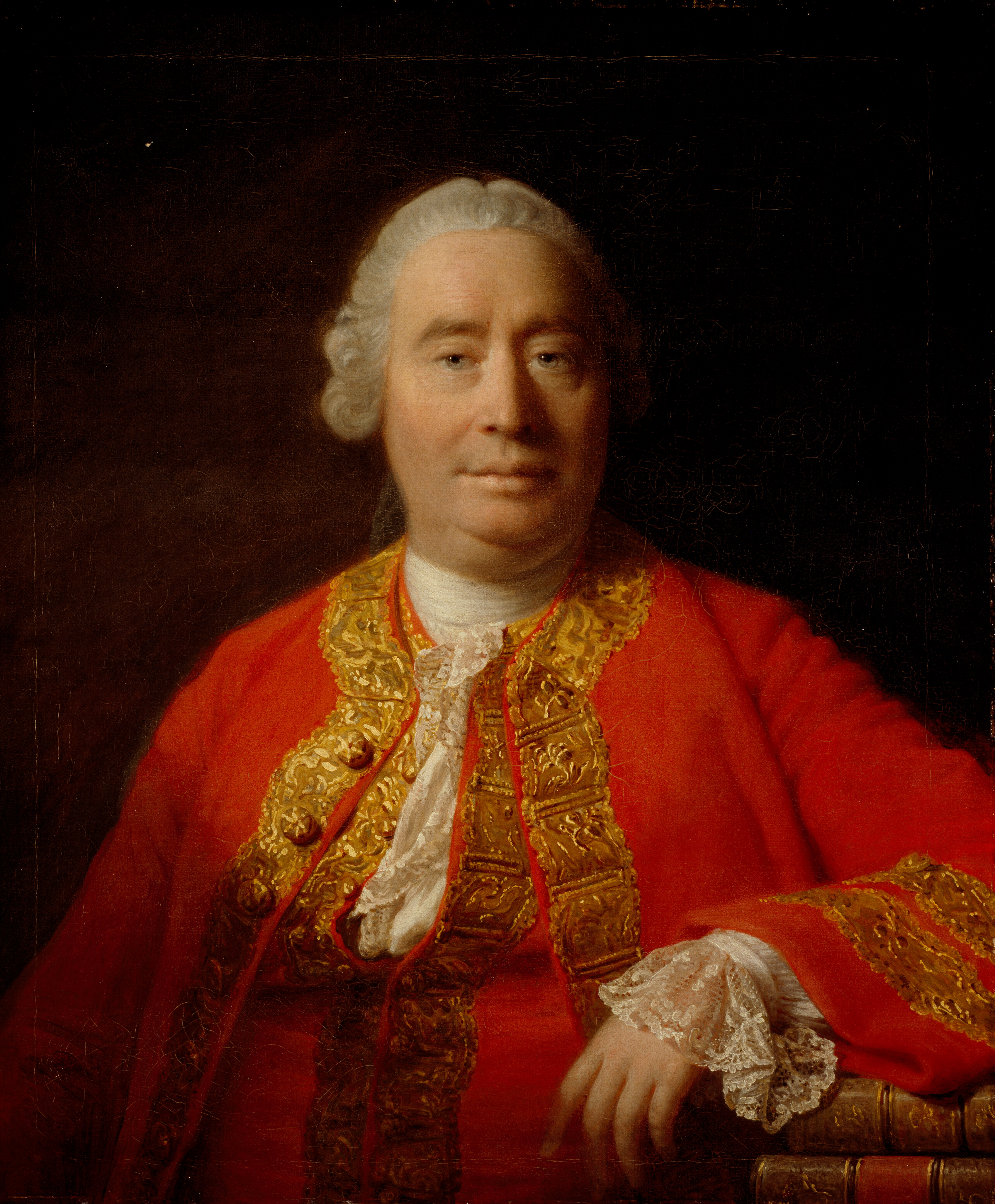
The philosopher who gave us empiricism and the problem of induction also gave England its first great modern history. Written in the 1750s when Hume was already famous for his revolutionary treatises on human understanding, this monumental work covers nearly eighteen centuries of English history, from Caesar's landing on British shores to the constitutional settlement of 1688. Hume saw it all as a long, painful evolution: the gradual replacement of arbitrary will with the rule of law, the slow wresting of power from monarchs and its placement into institutions. This is not mere chronicle but argument, history as philosophical drama, with constitutions always unstable and the forces of tyranny and liberty in eternal tension. Hume's masterly prose, confident and elegantly fatalistic, renders the sweep of centuries with the same cool precision he brought to questions of cause and effect. The result remains one of the most ambitious attempts ever made to find meaning in a nation's past, and a work that shaped how England understood itself for generations. For readers who want history that thinks as well as it narrates.
Editions
X-Ray
“In public affairs men are often better pleased that the truth, though known to everybody, should be wrapped up under a decent cover than if it were exposed in open daylight to the eyes of all the world.””
— David Hume
“The Crusades - the most signal and most durable monument of human folly that has yet appeared in any age or nation.””
— David Hume
“It is indeed a mortifying reflection to those who are actuated by the love of fame, so justly denominated the last infirmity of noble minds, that the wisest legislator and most exalted genius that ever reformed or enlightened the world can never expect such tributes of praise as are lavished on the memory of pretended saints, whose whole conduct was probably to the last degree odious or contemptible, and whose industry was entirely directed to the pursuit of objects pernicious to mankind. It is only a conqueror, a personage no less entitled to our hatred, who can pretend to the attainment of equal renown and glory.””
— David Hume
“The virtues of valor and love of liberty; the only virtues which can have place among an uncivilized people, where justice and humanity are commonly neglected.””
— David Hume
“The civil wars which ensued, and which prepared the way for the establishment of monarchy in Rome, saved the Britons from that yoke which was ready to be imposed upon them. Augustus, the successor of Caesar, content with the victory obtained over the liberties of his own country, was little ambitious of acquiring fame by foreign wars; and being apprehensive lest the same unlimited extent of dominion, which had subverted the republic, might also overwhelm the empire, he recommended it to his successors never to enlarge the territories of the Romans. Tiberius, jealous of the fame which might be acquired by his generals, made this advice of Augustus a pretence for his inactivity [k].””
— David Hume
“On the whole, notwithstanding the seeming liberty, or rather licentiousness, of the Anglo-Saxons, the great body even of the free citizens, in those ages, really enjoyed much less true liberty, than where the execution of the laws is the most severe, and where subjects are reduced to the strictest subordination and dependence on the civil magistrate. The reason is derived from the excess itself of that liberty. Men must guard themselves at any price against insults and injuries; and where they receive not protection from the laws and magistrate, they will seek it by submission to superiors, and by herding in some private confederacy which acts under the direction of a powerful leader. And thus all anarchy is the immediate cause of tyranny, if not over the state, at least over many of the individuals.””
— David Hume
“obtruded on us by the Scottish historians. [* Chron. Sax. p. 19.] [** W. Malms, p. 19.]””
— David Hume
About The History of England, Volume I: From the Invasion of Julius Caesar to the Revolution in 1688
Chapter Summaries
- 1
- Hume begins with the ancient Britons under Druidical influence, traces Roman conquest and withdrawal, and describes the Saxon invasions that established seven kingdoms. The chapter covers the period from Caesar's invasions through the establishment of Saxon dominance.
- 2
- This chapter covers the unification of England under Egbert, the Danish invasions, Alfred's heroic resistance and reforms, and the succession through to Edward the Martyr. It shows the consolidation of English monarchy and the ongoing Danish threat.
- 3
- The final chapter traces the collapse of Anglo-Saxon England through Ethelred's weak rule, Danish conquest under Canute, the restoration under Edward the Confessor, and the crisis of succession leading to 1066. It ends with Harold's accession and the approaching Norman invasion.
Key Themes
- The Cyclical Nature of Conquest
- Hume demonstrates how Britain repeatedly fell to foreign invaders - Romans, Saxons, Danes, and Normans - each bringing new cultures and institutions. This pattern shows the vulnerability of insular kingdoms to determined external forces.
- The Role of Religion in Politics
- Throughout the work, religious authority intertwines with political power, from Druidical influence over ancient Britons to papal support for William's conquest. Religious conversion often serves political ends rather than spiritual ones.
- The Corruption of Power
- Hume repeatedly shows how political power corrupts individuals and institutions, from tyrannical kings to ambitious nobles. Even religious figures like Dunstan use their spiritual authority for temporal gain.
Characters
- David Hume(protagonist)
- The author and historian who wrote this comprehensive history of England. Born in Edinburgh in 1711, he was a philosopher and historian who spent his life in literary pursuits.
- Julius Caesar(major)
- Roman general who first invaded Britain in 55 BC. He made two expeditions to Britain but did not establish permanent conquest.
- Cassivelaunus(major)
- British prince who united the Britons against Caesar's second invasion. He led the resistance but was ultimately forced to submit.
- Hengist(major)
- Saxon leader who, with his brother Horsa, first established Saxon power in Britain around 449 AD. Founded the kingdom of Kent.
- Horsa(major)
- Saxon leader and brother of Hengist. Killed in battle at Ailsford while establishing Saxon dominance in Britain.
- Vortigern(major)
- British prince who invited the Saxons to Britain for protection against the Scots and Picts. His decision led to Saxon conquest of Britain.
Link to this book
Add a free, dofollow link to Lex on your blog, forum, syllabus, or reading list.

<a href="https://lex-books.com/book/the-history-of-england-volume-i-from-the-invasion-of-julius-caesar-to-the-revolu-353beb21-97b5-4c0c-b995-d947c6a7e78a"><img src="https://lex-books.com/badges/read-on-lex.svg" alt="Read The History of England, Volume I: From the Invasion of Julius Caesar to the Revolution in 1688 by David Hume free on Lex" width="160" height="40"></a>[](https://lex-books.com/book/the-history-of-england-volume-i-from-the-invasion-of-julius-caesar-to-the-revolu-353beb21-97b5-4c0c-b995-d947c6a7e78a)[url=https://lex-books.com/book/the-history-of-england-volume-i-from-the-invasion-of-julius-caesar-to-the-revolu-353beb21-97b5-4c0c-b995-d947c6a7e78a][img]https://lex-books.com/badges/read-on-lex.svg[/img][/url]Read The History of England, Volume I: From the Invasion of Julius Caesar to the Revolution in 1688 by David Hume free on Lex: https://lex-books.com/book/the-history-of-england-volume-i-from-the-invasion-of-julius-caesar-to-the-revolu-353beb21-97b5-4c0c-b995-d947c6a7e78aCite this book
Reading this edition for a paper or guide? Copy a citation.
Hume, David. The History of England, Volume I: From the Invasion of Julius Caesar to the Revolution in 1688. Lex, lex-books.com/book/the-history-of-england-volume-i-from-the-invasion-of-julius-caesar-to-the-revolu-353beb21-97b5-4c0c-b995-d947c6a7e78a.Hume, D. (n.d.). The History of England, Volume I: From the Invasion of Julius Caesar to the Revolution in 1688. Lex. https://lex-books.com/book/the-history-of-england-volume-i-from-the-invasion-of-julius-caesar-to-the-revolu-353beb21-97b5-4c0c-b995-d947c6a7e78aHume, David. The History of England, Volume I: From the Invasion of Julius Caesar to the Revolution in 1688. Lex. https://lex-books.com/book/the-history-of-england-volume-i-from-the-invasion-of-julius-caesar-to-the-revolu-353beb21-97b5-4c0c-b995-d947c6a7e78a.