The Great God Pan
1894
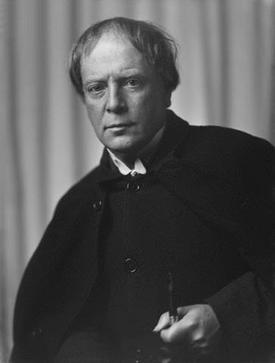
The Great God Pan opens with one of the most audacious premises in horror fiction: a doctor named Raymond believes he can surgically remove the barrier between the material world and a deeper, darker reality. He performs his radical experiment on a young woman named Mary, and what she sees behind the veil drives her to madness. Twenty years later, the consequences echo through a chain of suicides, disappearances, and strange rituals performed in moonlit Welsh woods. At the center of these horrors stands Helen Vaughan, a woman whose very presence seems to draw others toward an ancient and terrible abyss. Arthur Machen writes with a poet's precision and a physician's clinical detachment, building dread the way fog rolls in from the sea: slowly, completely, until you cannot see the world you knew. Published in 1894, this novella was condemned as degenerate and immoral, its suggestion of supernatural sexuality too shocking for polite readers. Yet it established the template for every cosmic horror that followed. H.P. Lovecraft studied it. Bram Stoker borrowed from it. Stephen King called it one of the best horror stories ever written. It remains the genre's gold standard: not a tale of monsters or jump scares, but of knowledge too terrible to bear, and the price of looking behind the curtain.
Editions
X-Ray
“We know what happened to those who chanced to meet the Great God Pan, and those who are wise know that all symbols are symbols of something, not of nothing. It was, indeed, an exquisite symbol beneath which men long ago veiled their knowledge of the most awful, most secret forces which lie at the heart of all things; forces before which the souls of men must wither and die and blacken, as their bodies blacken under the electric current. Such forces cannot be named, cannot be spoken, cannot be imagined except under a veil and a symbol, a symbol to the most of us appearing a quaint, poetic fancy, to some a foolish tale. But you and I, at all events, have known something of the terror that may dwell in the secret place of life, manifested under human flesh; that which is without form taking to itself a form.””
— Arthur Machen
“In every grain of wheat there lies hidden the soul of a star.””
— Arthur Machen
“There is a real world, but it is beyond this glamour and this vision, beyond these 'chases in Arras, dreams in a career,' beyond them all as beyond a veil. I do not know whether any human being has ever lifted that veil; but I do know, Clarke, that you and I shall see it lifted this very night from before another's eyes. You may think this all strange nonsense; it may be strange, but it is true, and the ancients knew what lifting the veil means. They called it seeing the god Pan.””
— Arthur Machen
“I knew I had looked into the eyes of a lost soul, Austin, the man's outward form remained, but all hell was within it.””
— Arthur Machen
“all these are but dreams and shadows; the shadows that hide the real world from our eyes.””
— Arthur Machen
“I had to cast out a good many lines, though, before I got what I wanted, and when I landed the fish I did not for a moment suppose it was my fish. But I listened to what I was told out of a constitutional liking for useless information, and I found myself in possession of a very curious story, though, as I imagined, not the story I was looking for.””
— Arthur Machen
“By what seemed then and still seems a chance, the suggestion of a moment’s idle thought followed up upon familiar lines and paths that I had tracked a hundred times already, the great truth burst upon me, and I saw, mapped out in lines of light, a whole world, a sphere unknown; continents and islands, and great oceans in which no ship has sailed (to my belief) since a Man first lifted up his eyes and beheld the sun, and the stars of heaven, and the quiet earth beneath.””
— Arthur Machen
“I stood here, and saw before me the unutterable, the unthinkable gulf that yawns profound between two worlds, the world of matter and the world of spirit; I saw the great empty deep stretch dim before me, and in that instant a bridge of light leapt from the earth to the unknown shore, and the abyss was spanned.””
— Arthur Machen
“ET DIABOLUS INCARNATE EST. ET HOMO FACTUS EST. ””
— Arthur Machen
Link to this book
Add a free, dofollow link to Lex on your blog, forum, syllabus, or reading list.

<a href="https://lex-books.com/book/the-great-god-pan-eb7511c3-8a05-4dae-a62e-3ba0d1966435"><img src="https://lex-books.com/badges/read-on-lex.svg" alt="Read The Great God Pan by Arthur Machen free on Lex" width="160" height="40"></a>[](https://lex-books.com/book/the-great-god-pan-eb7511c3-8a05-4dae-a62e-3ba0d1966435)[url=https://lex-books.com/book/the-great-god-pan-eb7511c3-8a05-4dae-a62e-3ba0d1966435][img]https://lex-books.com/badges/read-on-lex.svg[/img][/url]Read The Great God Pan by Arthur Machen free on Lex: https://lex-books.com/book/the-great-god-pan-eb7511c3-8a05-4dae-a62e-3ba0d1966435Cite this book
Reading this edition for a paper or guide? Copy a citation.
Machen, Arthur. The Great God Pan. Lex, lex-books.com/book/the-great-god-pan-eb7511c3-8a05-4dae-a62e-3ba0d1966435.Machen, A. (1894). The Great God Pan. Lex. https://lex-books.com/book/the-great-god-pan-eb7511c3-8a05-4dae-a62e-3ba0d1966435Machen, Arthur. The Great God Pan. Lex. https://lex-books.com/book/the-great-god-pan-eb7511c3-8a05-4dae-a62e-3ba0d1966435.