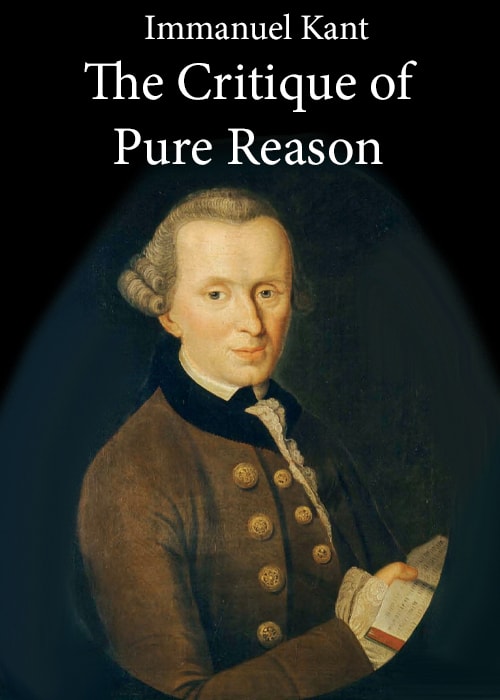
The Critique of Pure Reason
1781
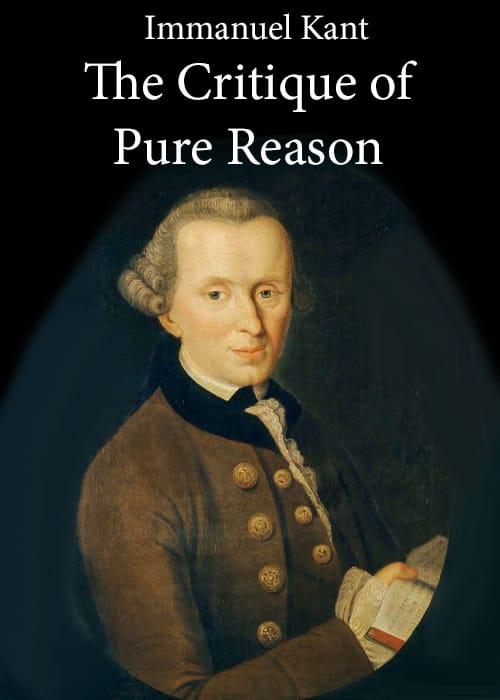
The Critique of Pure Reason
1781
Translated by J. M. D. (John Miller Dow) Meiklejohn
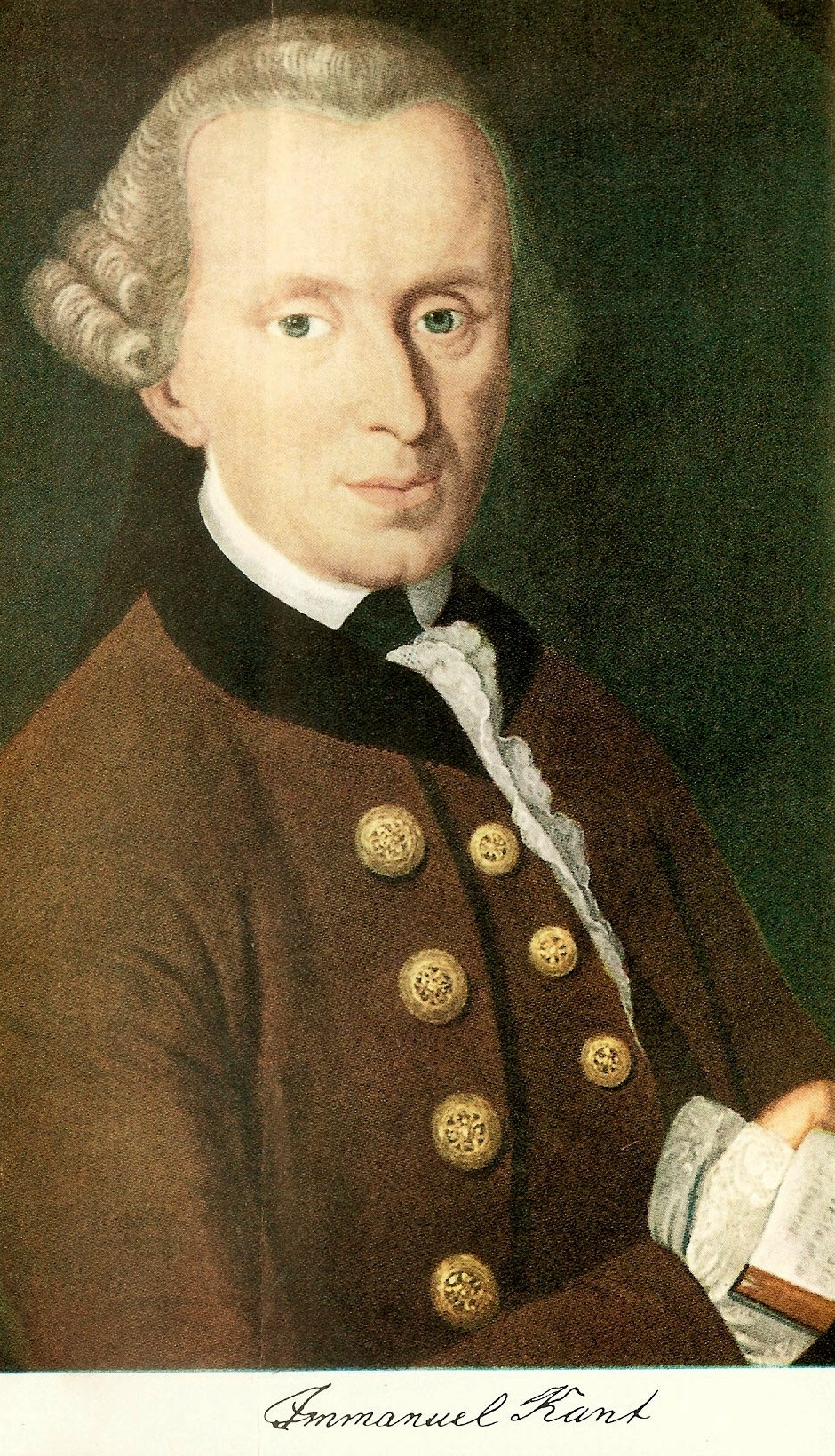
In 1781, a Prussian philosopher published a book that would permanently alter how humans think about thinking. Immanuel Kant's radical proposition: while all knowledge begins with experience, not all knowledge comes from experience. The mind itself contributes necessary structures to how we perceive reality. Space and time are not things-in-themselves but the irreducible forms through which our intuition organizes sense data. Through what Kant calls transcendental idealism, he attempts to resolve the skepticism that had paralyzed philosophy: Hume's doubt about causation and Descartes' doubt about the external world. The Critique does not merely describe knowledge but interrogates the very faculty of reason itself, asking what it can legitimately claim to know and where it oversteps into meaningless speculation. The book is notoriously difficult, a labyrinth of distinctions and arguments, yet it inaugurated an entire tradition of philosophy. Two centuries later, every debate about consciousness, objectivity, or the limits of knowledge still orbits Kant's questions. This is required reading for anyone who wants to understand the foundation upon which modern philosophy stands.
Editions
X-Ray
“I had to deny knowledge in order to make room for faith.””
— Immanuel Kant
“All our knowledge begins with the senses, proceeds then to the understanding, and ends with reason. There is nothing higher than reason.””
— Immanuel Kant
“Whereas the beautiful is limited, the sublime is limitless, so that the mind in the presence of the sublime, attempting to imagine what it cannot, has pain in the failure but pleasure in contemplating the immensity of the attempt””
— Immanuel Kant
“Thoughts without content are empty, intuitions without concepts are blind.””
— Immanuel Kant
“Man must be disciplined, for he is by nature raw and wild..””
— Immanuel Kant
“Skepticism is thus a resting-place for human reason, where it can reflect upon its dogmatic wanderings and make survey of the region in which it finds itself, so that for the future it may be able to choose its path with more certainty. But it is no dwelling-place for permanent settlement. Such can be obtained only through perfect certainty in our knowledge, alike of the objects themselves and of the limits within which all our knowledge of objects is enclosed.””
— Immanuel Kant
“The light dove, in free flight cutting through the air the resistance of which it feels, could get the idea that it could do even better in airless space. Likewise, Plato abandoned the world of the senses because it posed so many hindrances for the understanding, and dared to go beyond it on the wings of the ideas, in the empty space of pure understanding.””
— Immanuel Kant
“it was the duty of philosophy to destroy the illusions which had their origin in misconceptions, whatever darling hopes and valued expectations may be ruined by its explanations.””
— Immanuel Kant
“Two things fill the mind with renewed and increasing awe and reverence the more often and the more steadily that they are meditated on: the starry skies above me and the moral law inside me. I have not to search for them and conjecture them as though they were veiled in darkness or were in the transcendent region beyond my horizon; I see them before me and connect them directly with the consciousness of my existence””
— Immanuel Kant
Link to this book
Add a free, dofollow link to Lex on your blog, forum, syllabus, or reading list.

<a href="https://lex-books.com/book/the-critique-of-pure-reason-ceefa91f-95ab-4a61-89bb-4010abffcf82"><img src="https://lex-books.com/badges/read-on-lex.svg" alt="Read The Critique of Pure Reason by Immanuel Kant free on Lex" width="160" height="40"></a>[](https://lex-books.com/book/the-critique-of-pure-reason-ceefa91f-95ab-4a61-89bb-4010abffcf82)[url=https://lex-books.com/book/the-critique-of-pure-reason-ceefa91f-95ab-4a61-89bb-4010abffcf82][img]https://lex-books.com/badges/read-on-lex.svg[/img][/url]Read The Critique of Pure Reason by Immanuel Kant free on Lex: https://lex-books.com/book/the-critique-of-pure-reason-ceefa91f-95ab-4a61-89bb-4010abffcf82Cite this book
Reading this edition for a paper or guide? Copy a citation.
Kant, Immanuel. The Critique of Pure Reason. Lex, lex-books.com/book/the-critique-of-pure-reason-ceefa91f-95ab-4a61-89bb-4010abffcf82.Kant, I. (1781). The Critique of Pure Reason. Lex. https://lex-books.com/book/the-critique-of-pure-reason-ceefa91f-95ab-4a61-89bb-4010abffcf82Kant, Immanuel. The Critique of Pure Reason. Lex. https://lex-books.com/book/the-critique-of-pure-reason-ceefa91f-95ab-4a61-89bb-4010abffcf82.