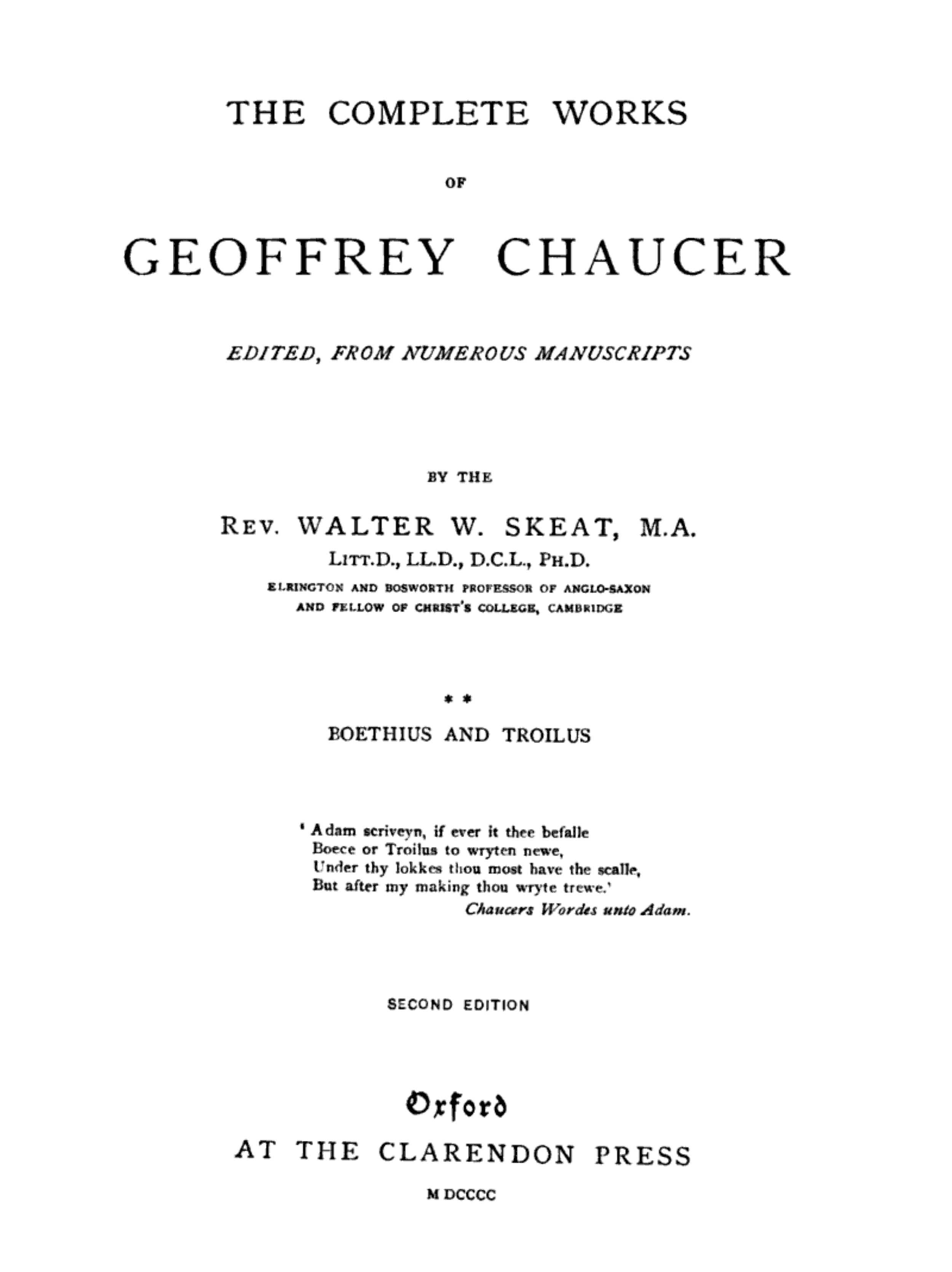
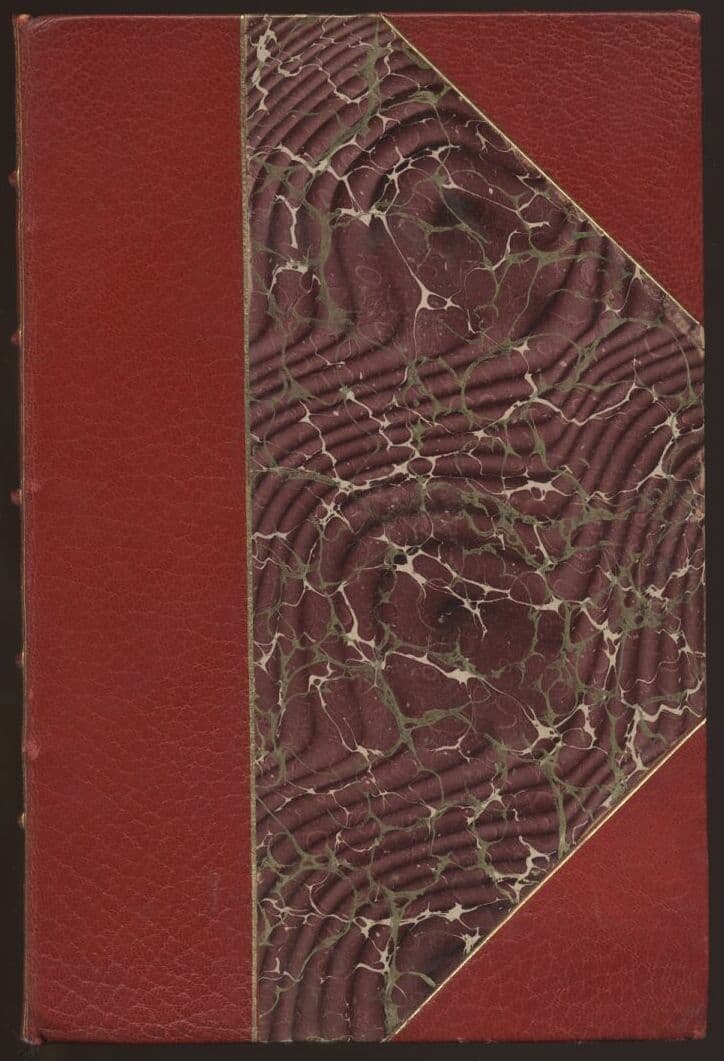
Chaucer's Works, Volume 2 — Boethius and Troilus
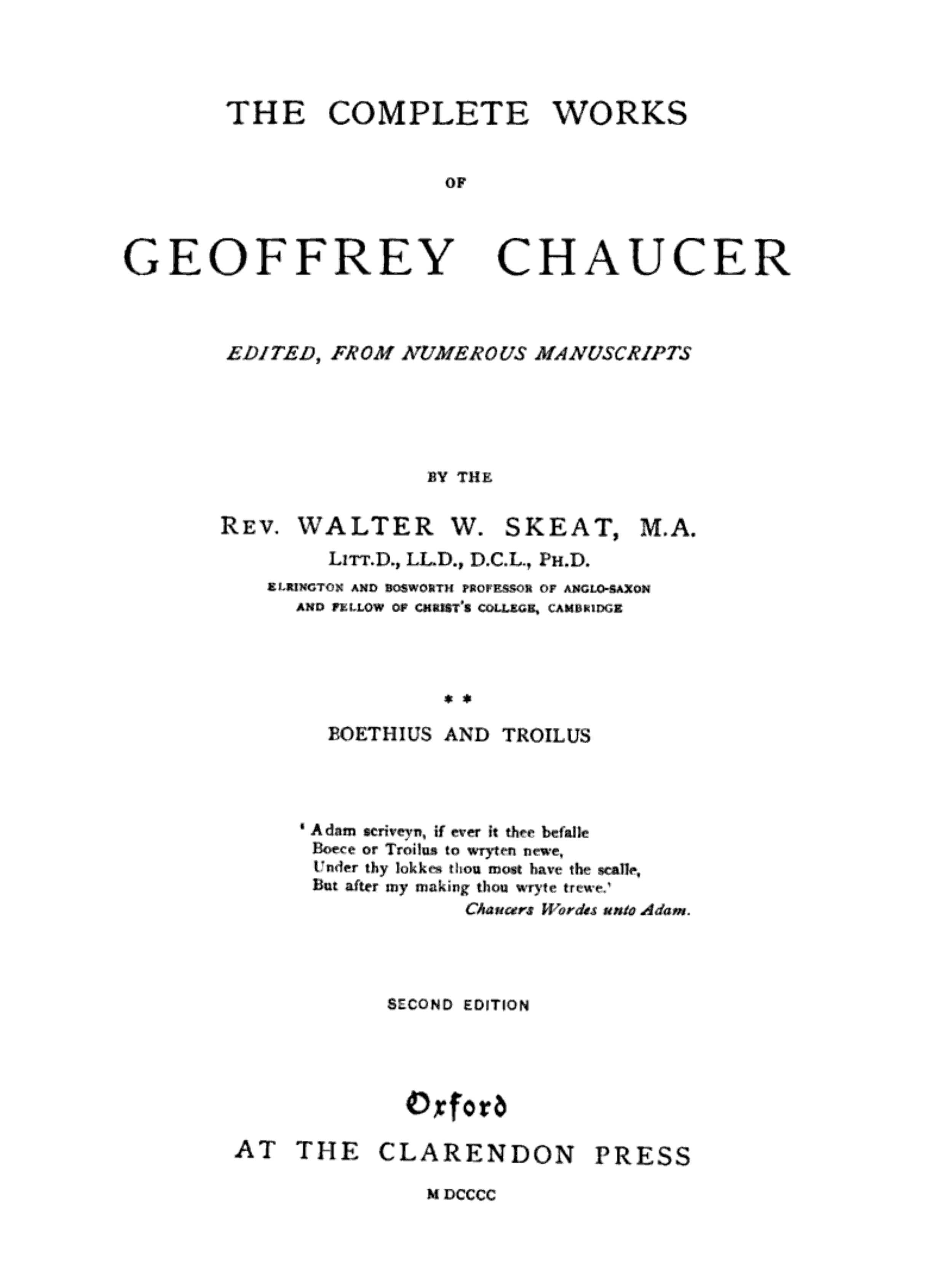
Chaucer's Works, Volume 2 — Boethius and Troilus
This volume presents Chaucer at the height of his powers: a philosopher-translator and a poet of devastating emotional precision. The Consolation of Philosophy is Chaucer's rendering of Boethius's medieval classic, written in a prison cell while awaiting execution. Lady Philosophy descends to comfort the condemned statesman, and their dialogue becomes a profound meditation on fortune, happiness, and the nature of true worth. It is simultaneously a political tract, a spiritual exercise, and one of the most influential texts in Western thought. Against this stands Troilus and Criseyde, Chaucer's masterwork of romantic tragedy. Set during the Trojan War, it follows the doomed affair between the young prince Troilos and the widow Criseyde, whose shift of allegiance to the Greek camp and subsequent infidelity shatter her lover entirely. Chaucer tells this tale with extraordinary psychological nuance, making Criseyde's betrayal not a simple moral failure but a devastating act of human weakness under impossible pressure. The poem influenced Shakespeare centuries later when he transformed it into Troilus and Cressida. Together, these works showcase a writer grappling with fortune's cruelty, love's fragility, and the ancient question of what endures when everything is lost.
Editions
X-Ray
“By God, if women had written stories,As clerks had within here oratories,They would have written of men more wickednessThan all the mark of Adam may redress.””
— Geoffrey Chaucer
“Chese now," quod she, "oon of thise thynges tweye:To han me foul and old til that I deye,And be to yow a trewe, humble wyf,And nevere yow displese in al my lyf,Or elles ye wol han me yong and fair,And take youre aventure of the repairThat shal be to youre hous by cause of me,Or in som oother place, may wel be.Now chese yourselven, wheither that yow liketh.””
— Geoffrey Chaucer
“For as I may be saved by God above, I never used discretion when in love But ever followed on my appetite, Whether the lad was short, long, black or white. Little I cared, if he was fond of me, How poor he was, or what his rank might be.””
— Geoffrey Chaucer
“A knowing wife if she is worth her salt Can always prove her husband is at fault, And even though the fellow may have heard Some story told him by a little bird She knows enough to prove the bird is crazy And get her maid to witness she’s a daisy,””
— Geoffrey Chaucer
Link to this book
Add a free, dofollow link to Lex on your blog, forum, syllabus, or reading list.

<a href="https://lex-books.com/book/chaucer-s-works-volume-2-boethius-and-troilus-194850ef-b38c-4202-a6e2-1d7b41f2957e"><img src="https://lex-books.com/badges/read-on-lex.svg" alt="Read Chaucer's Works, Volume 2 — Boethius and Troilus by Geoffrey Chaucer free on Lex" width="160" height="40"></a>[](https://lex-books.com/book/chaucer-s-works-volume-2-boethius-and-troilus-194850ef-b38c-4202-a6e2-1d7b41f2957e)[url=https://lex-books.com/book/chaucer-s-works-volume-2-boethius-and-troilus-194850ef-b38c-4202-a6e2-1d7b41f2957e][img]https://lex-books.com/badges/read-on-lex.svg[/img][/url]Read Chaucer's Works, Volume 2 — Boethius and Troilus by Geoffrey Chaucer free on Lex: https://lex-books.com/book/chaucer-s-works-volume-2-boethius-and-troilus-194850ef-b38c-4202-a6e2-1d7b41f2957eCite this book
Reading this edition for a paper or guide? Copy a citation.
Chaucer, Geoffrey. Chaucer's Works, Volume 2 — Boethius and Troilus. Lex, lex-books.com/book/chaucer-s-works-volume-2-boethius-and-troilus-194850ef-b38c-4202-a6e2-1d7b41f2957e.Chaucer, G. (n.d.). Chaucer's Works, Volume 2 — Boethius and Troilus. Lex. https://lex-books.com/book/chaucer-s-works-volume-2-boethius-and-troilus-194850ef-b38c-4202-a6e2-1d7b41f2957eChaucer, Geoffrey. Chaucer's Works, Volume 2 — Boethius and Troilus. Lex. https://lex-books.com/book/chaucer-s-works-volume-2-boethius-and-troilus-194850ef-b38c-4202-a6e2-1d7b41f2957e.