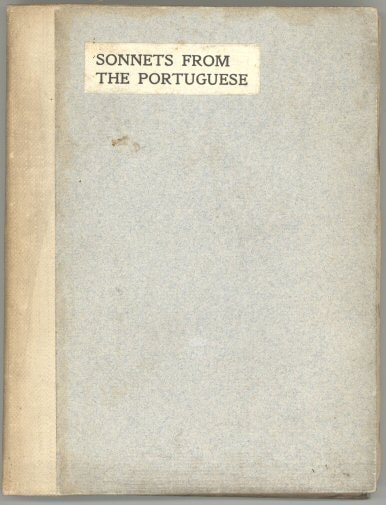
Sonnets from the Portuguese
1850
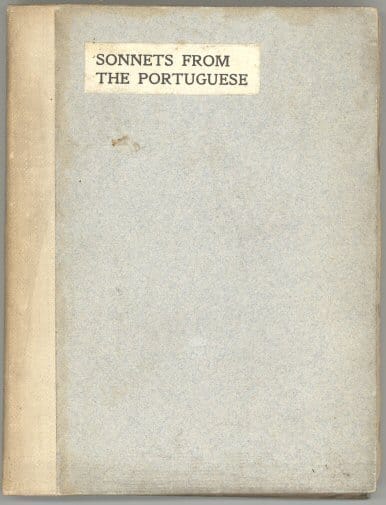
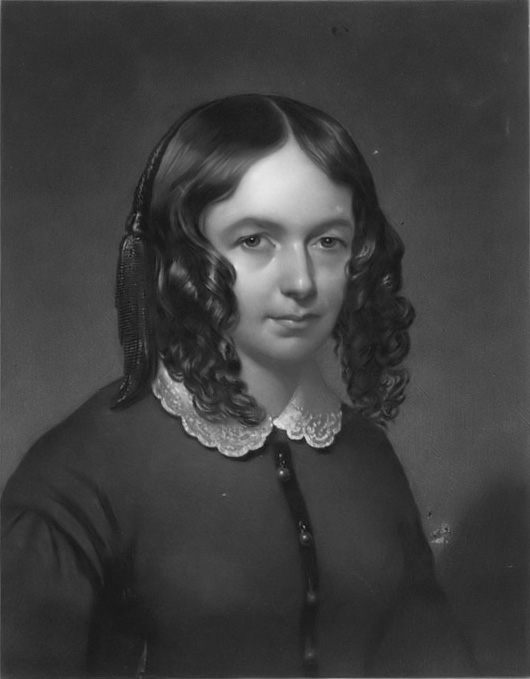
Forty-four sonnets that chart one woman's journey from grief and fear to the most passionate declaration of love in the English language. Written secretly during her courtship with Robert Browning, these poems capture the terrifying, exhilarating process of letting someone through the walls she had built around her wounded heart. Barrett Browning had spent years as a semi-invalid, practically a prisoner in her father's house, convinced she would never know love. Then came Browning, and these poems: sonnets that move from aching hesitation to the famous cascade of 'How do I love thee? Let me count the ways,' where desire and devotion merge into something that feels not just romantic but holy. The title itself was his nickname for her - 'my little Portuguese' - a tender private joke that becomes the key to understanding the collection's intimacy. These are not poems about love in the abstract; they are love letters written in the most demanding form in literature, by a woman who was told she would never marry, who had every reason to doubt happiness was possible. More than a century and a half later, they still read like the truest thing ever said about what it costs and what it means to love someone completely.
Editions


X-Ray
“How do I love thee? Let me count the ways.I love thee to the depth and breadth and heightMy soul can reach, when feeling out of sightFor the ends of being and ideal grace.I love thee to the level of every day'sMost quiet need, by sun and candle-light.I love thee freely, as men strive for right.I love thee purely, as they turn from praise.I love thee with the passion put to useIn my old griefs, and with my childhood's faith.I love thee with a love I seemed to loseWith my lost saints. I love thee with the breath,Smiles, tears, of all my life; and, if God choose,I shall but love thee better after death.””
— Elizabeth Barrett Browning
“Quick-loving hearts ... may quickly loathe.””
— Elizabeth Barrett Browning
“If thou must love me, let it be for naughtExcept for love's sake only. Do not say,'I love her for her smile”
— Elizabeth Barrett Browning
“And yet, because I love thee, I obtainFrom that same love this vindicating grace,To live on still in love, and yet in vain””
— Elizabeth Barrett Browning
“I saw, in gradual vision through my tears,The sweet, sad years, the melancholy years,Those of my own life, who by turns had flungA shadow across me.””
— Elizabeth Barrett Browning
“Alas, I have grieved so I am hard to love.Yet love me--wilt thou? Open thine heart wide,And fold within, the wet wings of thy dove.””
— Elizabeth Barrett Browning
“Will that light come again,As now these tears come...falling hot and real!””
— Elizabeth Barrett Browning
“My letters! all dead paper, mute and white!And yet they seem alive and quiveringAgainst my tremulous hands which loose the stringAnd let them drop down on my knee to-night.This said, -- he wished to have me in his sightOnce, as a friend: this fixed a day in springTo come and touch my hand ... a simple thing,Yet I wept for it! -- this, ... the paper's light ...Said, Dear I love thee; and I sank and quailedAs if God's future thundered on my past.This said, I am thine -- and so its ink has paledWith lying at my heart that beat too fast.And this ... O Love, thy words have ill availedIf, what this said, I dared repeat at last!””
— Elizabeth Barrett Browning
“Men could not part us with their worldly jars,Nor the seas change us, nor the tempests bend;Our hands would touch for all the mountain-bars,--And, heaven being rolled between us at the end,We should but vow the faster for the stars.””
— Elizabeth Barrett Browning
Link to this book
Add a free, dofollow link to Lex on your blog, forum, syllabus, or reading list.

<a href="https://lex-books.com/book/sonnets-from-the-portuguese-3e616af4-c8d8-4c95-af22-0db8520374b6"><img src="https://lex-books.com/badges/read-on-lex.svg" alt="Read Sonnets from the Portuguese by Elizabeth Barrett Browning free on Lex" width="160" height="40"></a>[](https://lex-books.com/book/sonnets-from-the-portuguese-3e616af4-c8d8-4c95-af22-0db8520374b6)[url=https://lex-books.com/book/sonnets-from-the-portuguese-3e616af4-c8d8-4c95-af22-0db8520374b6][img]https://lex-books.com/badges/read-on-lex.svg[/img][/url]Read Sonnets from the Portuguese by Elizabeth Barrett Browning free on Lex: https://lex-books.com/book/sonnets-from-the-portuguese-3e616af4-c8d8-4c95-af22-0db8520374b6Cite this book
Reading this edition for a paper or guide? Copy a citation.
Browning, Elizabeth Barrett. Sonnets from the Portuguese. Lex, lex-books.com/book/sonnets-from-the-portuguese-3e616af4-c8d8-4c95-af22-0db8520374b6.Browning, E. B. (1850). Sonnets from the Portuguese. Lex. https://lex-books.com/book/sonnets-from-the-portuguese-3e616af4-c8d8-4c95-af22-0db8520374b6Browning, Elizabeth Barrett. Sonnets from the Portuguese. Lex. https://lex-books.com/book/sonnets-from-the-portuguese-3e616af4-c8d8-4c95-af22-0db8520374b6.