Song of Roland
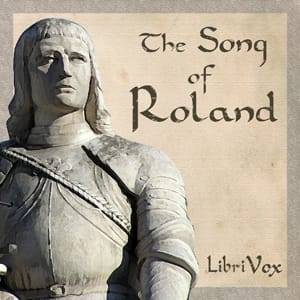
The Song of Roland is an epic poem from the 11th century, originally composed in Old French. It recounts the events of the Battle of Roncevaux Pass in 778, focusing on the heroism of Roland, a knight in Charlemagne's army. This work is notable for its portrayal of feudal values and chivalric ideals, making it one of the earliest and most significant examples of French literature. The poem has been translated into English, allowing wider access to its themes of loyalty and sacrifice.
Editions

Audiobook
Human narrated
Link to this book
Add a free, dofollow link to Lex on your blog, forum, syllabus, or reading list.

HTML
<a href="https://lex-books.com/book/song-of-roland-a4f00505-c9c7-4c8c-b09a-0407caf8771a"><img src="https://lex-books.com/badges/read-on-lex.svg" alt="Read Song of Roland by Anonymous free on Lex" width="160" height="40"></a>Markdown
[](https://lex-books.com/book/song-of-roland-a4f00505-c9c7-4c8c-b09a-0407caf8771a)BBCode
[url=https://lex-books.com/book/song-of-roland-a4f00505-c9c7-4c8c-b09a-0407caf8771a][img]https://lex-books.com/badges/read-on-lex.svg[/img][/url]Plain link
Read Song of Roland by Anonymous free on Lex: https://lex-books.com/book/song-of-roland-a4f00505-c9c7-4c8c-b09a-0407caf8771aCite this book
Reading this edition for a paper or guide? Copy a citation.
MLA
Anonymous. Song of Roland. Lex, lex-books.com/book/song-of-roland-a4f00505-c9c7-4c8c-b09a-0407caf8771a.APA
Anonymous (n.d.). Song of Roland. Lex. https://lex-books.com/book/song-of-roland-a4f00505-c9c7-4c8c-b09a-0407caf8771aChicago
Anonymous. Song of Roland. Lex. https://lex-books.com/book/song-of-roland-a4f00505-c9c7-4c8c-b09a-0407caf8771a.