Silas Marner
1861
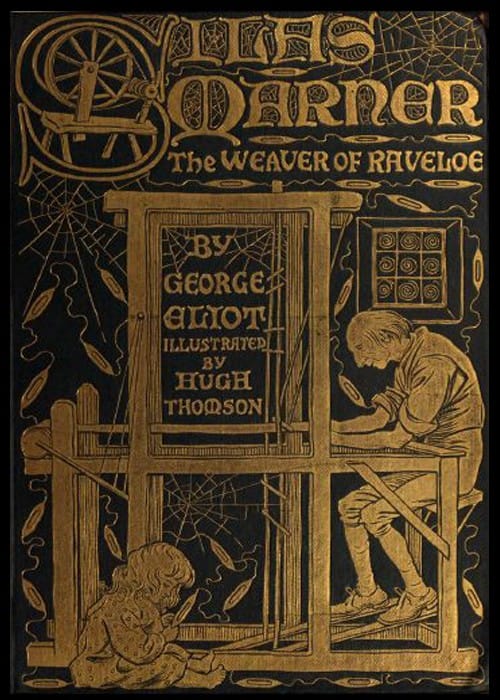
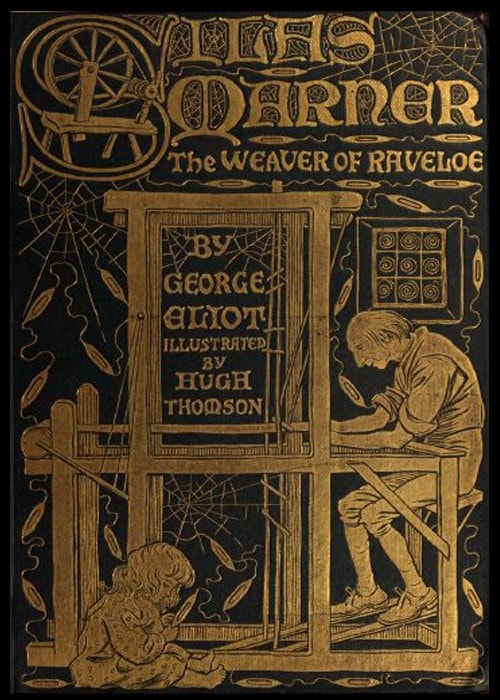
He was a man broken by betrayal, retreated into silence and gold. Then a child wandered into his life. Silas Marner has spent fifteen years in the village of Raveloe, a solitary linen-weaver known only as strange and possibly dangerous. His world is the rhythmic clack of his loom and the gleaming gold he counts each night, the only certainty in an existence stripped of trust and love. The villagers keep their distance. They whisper about his former life, his strange fits, the crime that drove him from his original home. Silas wants nothing from them and nothing from a world that once destroyed him. But one winter night, his gold is stolen and a different kind of intervention arrives: a toddler, lost and wandering, who stumbles into his cottage and into his frozen heart. What follows is George Eliot's quiet, devastating exploration of what it means to be saved and what it means to belong. This is a novel about the ties we forge, the wealth we keep, and the question of whether a life spent in isolation can ever be reclaimed.
Editions


X-Ray
“Hurt, he'll never be hurt--he's made to hurt other people.””
— George Eliot
“In old days there were angels who came and took men by the hand and led them away from the city of destruction. We see no white-winged angels now. But yet men are led away from threatening destruction: a hand is put into theirs, which leads them forth gently towards a calm and bright land, so that they look no more backward; and the hand may be a little child's.””
— George Eliot
“Perfect love has a breath of poetry which can exalt the relations of the least-instructed human beings.””
— George Eliot
“A man falling into dark waters seeks a momentary footing even on sliding stones.””
— George Eliot
“Nothing is so good as it seems beforehand.””
— George Eliot
“A child, more than all other giftsThat earth can offer to declining man,Brings hope with it, and forward-looking thoughts."”
— George Eliot
“...There's nothing kills a man so soon as having nobody to find fault with but himself.””
— George Eliot
“When a man turns a blessing from his door, it falls to them as take it in.””
— George Eliot
“Even people whose lives have been made various by learning sometimes find it hard to keep a fast hold on their habitual views of life, on their faith in the Invisible - nay, on the sense that their past joys and sorrows are a real experience, when they are suddenly transported to a new land, where the beings around them know nothing of their history, and share none of their ideas - where their mother earth shows another lap, and human life has other forms than those on which their souls have been nourished. Minds that have been unhinged from their old faith and love have perhaps sought this Lethean influence of exile in which the past becomes dreamy because its symbols have all vanished, and the present too is dreamy because it is linked with no memories.””
— George Eliot
Link to this book
Add a free, dofollow link to Lex on your blog, forum, syllabus, or reading list.

<a href="https://lex-books.com/book/silas-marner-5291f9c7-eb80-40df-85bc-85abfd7cb577"><img src="https://lex-books.com/badges/read-on-lex.svg" alt="Read Silas Marner by George Eliot free on Lex" width="160" height="40"></a>[](https://lex-books.com/book/silas-marner-5291f9c7-eb80-40df-85bc-85abfd7cb577)[url=https://lex-books.com/book/silas-marner-5291f9c7-eb80-40df-85bc-85abfd7cb577][img]https://lex-books.com/badges/read-on-lex.svg[/img][/url]Read Silas Marner by George Eliot free on Lex: https://lex-books.com/book/silas-marner-5291f9c7-eb80-40df-85bc-85abfd7cb577Cite this book
Reading this edition for a paper or guide? Copy a citation.
Eliot, George. Silas Marner. Lex, lex-books.com/book/silas-marner-5291f9c7-eb80-40df-85bc-85abfd7cb577.Eliot, G. (1861). Silas Marner. Lex. https://lex-books.com/book/silas-marner-5291f9c7-eb80-40df-85bc-85abfd7cb577Eliot, George. Silas Marner. Lex. https://lex-books.com/book/silas-marner-5291f9c7-eb80-40df-85bc-85abfd7cb577.