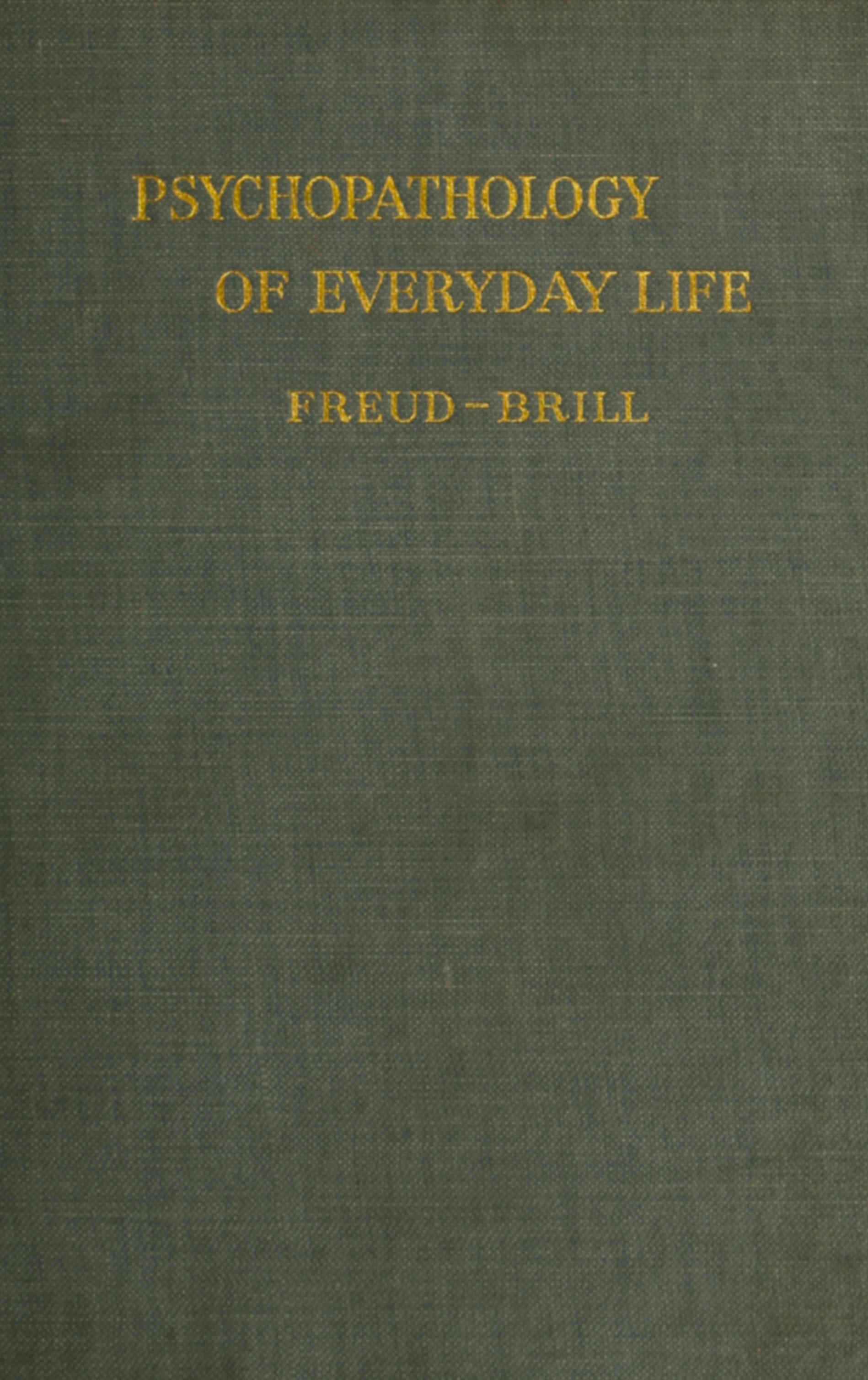
Psychopathology of Everyday Life
1901
Freud believed the mind was like an iceberg - most of it hidden beneath the surface. In this revolutionary text, he argues that our smallest mistakes - the name we forget, the word we mispronounce, the page we misread - are not random failures but windows into our unconscious. Beginning with his famous inability to recall the name 'Signorelli,' Freud demonstrates how these mental glitches expose repressed thoughts and desires we're unwilling or unable to confront consciously. The slip becomes a confession the speaker never meant to make. A landmark work that remains startling over a century later, this is Freud at his most accessible, transforming the trivial annoyances of daily life into evidence of a vast, hidden psychological underworld. It changed forever how we understand the boundary between the rational and the irrational.
Editions
X-Ray
“How far back into childhood do our memories reach?””
— Sigmund Freud
“We never lose what we really want””
— Sigmund Freud
“Various sources force us to assume that the so-called earliest childhood recollections are not true memory traces but later elaborations of the same, elaborations which might have been subjected to the influences of many later psychic forces. Thus, the "childhood reminiscences" of individuals altogether advance to the signification of "concealing memories," and thereby form a noteworthy analogy to the childhood reminiscences as laid down in the legends and myths of nations.””
— Sigmund Freud
“I believe we accept too indifferently the fact of infantile amnesia”
— Sigmund Freud
“Perciò la differenza tra me ed un uomo superstizioso consiste in questo: io non credo che un avvenimento verificatosi senza alcuna partecipazione della mia vita psichica possa rivelarmi cose arcane sul futuro; credo invece che un'espressione non intenzionale della mia vita psichica possa rivelarmi qualcosa di ignoto che, in fondo, appartiene solo alla mia vita psichica; credo alla casualità esterna (reale) ma non a quella interna (psichica). Insomma, il mio è l'atteggiamento esattamente opposto a quello del superstizioso; egli, non sapendo nulla della motivazione degli atti casuali e degli atti mancati, crede nella casualità psichica; è portato ad attribuire al caso esterno un'importanza che si manifesta nella realtà futura, ed a vedere nel caso un mezzo d'espressione di qualcosa che è nascosto nella realtà. Ci sono dunque due differenze tra me e l'uomo superstizioso: prima di tutto egli proietta all'esterno una motivazione che io cerco all'interno; in secondo luogo, egli interpreta il caso per mezzo di un avvenimento che io riconduco ad un'idea. Ciò che per lui è occulto per me è inconscio; in noi c'è la tendenza comune a non considerare il caso come tale, ma ad interpretarlo.Ora io sostengo che quest'ignoranza cosciente e questa conoscenza inconscia della motivazione delle casualità psichiche sono una delle radici della superstizione. Proprio perché il superstizioso non sa nulla della motivazione dei suoi atti casuali e perché questa motivazione cerca di imporsi alla sua conoscenza, egli è obbligato a spostarla ed a collocarla nel mondo esterno.””
— Sigmund Freud
“What one forgets once he will often forget again.””
— Sigmund Freud
“Nella nostra concezione moderna del mondo”
— Sigmund Freud
“Certain inadequacies in our psychic performance and certain actions performed apparently unintentionally prove, when methods of psychoanalytical investigation are applied to them, to be well motivated and determined by factors of which the conscious mind is unaware.””
— Sigmund Freud
“Dado que estos recuerdos infantiles indiferentes deben su conservación no al propio contenido””
— Sigmund Freud
Link to this book
Add a free, dofollow link to Lex on your blog, forum, syllabus, or reading list.

<a href="https://lex-books.com/book/psychopathology-of-everyday-life-c91d43a3-f1a3-4db3-b1a7-3ff0999a9bcf"><img src="https://lex-books.com/badges/read-on-lex.svg" alt="Read Psychopathology of Everyday Life by Sigmund Freud free on Lex" width="160" height="40"></a>[](https://lex-books.com/book/psychopathology-of-everyday-life-c91d43a3-f1a3-4db3-b1a7-3ff0999a9bcf)[url=https://lex-books.com/book/psychopathology-of-everyday-life-c91d43a3-f1a3-4db3-b1a7-3ff0999a9bcf][img]https://lex-books.com/badges/read-on-lex.svg[/img][/url]Read Psychopathology of Everyday Life by Sigmund Freud free on Lex: https://lex-books.com/book/psychopathology-of-everyday-life-c91d43a3-f1a3-4db3-b1a7-3ff0999a9bcfCite this book
Reading this edition for a paper or guide? Copy a citation.
Freud, Sigmund. Psychopathology of Everyday Life. Lex, lex-books.com/book/psychopathology-of-everyday-life-c91d43a3-f1a3-4db3-b1a7-3ff0999a9bcf.Freud, S. (1901). Psychopathology of Everyday Life. Lex. https://lex-books.com/book/psychopathology-of-everyday-life-c91d43a3-f1a3-4db3-b1a7-3ff0999a9bcfFreud, Sigmund. Psychopathology of Everyday Life. Lex. https://lex-books.com/book/psychopathology-of-everyday-life-c91d43a3-f1a3-4db3-b1a7-3ff0999a9bcf.