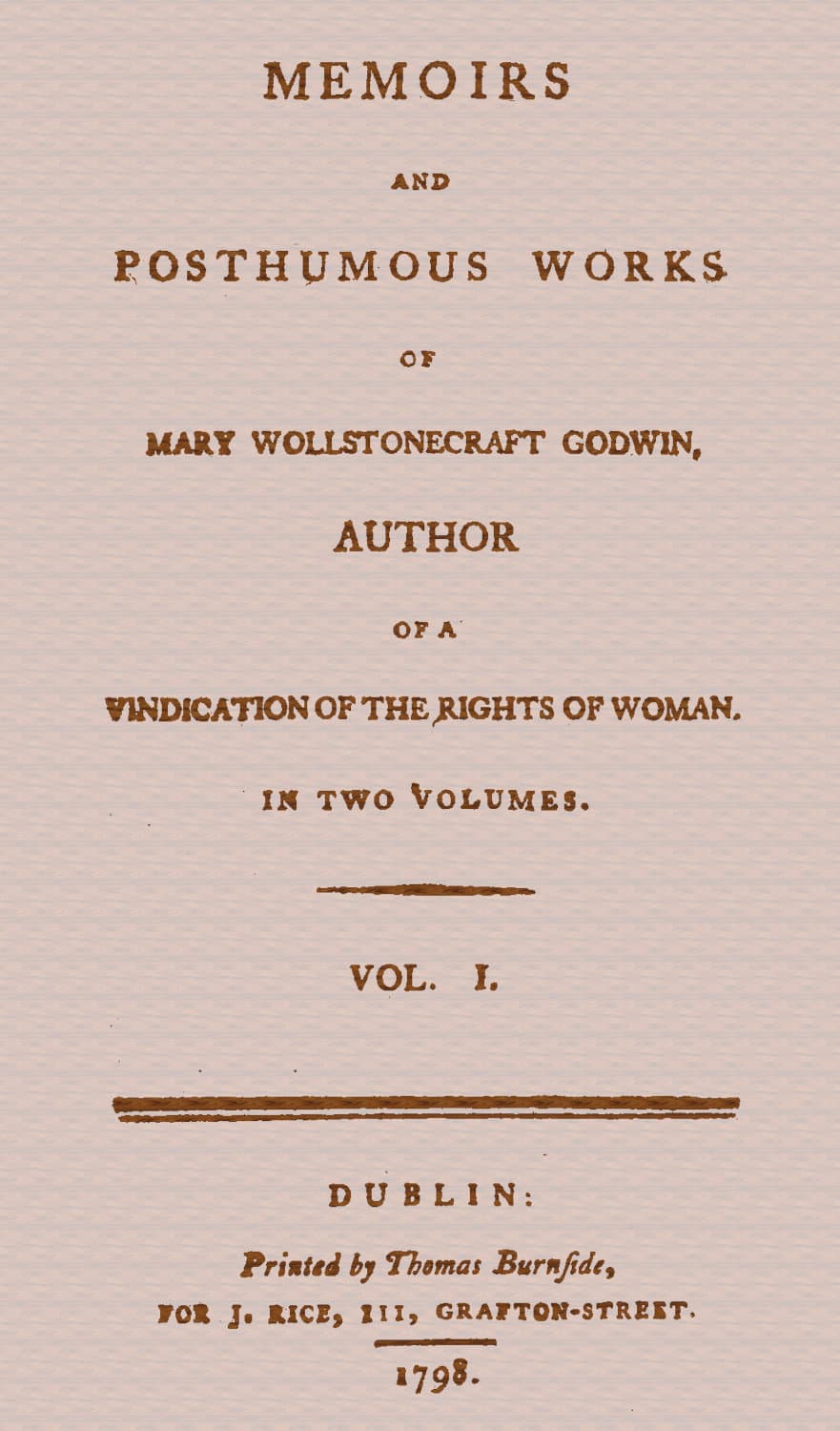
Posthumous Works of the Author of a Vindication of the Rights of Woman
1798
Posthumous Works of the Author of a Vindication of the Rights of Woman
1798
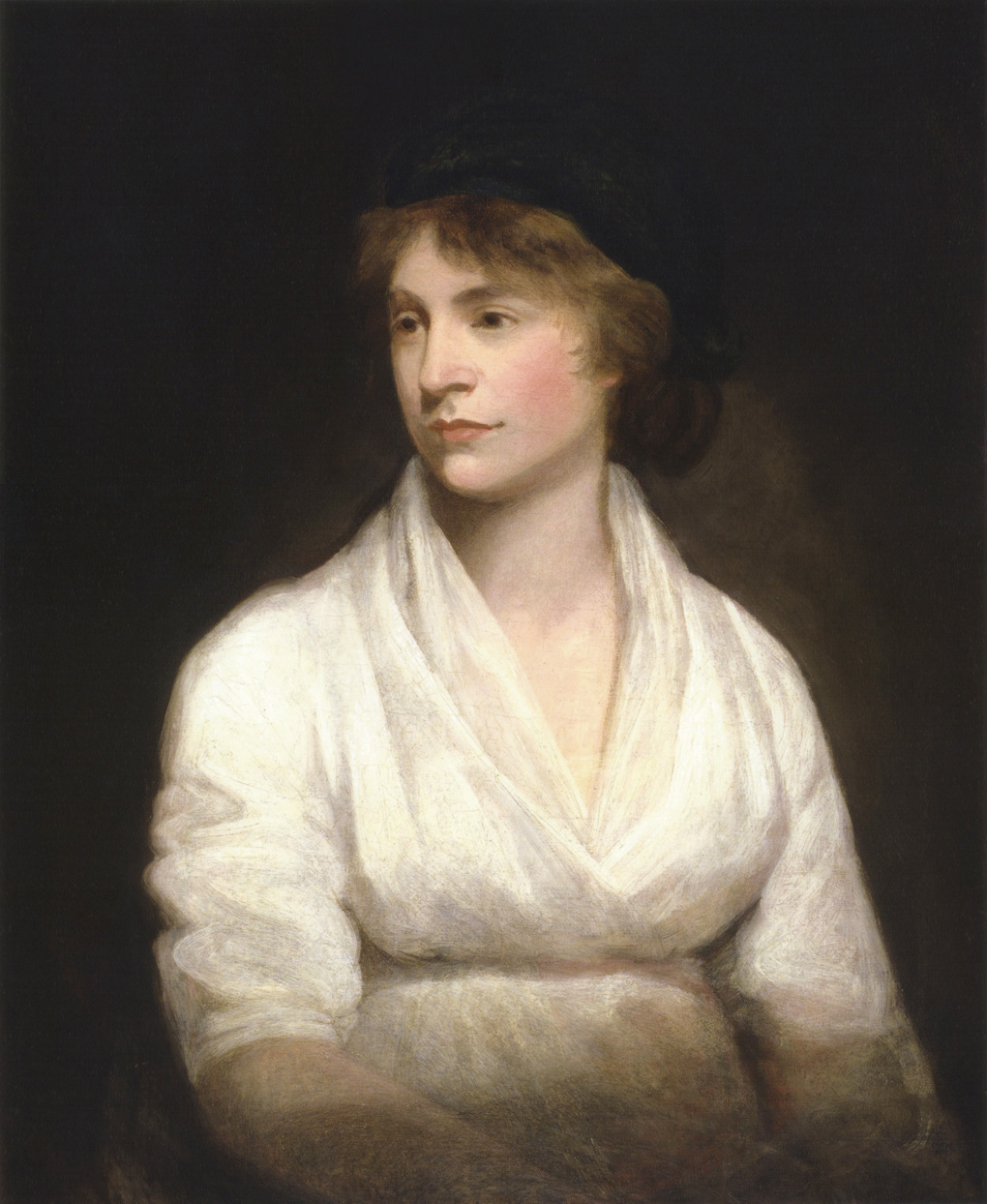
Mary Wollstonecraft did not live to see this book published. She died in 1797, at thirty-eight, giving birth to a daughter who would become the author of Frankenstein. Her husband William Godwin assembled these fragments in 1798, and what remains is a fragmentary masterpiece: the incomplete novel 'The Wrongs of Woman,' in which a mother named Maria sits in a prison cell, separated from her infant child, raging against a world that has imprisoned her both literally and figuratively. The novel was written in the shadow of Wollstonecraft's own maternal losses and personal unraveling, lending it an unbearable intimacy. Maria's prison is not just a room but the entire patriarchal structure that denies women property, voice, and autonomy. She reads, she reflects, she plans her escape, and she refuses to accept that her life is worth less than the man who imprisoned her. This is feminist fiction before the term existed, a radical imaginative work that applies the philosophical arguments of 'A Vindication of the Rights of Woman' to the body and heart of a woman who suffers. The book's incompleteness is itself moving: an unfinished argument, an interrupted life, a voice cut short that still demands to be heard.
Editions
Link to this book
Add a free, dofollow link to Lex on your blog, forum, syllabus, or reading list.

<a href="https://lex-books.com/book/posthumous-works-of-the-author-of-a-vindication-of-the-rights-of-woman-32318931-84b6-4350-a6fd-aef095edae67"><img src="https://lex-books.com/badges/read-on-lex.svg" alt="Read Posthumous Works of the Author of a Vindication of the Rights of Woman by Mary Wollstonecraft free on Lex" width="160" height="40"></a>[](https://lex-books.com/book/posthumous-works-of-the-author-of-a-vindication-of-the-rights-of-woman-32318931-84b6-4350-a6fd-aef095edae67)[url=https://lex-books.com/book/posthumous-works-of-the-author-of-a-vindication-of-the-rights-of-woman-32318931-84b6-4350-a6fd-aef095edae67][img]https://lex-books.com/badges/read-on-lex.svg[/img][/url]Read Posthumous Works of the Author of a Vindication of the Rights of Woman by Mary Wollstonecraft free on Lex: https://lex-books.com/book/posthumous-works-of-the-author-of-a-vindication-of-the-rights-of-woman-32318931-84b6-4350-a6fd-aef095edae67Cite this book
Reading this edition for a paper or guide? Copy a citation.
Wollstonecraft, Mary. Posthumous Works of the Author of a Vindication of the Rights of Woman. Lex, lex-books.com/book/posthumous-works-of-the-author-of-a-vindication-of-the-rights-of-woman-32318931-84b6-4350-a6fd-aef095edae67.Wollstonecraft, M. (1798). Posthumous Works of the Author of a Vindication of the Rights of Woman. Lex. https://lex-books.com/book/posthumous-works-of-the-author-of-a-vindication-of-the-rights-of-woman-32318931-84b6-4350-a6fd-aef095edae67Wollstonecraft, Mary. Posthumous Works of the Author of a Vindication of the Rights of Woman. Lex. https://lex-books.com/book/posthumous-works-of-the-author-of-a-vindication-of-the-rights-of-woman-32318931-84b6-4350-a6fd-aef095edae67.