A vindication of the rights of men, in a letter to the Right Honourable Edmund…
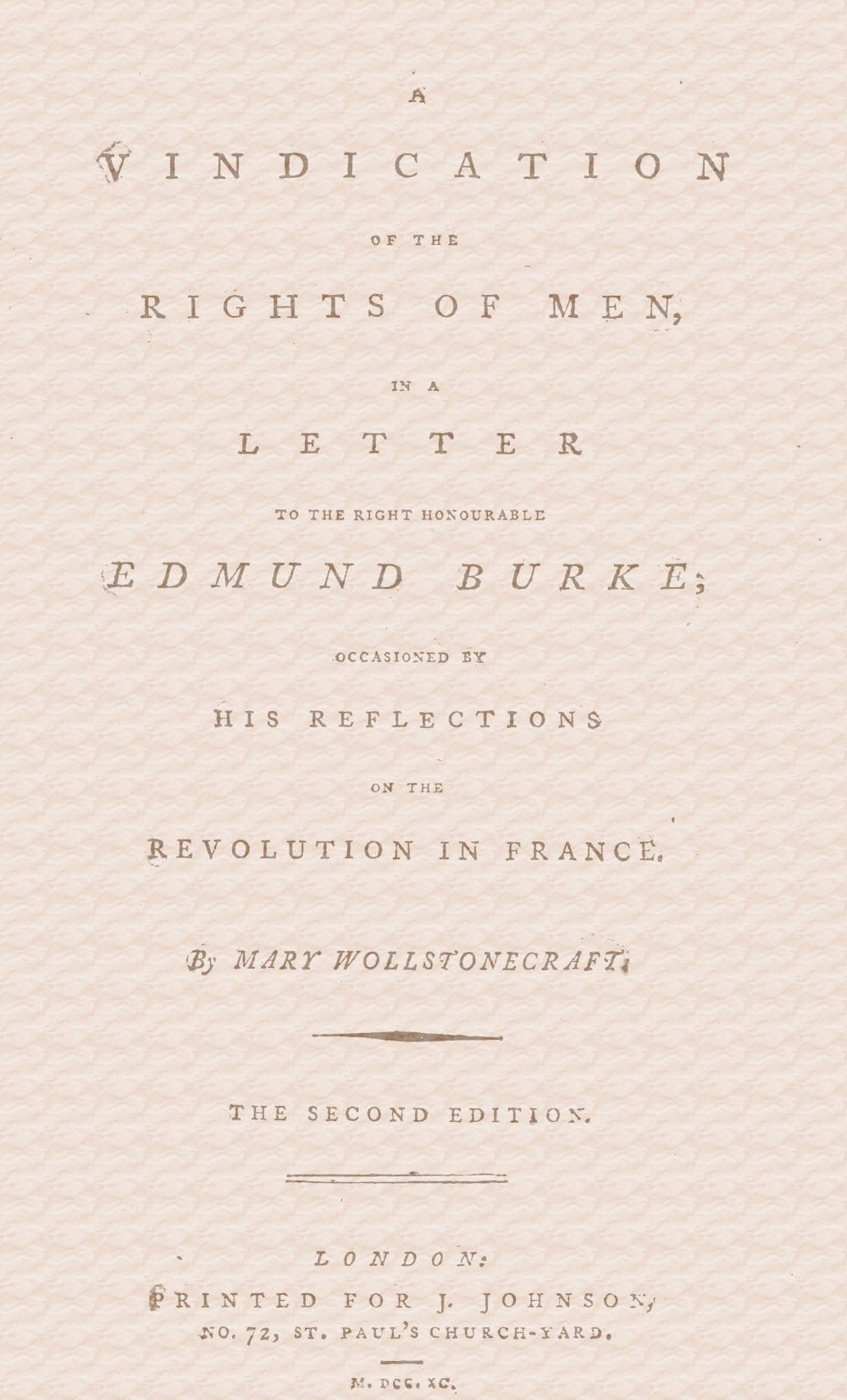
A vindication of the rights of men, in a letter to the Right Honourable Edmund…
In November 1790, a relatively unknown writer published a pamphlet that would ignite a political firestorm and launch one of history's most consequential intellectual careers. Mary Wollstonecraft's furious response to Edmund Burke's attack on the French Revolution became the opening shot in a pamphlet war that would reshape British political thought. She systematically dismantles Burke's defense of hereditary privilege, the church-state alliance, and his condescending portrayal of the French revolutionaries as an irrational mob. But this is no dry philosophical treatise. Wollstonecraft writes with burning conviction, arguing that liberty is not an "entailed inheritance" to be doled out by the privileged few, but a birthright of every human being born rational. She exposes the gendered logic beneath Burke's elegant prose, asking pointedly whether women are to be included in his vision of civic humanity. The result is a galvanizing work that laid the intellectual groundwork for everything that followed in Wollstonecraft's revolutionary body of thought.
Editions

Link to this book
Add a free, dofollow link to Lex on your blog, forum, syllabus, or reading list.

<a href="https://lex-books.com/book/a-vindication-of-the-rights-of-men-in-a-letter-to-the-right-honourable-edmund-1edc0767-018d-44ff-8644-7e773990e6e3"><img src="https://lex-books.com/badges/read-on-lex.svg" alt="Read A vindication of the rights of men, in a letter to the Right Honourable Edmund… by Mary Wollstonecraft free on Lex" width="160" height="40"></a>[](https://lex-books.com/book/a-vindication-of-the-rights-of-men-in-a-letter-to-the-right-honourable-edmund-1edc0767-018d-44ff-8644-7e773990e6e3)[url=https://lex-books.com/book/a-vindication-of-the-rights-of-men-in-a-letter-to-the-right-honourable-edmund-1edc0767-018d-44ff-8644-7e773990e6e3][img]https://lex-books.com/badges/read-on-lex.svg[/img][/url]Read A vindication of the rights of men, in a letter to the Right Honourable Edmund… by Mary Wollstonecraft free on Lex: https://lex-books.com/book/a-vindication-of-the-rights-of-men-in-a-letter-to-the-right-honourable-edmund-1edc0767-018d-44ff-8644-7e773990e6e3Cite this book
Reading this edition for a paper or guide? Copy a citation.
Wollstonecraft, Mary. A vindication of the rights of men, in a letter to the Right Honourable Edmund…. Lex, lex-books.com/book/a-vindication-of-the-rights-of-men-in-a-letter-to-the-right-honourable-edmund-1edc0767-018d-44ff-8644-7e773990e6e3.Wollstonecraft, M. (n.d.). A vindication of the rights of men, in a letter to the Right Honourable Edmund…. Lex. https://lex-books.com/book/a-vindication-of-the-rights-of-men-in-a-letter-to-the-right-honourable-edmund-1edc0767-018d-44ff-8644-7e773990e6e3Wollstonecraft, Mary. A vindication of the rights of men, in a letter to the Right Honourable Edmund…. Lex. https://lex-books.com/book/a-vindication-of-the-rights-of-men-in-a-letter-to-the-right-honourable-edmund-1edc0767-018d-44ff-8644-7e773990e6e3.