Nothing to Do: A Tilt at Our Best Society
1857
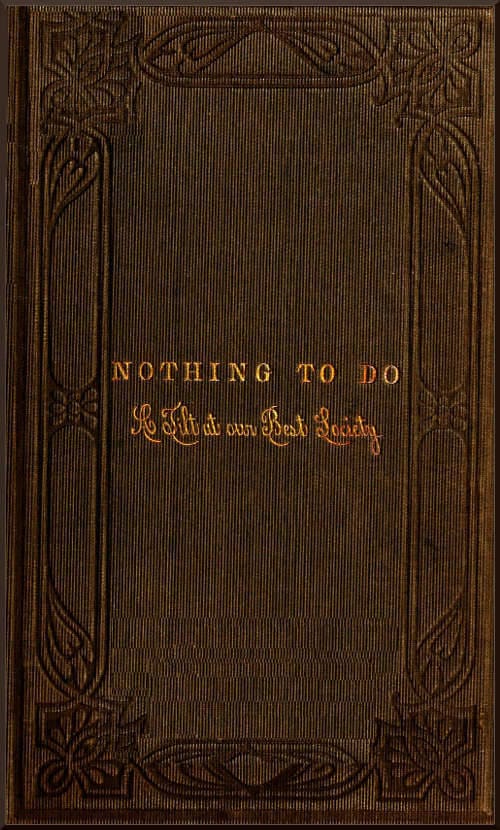
Nothing to Do: A Tilt at Our Best Society is a satirical poem by Horatio Alger, Jr., first published in 1857. The poem critiques the social class dynamics and idleness of the wealthy elite in mid-19th century America, focusing on Augustus Fitz-Herbert, a millionaire's son who embodies the arrogance of privilege. Through humor and sharp observations, Alger questions the merit of inherited wealth versus hard work, advocating for a more engaged and purpose-driven existence. This work remains culturally significant for its exploration of social values and moral shortcomings in a rapidly changing society.
Editions
Link to this book
Add a free, dofollow link to Lex on your blog, forum, syllabus, or reading list.

<a href="https://lex-books.com/book/nothing-to-do-a-tilt-at-our-best-society-cf3cfc44-9788-4e29-982e-a871e67379d2"><img src="https://lex-books.com/badges/read-on-lex.svg" alt="Read Nothing to Do: A Tilt at Our Best Society by Horatio Alger Jr. free on Lex" width="160" height="40"></a>[](https://lex-books.com/book/nothing-to-do-a-tilt-at-our-best-society-cf3cfc44-9788-4e29-982e-a871e67379d2)[url=https://lex-books.com/book/nothing-to-do-a-tilt-at-our-best-society-cf3cfc44-9788-4e29-982e-a871e67379d2][img]https://lex-books.com/badges/read-on-lex.svg[/img][/url]Read Nothing to Do: A Tilt at Our Best Society by Horatio Alger Jr. free on Lex: https://lex-books.com/book/nothing-to-do-a-tilt-at-our-best-society-cf3cfc44-9788-4e29-982e-a871e67379d2Cite this book
Reading this edition for a paper or guide? Copy a citation.
Jr., Horatio Alger. Nothing to Do: A Tilt at Our Best Society. Lex, lex-books.com/book/nothing-to-do-a-tilt-at-our-best-society-cf3cfc44-9788-4e29-982e-a871e67379d2.Jr., H. A. (1857). Nothing to Do: A Tilt at Our Best Society. Lex. https://lex-books.com/book/nothing-to-do-a-tilt-at-our-best-society-cf3cfc44-9788-4e29-982e-a871e67379d2Jr., Horatio Alger. Nothing to Do: A Tilt at Our Best Society. Lex. https://lex-books.com/book/nothing-to-do-a-tilt-at-our-best-society-cf3cfc44-9788-4e29-982e-a871e67379d2.