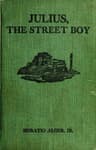
Julius, the Street Boy; Or, Out West
1874
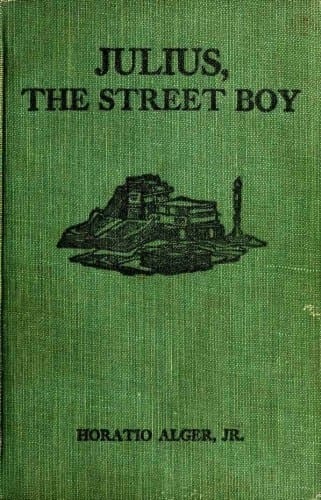
Julius, the Street Boy; Or, Out West
1874
In the grime and shadow of 1870s New York, a boy named Julius makes a choice that will define his life: he will not become what the streets demand. Raised by a burglar named Jack Morgan, Julius knows exactly where that path leads. So when the Children's Aid Society offers him a ticket westward, he takes it not just as escape, but as resurrection. The novel follows his journey from the tenements of the Lower East Side to the raw, hopeful frontier, where the same ambition that drove him to survive in the city might finally allow him to thrive. Along the way, he encounters old dangers and new challenges, each test revealing whether a boy born to poverty can truly reinvent himself in a land where nobody knows his name. Alger, whose work essentially invented the American rags-to-riches mythology, wrote this not as fantasy but as prescription: a blueprint for thousands of real children who looked west for salvation. The book endures not because its vision is subtle, but because it captured something raw and true about a nation's belief that tomorrow could always be better than today.
Editions
Link to this book
Add a free, dofollow link to Lex on your blog, forum, syllabus, or reading list.

<a href="https://lex-books.com/book/julius-the-street-boy-or-out-west-427cbfc1-27b9-47c1-b7e9-410773888187"><img src="https://lex-books.com/badges/read-on-lex.svg" alt="Read Julius, the Street Boy; Or, Out West by Horatio Alger Jr. free on Lex" width="160" height="40"></a>[](https://lex-books.com/book/julius-the-street-boy-or-out-west-427cbfc1-27b9-47c1-b7e9-410773888187)[url=https://lex-books.com/book/julius-the-street-boy-or-out-west-427cbfc1-27b9-47c1-b7e9-410773888187][img]https://lex-books.com/badges/read-on-lex.svg[/img][/url]Read Julius, the Street Boy; Or, Out West by Horatio Alger Jr. free on Lex: https://lex-books.com/book/julius-the-street-boy-or-out-west-427cbfc1-27b9-47c1-b7e9-410773888187Cite this book
Reading this edition for a paper or guide? Copy a citation.
Jr., Horatio Alger. Julius, the Street Boy; Or, Out West. Lex, lex-books.com/book/julius-the-street-boy-or-out-west-427cbfc1-27b9-47c1-b7e9-410773888187.Jr., H. A. (1874). Julius, the Street Boy; Or, Out West. Lex. https://lex-books.com/book/julius-the-street-boy-or-out-west-427cbfc1-27b9-47c1-b7e9-410773888187Jr., Horatio Alger. Julius, the Street Boy; Or, Out West. Lex. https://lex-books.com/book/julius-the-street-boy-or-out-west-427cbfc1-27b9-47c1-b7e9-410773888187.