Memoirs of My Life and Writings
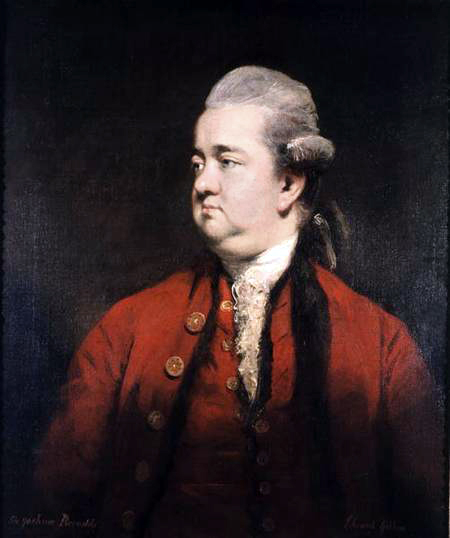
Among the first autobiographies written in the modern sense, Edward Gibbon's Memoirs offers an unparalleled window into the mind that gave the world The Decline and Fall of the Roman Empire. Gibbon charts his own life with the same forensic precision he brought to Roman history: a sickly childhood in London, his disillusionment with an Oxford he memorably dismissed as steeped in 'port and prejudice,' his transformative years in Lausanne, and the singular, unconsummated passion that haunted him. The result is neither self-aggrandizement nor false modesty, but something rarer: a brilliant mind turning its analytical powers upon itself. These pages distill a rich, full life into something both intimate and monumental, revealing the private man behind the public achievement. The candor is striking, the warmth genuine, and the intellectual passion unmistakable on every page.
Editions
X-Ray
“To a lover of books the shops and sales in London present irresistible temptations.””
— Edward Gibbon
“I must reluctantly observe that two causes, the abbreviation of time, and the failure of hope, will always tinge with a browner shade the evening of life.””
— Edward Gibbon
“The pilgrimage of Italy, which I now accomplished, had long been the object of my curious devotion. The passage of Mount Cenis, the regular streets of Turin, the Gothic cathedral of Milan, the scenery of the Boromean Islands, the marble palaces of Genoa, the beauties of Florence, the wonders of Rome, the curiosities of Naples, the galleries of Bologna, the singular aspect of Venice, the amphitheatre of Verona, and the Palladian architecture of Vicenza, are still present to my imagination. I read the Tuscan writers on the banks of the Arno; but my conversation was with the dead rather than the living, and the whole college of Cardinals was of less value in my eyes than the transfiguration of Raphael, the Apollo of the Vatican, or the massy greatness of the Coliseum. It was at Rome, on the fifteenth of October, 1764, as I sat musing amidst the ruins of the Capitol, while the barefooted fryars were singing Vespers in the temple of Jupiter, that the idea of writing the decline and fall of the City first started to my mind. After Rome has kindled and satisfied the enthusiasm of the Classic pilgrim, his curiosity for all meaner objects insensibly subsides.””
— Edward Gibbon
“Another d-mn'd thick, square book! Always, scribble, scribble, scribble! Eh! Mr. Gibbon?””
— Edward Gibbon
“The knowledge of our own family from a remote period will be always esteemed as an abstract pre-eminence since it can never be promiscuously enjoyed, but the longest series of peasants and mechanics would not afford much gratification to the pride of their descendant. We wish to discover our ancestors, but we wish to discover them possessed of ample fortunes, adorned with honourable titles, and holding an eminent rank in the class of hereditary nobles, which has been maintained for the wisest and most beneficial purposes, in almost every climate of the globe, and in almost every form of political society.””
— Edward Gibbon
Link to this book
Add a free, dofollow link to Lex on your blog, forum, syllabus, or reading list.

<a href="https://lex-books.com/book/memoirs-of-my-life-and-writings-4e2c0220-8691-475b-be58-c9e94a9c136c"><img src="https://lex-books.com/badges/read-on-lex.svg" alt="Read Memoirs of My Life and Writings by Edward Gibbon free on Lex" width="160" height="40"></a>[](https://lex-books.com/book/memoirs-of-my-life-and-writings-4e2c0220-8691-475b-be58-c9e94a9c136c)[url=https://lex-books.com/book/memoirs-of-my-life-and-writings-4e2c0220-8691-475b-be58-c9e94a9c136c][img]https://lex-books.com/badges/read-on-lex.svg[/img][/url]Read Memoirs of My Life and Writings by Edward Gibbon free on Lex: https://lex-books.com/book/memoirs-of-my-life-and-writings-4e2c0220-8691-475b-be58-c9e94a9c136cCite this book
Reading this edition for a paper or guide? Copy a citation.
Gibbon, Edward. Memoirs of My Life and Writings. Lex, lex-books.com/book/memoirs-of-my-life-and-writings-4e2c0220-8691-475b-be58-c9e94a9c136c.Gibbon, E. (n.d.). Memoirs of My Life and Writings. Lex. https://lex-books.com/book/memoirs-of-my-life-and-writings-4e2c0220-8691-475b-be58-c9e94a9c136cGibbon, Edward. Memoirs of My Life and Writings. Lex. https://lex-books.com/book/memoirs-of-my-life-and-writings-4e2c0220-8691-475b-be58-c9e94a9c136c.