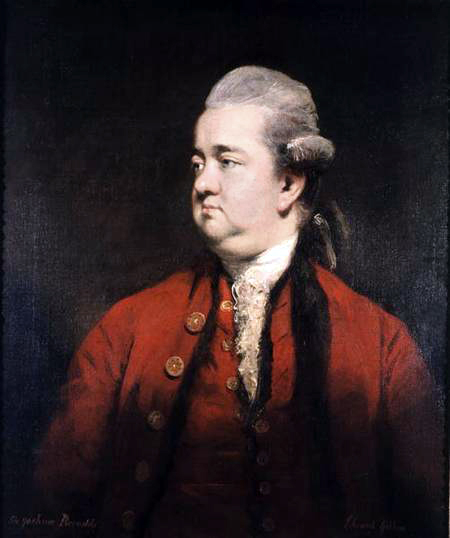
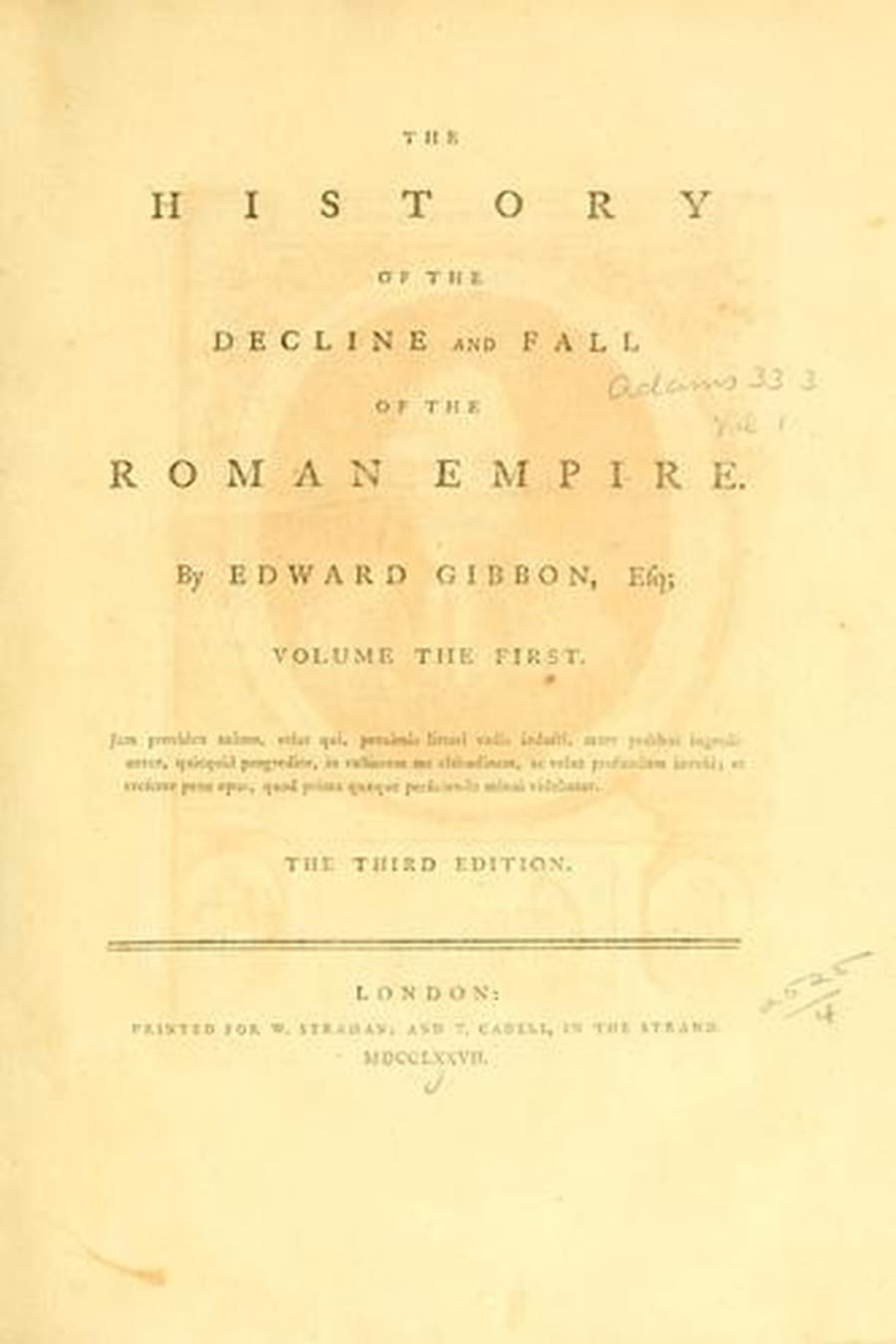
History of the Decline and Fall of the Roman Empire — Volume 1
1776

Gibbon's masterpiece is not merely a history of Rome's fall but an inquiry into how civilizations die. Written in the Enlightenment's confident maturity, it traces the Roman Empire from its height under the Antonine emperors, a realm of unprecedented prosperity, disciplined legions, and sophisticated governance, through the slow unraveling that would take fifteen centuries to complete. Gibbon brings the ancients back to vivid life: the madmen and the philosophers, the soldiers who built empires and the priests who inherited the ruins. His achievement was not just scholarly but literary: he invented a historical prose that could be witty, savage, and melancholic by turns, that could render a battle or a theological dispute with equal force. This first volume establishes his method and his central argument, that Rome did not fall to a single catastrophe but was slowly undermined by the weight of its own contradictions, by barbarian pressure, and by the transformation of a martial civilization into something gentler and, ultimately, weaker. It is a book about the nature of power itself, and why nothing, not even eternal Rome, lasts forever.
Editions


X-Ray
“The various modes of worship which prevailed in the Roman world were all considered by the people as equally true; by the philosopher as equally false; and by the magistrate as equally useful.””
— Edward Gibbon
“The most worthless of mankind are not afraid to condemn in others the same disorders which they allow in themselves; and can readily discover some nice difference in age, character, or station, to justify the partial distinction.””
— Edward Gibbon
“Revenge is profitable, gratitude is expensive.””
— Edward Gibbon
“The policy of the emperors and the senate, as far as it concerned religion, was happily seconded by the reflections of the enlightened, and by the habits of the superstitious, part of their subjects. The various modes of worship, which prevailed in the Roman world, were all considered by the people, as equally true; by the philosopher, as equally false; and by the magistrate, as equally useful. And thus toleration produced not only mutual indulgence, but even religious concord.””
— Edward Gibbon
“War, in its fairest form, implies a perpetual violation of humanity and justice.””
— Edward Gibbon
“The theologian may indulge the pleasing task of describing Religion as she descended from Heaven, arrayed in her native purity. A more melancholy duty is imposed on the historian. He must discover the inevitable mixture of error and corruption which she contracted in a long residence upon Earth, among a weak and degenerate race of beings.””
— Edward Gibbon
“The army is the only order of men sufficiently united to concur in the same sentiments, and powerful enough to impose them on the rest of their fellow-citizens; but the temper of soldiers, habituated at once to violence and to slavery, renders them very unfit guardians of a legal, or even a civil constitution.””
— Edward Gibbon
“Edward Gibbon, in his classic work on the fall of the Roman Empire, describes the Roman era's declension as a place where "bizarreness masqueraded as creativity.””
— Edward Gibbon
“The ascent to greatness, however steep and dangerous, may entertain an active spirit with the consciousness and exercise of its own power: but the possession of a throne could never yet afford a lasting satisfaction to an ambitious mind.””
— Edward Gibbon
Link to this book
Add a free, dofollow link to Lex on your blog, forum, syllabus, or reading list.

<a href="https://lex-books.com/book/history-of-the-decline-and-fall-of-the-roman-empire-volume-1-8f80a2fa-ee20-46d1-a686-6e9b0a46be9e"><img src="https://lex-books.com/badges/read-on-lex.svg" alt="Read History of the Decline and Fall of the Roman Empire — Volume 1 by Edward Gibbon free on Lex" width="160" height="40"></a>[](https://lex-books.com/book/history-of-the-decline-and-fall-of-the-roman-empire-volume-1-8f80a2fa-ee20-46d1-a686-6e9b0a46be9e)[url=https://lex-books.com/book/history-of-the-decline-and-fall-of-the-roman-empire-volume-1-8f80a2fa-ee20-46d1-a686-6e9b0a46be9e][img]https://lex-books.com/badges/read-on-lex.svg[/img][/url]Read History of the Decline and Fall of the Roman Empire — Volume 1 by Edward Gibbon free on Lex: https://lex-books.com/book/history-of-the-decline-and-fall-of-the-roman-empire-volume-1-8f80a2fa-ee20-46d1-a686-6e9b0a46be9eCite this book
Reading this edition for a paper or guide? Copy a citation.
Gibbon, Edward. History of the Decline and Fall of the Roman Empire — Volume 1. Lex, lex-books.com/book/history-of-the-decline-and-fall-of-the-roman-empire-volume-1-8f80a2fa-ee20-46d1-a686-6e9b0a46be9e.Gibbon, E. (1776). History of the Decline and Fall of the Roman Empire — Volume 1. Lex. https://lex-books.com/book/history-of-the-decline-and-fall-of-the-roman-empire-volume-1-8f80a2fa-ee20-46d1-a686-6e9b0a46be9eGibbon, Edward. History of the Decline and Fall of the Roman Empire — Volume 1. Lex. https://lex-books.com/book/history-of-the-decline-and-fall-of-the-roman-empire-volume-1-8f80a2fa-ee20-46d1-a686-6e9b0a46be9e.