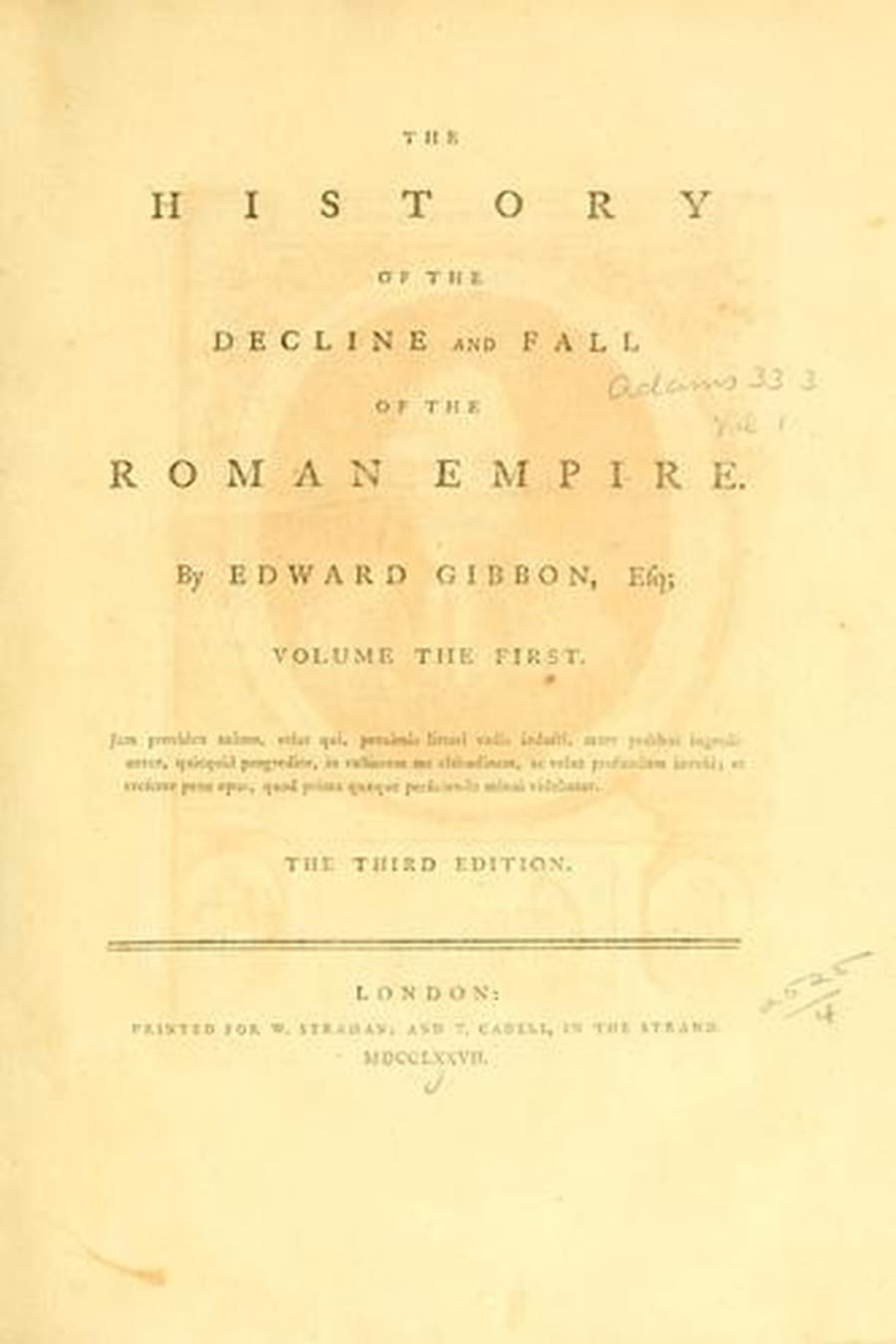
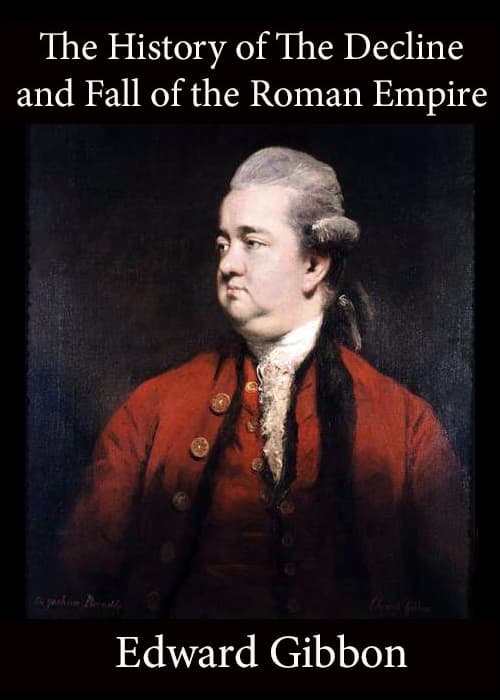
History of the Decline and Fall of the Roman Empire — Volume 2
1781

History of the Decline and Fall of the Roman Empire — Volume 2
1781
Gibbon's second volume opens at the smoldering ruins of Rome after the Great Fire of 64 AD, where Emperor Nero scapegoated the fledgling Christian sect for his own arson. From this infamous persecution, Gibbon traces an extraordinary transformation: the slow percolation of an obscure Jewish sect into the official religion of the empire. We witness the philosophical paganism of Marcus Aurelius, the military anarchy of the third century, Diocletian's desperate reforms, and finally Constantine's conversion, which Gibbon analyses with devastating precision, asking not just what happened but why Christianity succeeded where other cults failed. The founding of Constantinople anchors the narrative, the new Christian Rome that would outlast the old. This is history as literature: Gibbon's prose possesses a rhetorical elegance that makes the fall of empires read like tragedy. His ironic detachment, his careful weighing of evidence, his willingness to question both pagan virtue and Christian triumph, these made him modern when modern history did not exist. Readers who finish this volume understand why empires die not in a single battle but through gradual rot, institutional sclerosis, the slow replacement of old loyalties with new faiths.
Editions


X-Ray
“The various modes of worship which prevailed in the Roman world were all considered by the people as equally true; by the philosopher as equally false; and by the magistrate as equally useful.””
— Edward Gibbon
“The most worthless of mankind are not afraid to condemn in others the same disorders which they allow in themselves; and can readily discover some nice difference in age, character, or station, to justify the partial distinction.””
— Edward Gibbon
“Revenge is profitable, gratitude is expensive.””
— Edward Gibbon
“The policy of the emperors and the senate, as far as it concerned religion, was happily seconded by the reflections of the enlightened, and by the habits of the superstitious, part of their subjects. The various modes of worship, which prevailed in the Roman world, were all considered by the people, as equally true; by the philosopher, as equally false; and by the magistrate, as equally useful. And thus toleration produced not only mutual indulgence, but even religious concord.””
— Edward Gibbon
“War, in its fairest form, implies a perpetual violation of humanity and justice.””
— Edward Gibbon
“The theologian may indulge the pleasing task of describing Religion as she descended from Heaven, arrayed in her native purity. A more melancholy duty is imposed on the historian. He must discover the inevitable mixture of error and corruption which she contracted in a long residence upon Earth, among a weak and degenerate race of beings.””
— Edward Gibbon
“The army is the only order of men sufficiently united to concur in the same sentiments, and powerful enough to impose them on the rest of their fellow-citizens; but the temper of soldiers, habituated at once to violence and to slavery, renders them very unfit guardians of a legal, or even a civil constitution.””
— Edward Gibbon
“Edward Gibbon, in his classic work on the fall of the Roman Empire, describes the Roman era's declension as a place where "bizarreness masqueraded as creativity.””
— Edward Gibbon
“The ascent to greatness, however steep and dangerous, may entertain an active spirit with the consciousness and exercise of its own power: but the possession of a throne could never yet afford a lasting satisfaction to an ambitious mind.””
— Edward Gibbon
Link to this book
Add a free, dofollow link to Lex on your blog, forum, syllabus, or reading list.

<a href="https://lex-books.com/book/history-of-the-decline-and-fall-of-the-roman-empire-volume-2-1288cde0-ca68-4a4b-815f-6b25f029fc36"><img src="https://lex-books.com/badges/read-on-lex.svg" alt="Read History of the Decline and Fall of the Roman Empire — Volume 2 by Edward Gibbon free on Lex" width="160" height="40"></a>[](https://lex-books.com/book/history-of-the-decline-and-fall-of-the-roman-empire-volume-2-1288cde0-ca68-4a4b-815f-6b25f029fc36)[url=https://lex-books.com/book/history-of-the-decline-and-fall-of-the-roman-empire-volume-2-1288cde0-ca68-4a4b-815f-6b25f029fc36][img]https://lex-books.com/badges/read-on-lex.svg[/img][/url]Read History of the Decline and Fall of the Roman Empire — Volume 2 by Edward Gibbon free on Lex: https://lex-books.com/book/history-of-the-decline-and-fall-of-the-roman-empire-volume-2-1288cde0-ca68-4a4b-815f-6b25f029fc36Cite this book
Reading this edition for a paper or guide? Copy a citation.
Gibbon, Edward. History of the Decline and Fall of the Roman Empire — Volume 2. Lex, lex-books.com/book/history-of-the-decline-and-fall-of-the-roman-empire-volume-2-1288cde0-ca68-4a4b-815f-6b25f029fc36.Gibbon, E. (1781). History of the Decline and Fall of the Roman Empire — Volume 2. Lex. https://lex-books.com/book/history-of-the-decline-and-fall-of-the-roman-empire-volume-2-1288cde0-ca68-4a4b-815f-6b25f029fc36Gibbon, Edward. History of the Decline and Fall of the Roman Empire — Volume 2. Lex. https://lex-books.com/book/history-of-the-decline-and-fall-of-the-roman-empire-volume-2-1288cde0-ca68-4a4b-815f-6b25f029fc36.