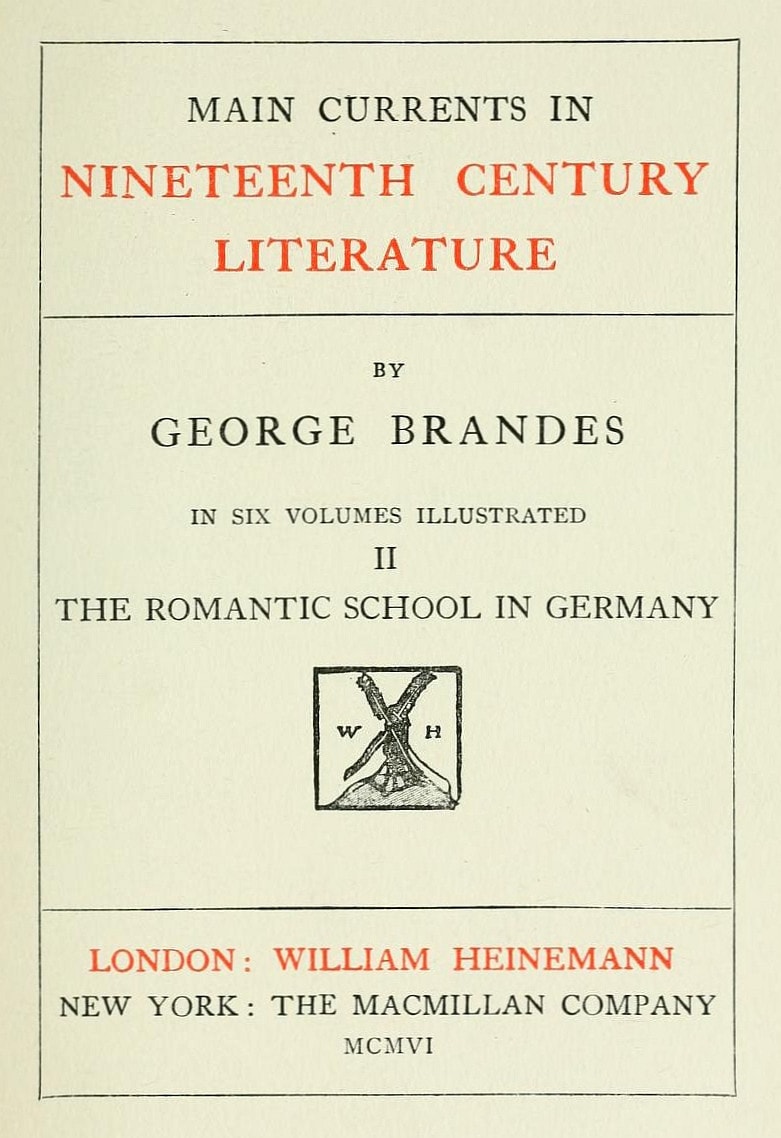
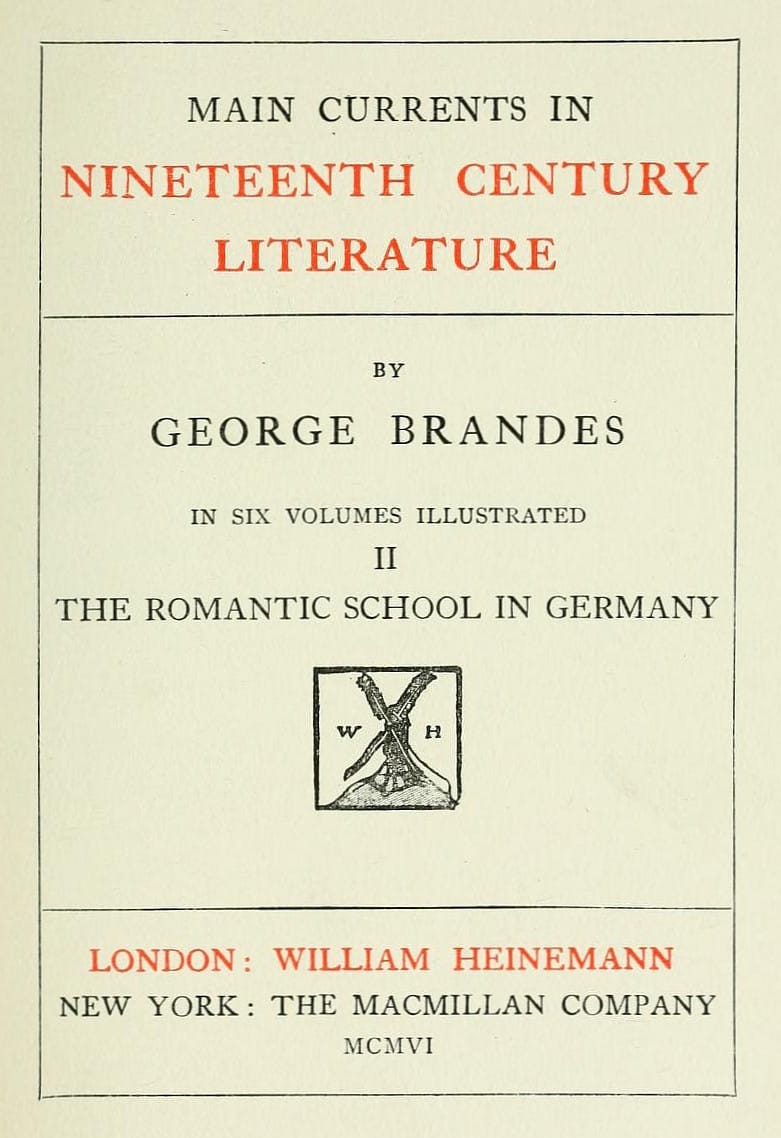
Main Currents in Nineteenth Century Literature - 2. the Romantic School in Germany
1902
Main Currents in Nineteenth Century Literature - 2. the Romantic School in Germany
1902
Translated by Mary Morison
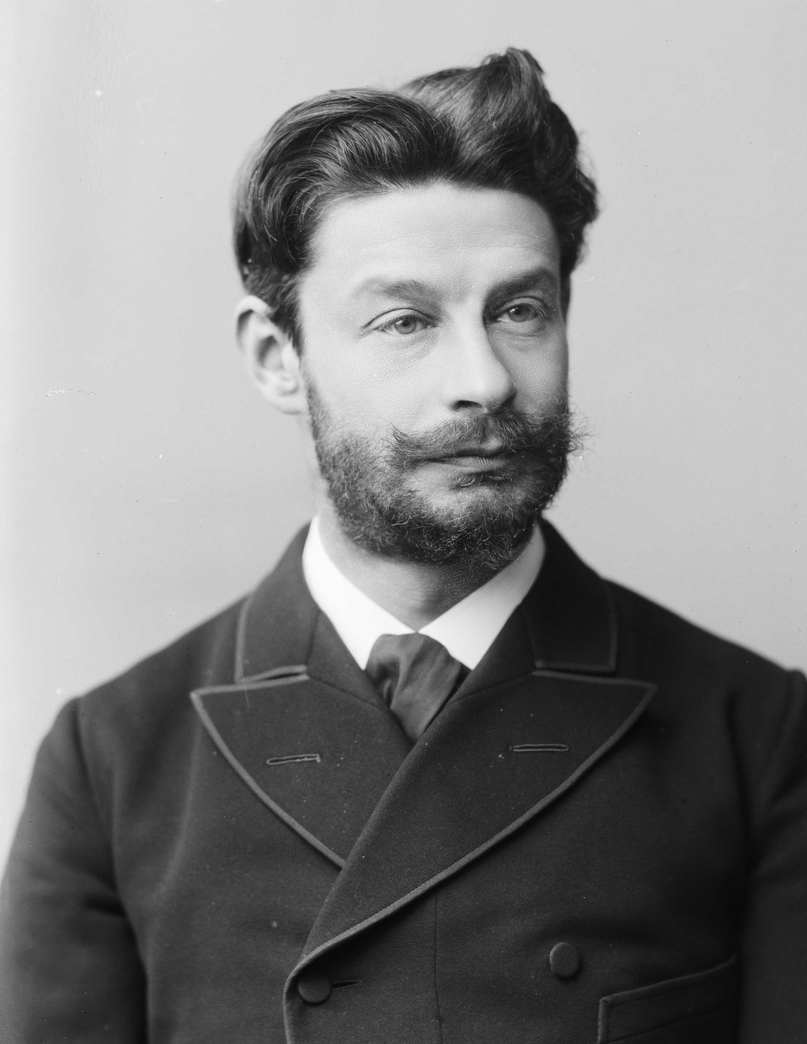
Georg Brandes arrived at German Romanticism as an outsider a Dane gazes at a foreign shore, and this distance proved generative rather than disqualifying. Written in 1902, this critical study illuminates a literary movement that emerged as a rebellion against Enlightenment rationalism, seeking instead to plumb the depths of individual consciousness, folk mythology, and the sublime forces of nature. Brandes traces the movement through its key architects: the brothers Schlegel, Novalis, Tieck, and others who believed poetry could restore what industrializing Europe had fractured. What distinguishes Brandes's approach is his insistence that literature cannot be severed from the emotional and historical currents that birthed it; he reads Romantic works as documents of longing, of a civilization grappling with its own disenchantment. The book functions both as literary history and as argument: Brandes contends that German Romanticism, for all its mysticism and medievalism, was fundamentally engaged with the psychological anxieties of modernity. For readers seeking to understand how one of Europe's most intellectually volatile periods understood itself, Brandes offers a critic's guide that is rigorous, sympathetic, and alive to the movement's continuing reverberations in modern consciousness.
Editions
Link to this book
Add a free, dofollow link to Lex on your blog, forum, syllabus, or reading list.

<a href="https://lex-books.com/book/main-currents-in-nineteenth-century-literature-2-the-romantic-school-in-germany-661f7c84-f40e-4e50-9e00-180c0419a648"><img src="https://lex-books.com/badges/read-on-lex.svg" alt="Read Main Currents in Nineteenth Century Literature - 2. the Romantic School in Germany by Georg Brandes free on Lex" width="160" height="40"></a>[](https://lex-books.com/book/main-currents-in-nineteenth-century-literature-2-the-romantic-school-in-germany-661f7c84-f40e-4e50-9e00-180c0419a648)[url=https://lex-books.com/book/main-currents-in-nineteenth-century-literature-2-the-romantic-school-in-germany-661f7c84-f40e-4e50-9e00-180c0419a648][img]https://lex-books.com/badges/read-on-lex.svg[/img][/url]Read Main Currents in Nineteenth Century Literature - 2. the Romantic School in Germany by Georg Brandes free on Lex: https://lex-books.com/book/main-currents-in-nineteenth-century-literature-2-the-romantic-school-in-germany-661f7c84-f40e-4e50-9e00-180c0419a648Cite this book
Reading this edition for a paper or guide? Copy a citation.
Brandes, Georg. Main Currents in Nineteenth Century Literature - 2. the Romantic School in Germany. Lex, lex-books.com/book/main-currents-in-nineteenth-century-literature-2-the-romantic-school-in-germany-661f7c84-f40e-4e50-9e00-180c0419a648.Brandes, G. (1902). Main Currents in Nineteenth Century Literature - 2. the Romantic School in Germany. Lex. https://lex-books.com/book/main-currents-in-nineteenth-century-literature-2-the-romantic-school-in-germany-661f7c84-f40e-4e50-9e00-180c0419a648Brandes, Georg. Main Currents in Nineteenth Century Literature - 2. the Romantic School in Germany. Lex. https://lex-books.com/book/main-currents-in-nineteenth-century-literature-2-the-romantic-school-in-germany-661f7c84-f40e-4e50-9e00-180c0419a648.