Anatole France
1908
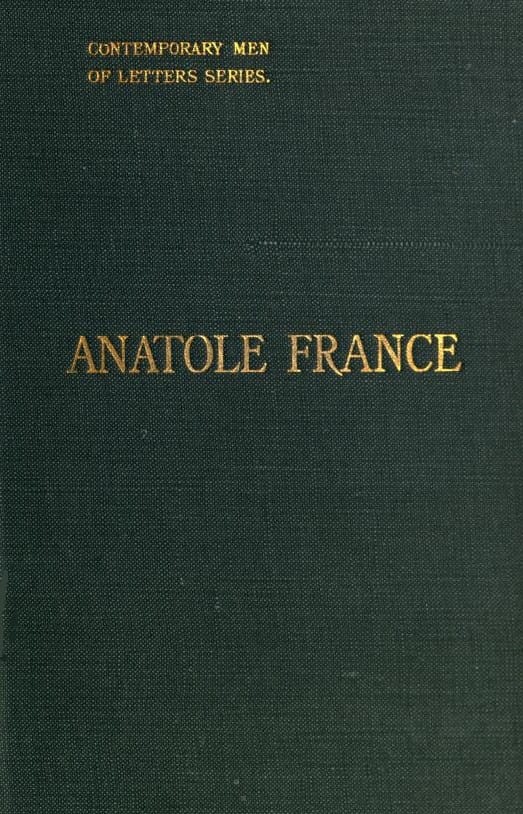
Georg Brandes, the Danish critic who fundamentally reshaped how we think about literary biography, turned his attention to Anatole France in 1908, capturing a writer at the height of his powers. France had emerged from the shadow of earlier literary giants to become what his contemporaries called the ideal French man of letters, a refinement of taste and wit that concealed genuine moral urgency. Brandes traces this journey from France's origins as a Parisian bookseller's son, through his elegant early satires, to his later embrace of social justice. The biography illuminates France's complex stance toward democracy, socialism, and religion: skeptical yet compassionate, ironic yet deeply engaged. Brandes offers a portrait written from one literary craftsman to another, examining how France's bookshop childhood shaped his aesthetic sensibility and his fundamental humanism. This early assessment proved remarkably prescient, France would win the Nobel Prize in 1921, and remains essential reading for anyone interested in the making of a modern literary reputation. The work stands as both a critical assessment and a period document, capturing how one of France's keenest observers understood the ironist who would become a champion of the human experience.
Editions
Link to this book
Add a free, dofollow link to Lex on your blog, forum, syllabus, or reading list.

<a href="https://lex-books.com/book/anatole-france-6725c0a0-46a5-448d-98c1-ca2343608205"><img src="https://lex-books.com/badges/read-on-lex.svg" alt="Read Anatole France by Georg Brandes free on Lex" width="160" height="40"></a>[](https://lex-books.com/book/anatole-france-6725c0a0-46a5-448d-98c1-ca2343608205)[url=https://lex-books.com/book/anatole-france-6725c0a0-46a5-448d-98c1-ca2343608205][img]https://lex-books.com/badges/read-on-lex.svg[/img][/url]Read Anatole France by Georg Brandes free on Lex: https://lex-books.com/book/anatole-france-6725c0a0-46a5-448d-98c1-ca2343608205Cite this book
Reading this edition for a paper or guide? Copy a citation.
Brandes, Georg. Anatole France. Lex, lex-books.com/book/anatole-france-6725c0a0-46a5-448d-98c1-ca2343608205.Brandes, G. (1908). Anatole France. Lex. https://lex-books.com/book/anatole-france-6725c0a0-46a5-448d-98c1-ca2343608205Brandes, Georg. Anatole France. Lex. https://lex-books.com/book/anatole-france-6725c0a0-46a5-448d-98c1-ca2343608205.