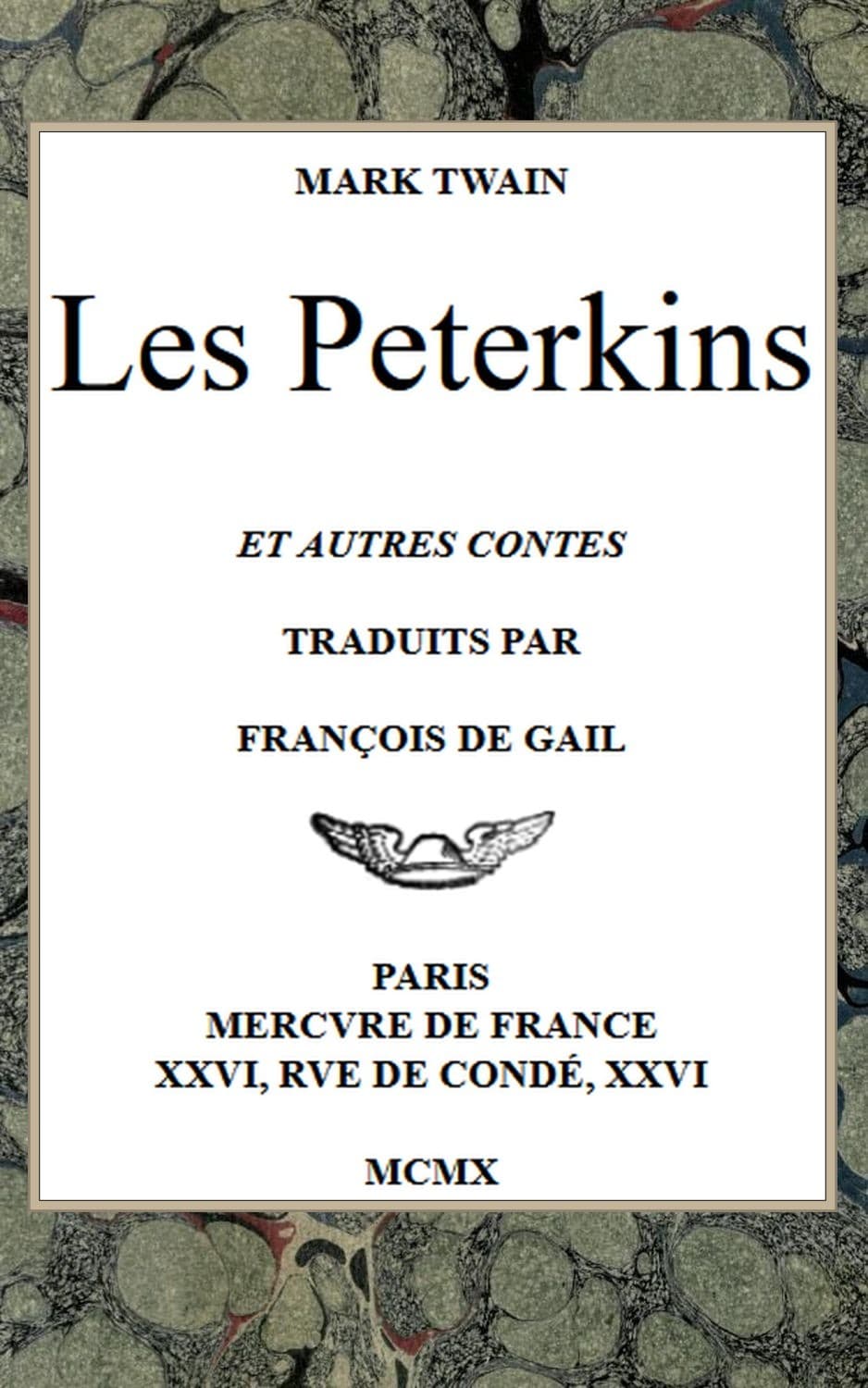
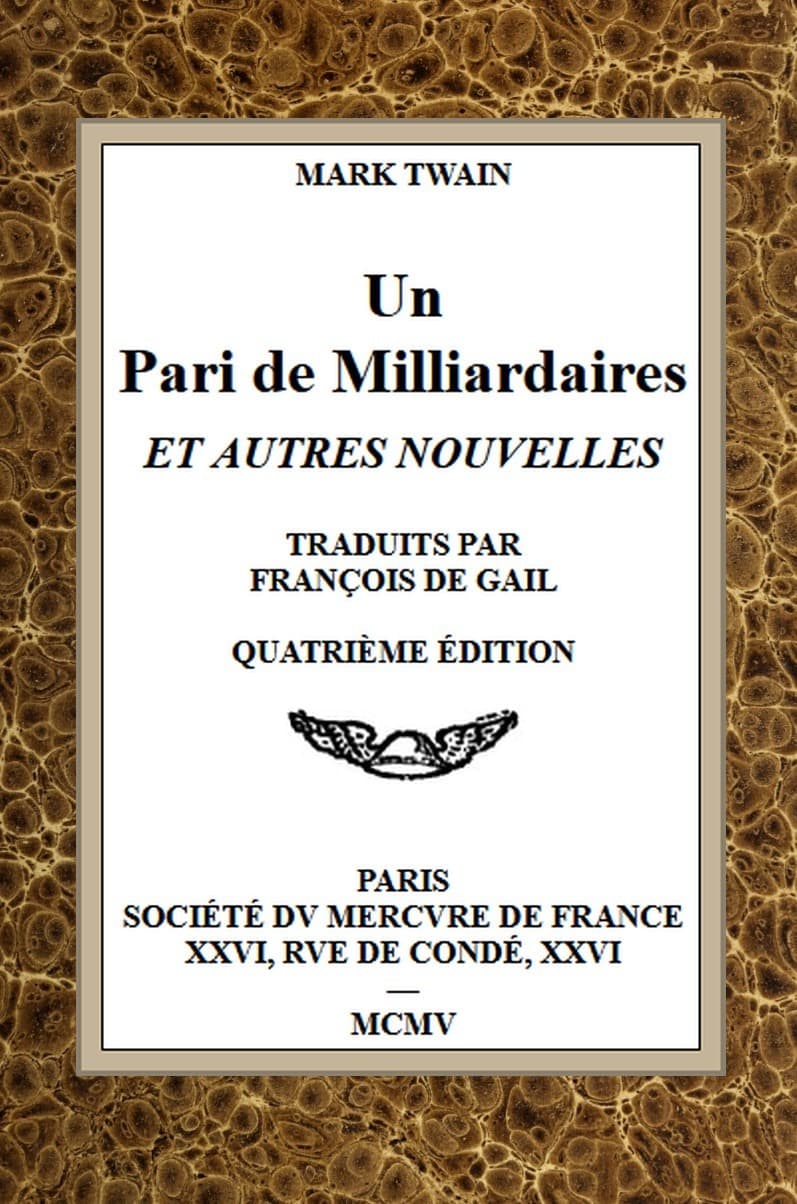
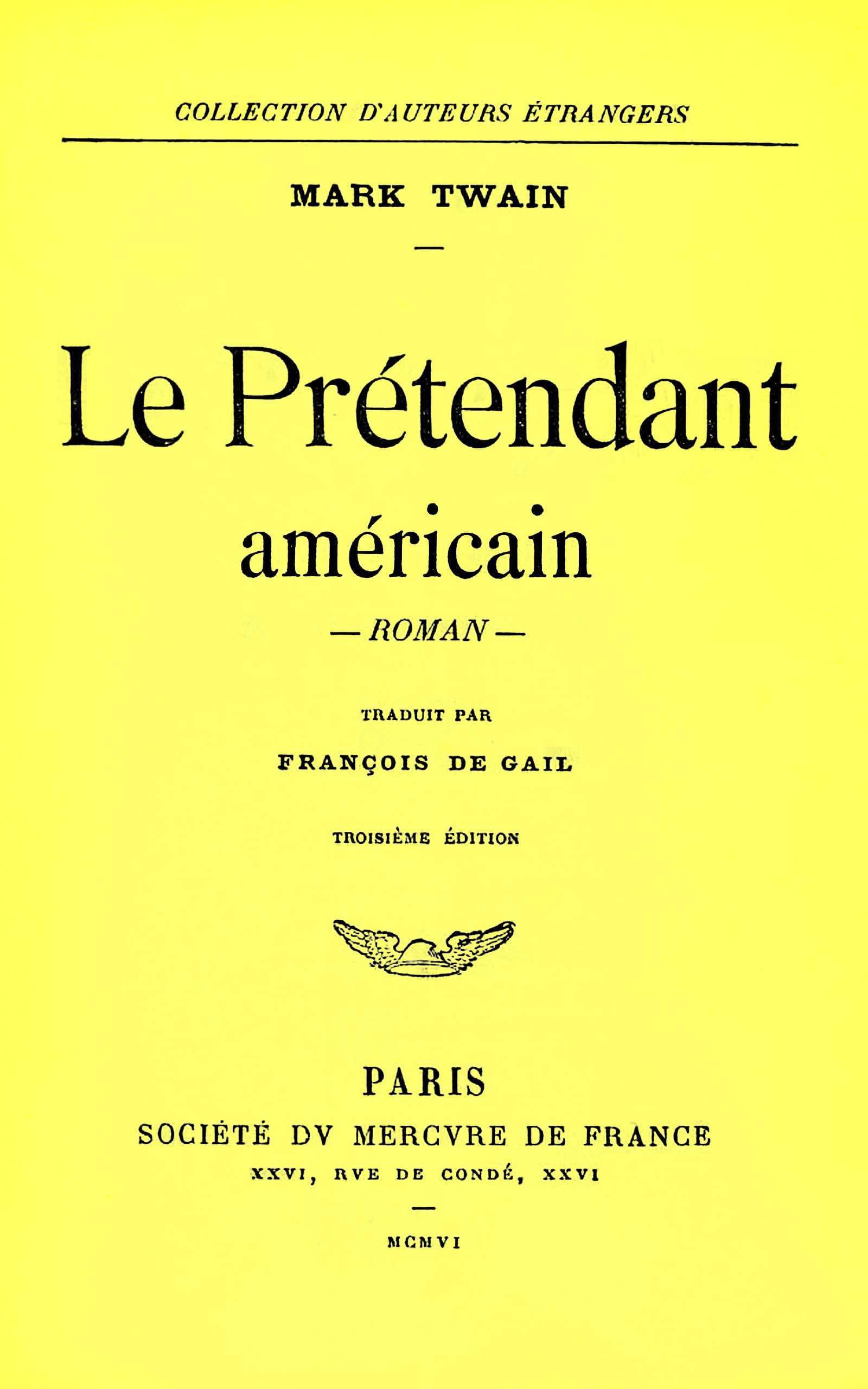
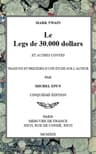
Le Legs De 30.000 Dollars Et Autres Contes
1939
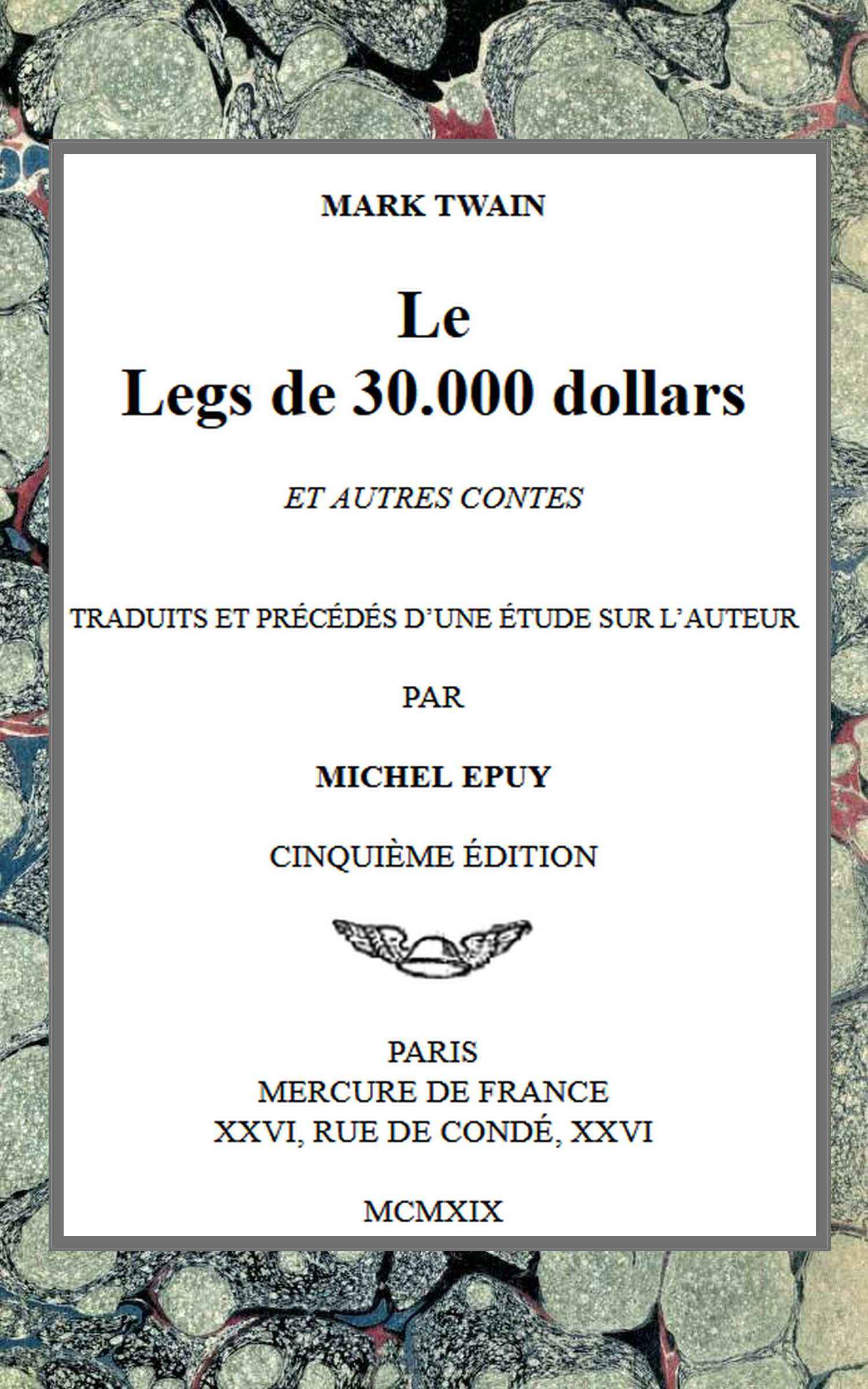
Le Legs De 30.000 Dollars Et Autres Contes
1939
Translated by Michel Epuy
Le Legs De 30.000 Dollars Et Autres Contes is a collection of short stories by Mark Twain, first published in 1939. The central tale follows Saladin Foster and his wife Electra, who receive a letter announcing a potential inheritance of $30,000 from a distant relative, leading to humorous and thought-provoking reflections on wealth and societal expectations. This work combines humor with socioeconomic commentary, illustrating how dreams of fortune can distract from core values and relationships. The stories are notable for their critique of American social life and customs in the early 20th century.
Editions
X-Ray
“In the country neighborhood thereabouts, along the dusty roads, one found at intervals the prettiest little cottage homes, snug and cozy, and so cobwebbed with vines snowed thick with roses that the doors and windows were wholly hidden from sight-sign that these were deserted homes, forsaken years ago by defeated and disappointed families who could neither sell them nor give them away.””
— Mark Twain
“It had as many immoralities as the machine of today has virtues. After a year or two I found that it was degrading my character, so I thought I would give it to Howells.””
— Mark Twain
“At the beginning of that interval a type-machine was a curiosity. The person who owned one was a curiosity, too. But now it is the other way about: the person who doesn't own one is a curiosity.””
— Mark Twain
“Had I never loved, I never would have been unhappy; but I turn to Him who can save, and if His wisdom does not will my expected union, I know He will give me strength to bear my lot.””
— Mark Twain
“His wife, Electra, was a capable helpmeet, although”
— Mark Twain
Link to this book
Add a free, dofollow link to Lex on your blog, forum, syllabus, or reading list.

<a href="https://lex-books.com/book/le-legs-de-30-000-dollars-et-autres-contes-a4aea28b-299f-4ded-8bb4-a15b9c43cba7"><img src="https://lex-books.com/badges/read-on-lex.svg" alt="Read Le Legs De 30.000 Dollars Et Autres Contes by Mark Twain free on Lex" width="160" height="40"></a>[](https://lex-books.com/book/le-legs-de-30-000-dollars-et-autres-contes-a4aea28b-299f-4ded-8bb4-a15b9c43cba7)[url=https://lex-books.com/book/le-legs-de-30-000-dollars-et-autres-contes-a4aea28b-299f-4ded-8bb4-a15b9c43cba7][img]https://lex-books.com/badges/read-on-lex.svg[/img][/url]Read Le Legs De 30.000 Dollars Et Autres Contes by Mark Twain free on Lex: https://lex-books.com/book/le-legs-de-30-000-dollars-et-autres-contes-a4aea28b-299f-4ded-8bb4-a15b9c43cba7Cite this book
Reading this edition for a paper or guide? Copy a citation.
Twain, Mark. Le Legs De 30.000 Dollars Et Autres Contes. Lex, lex-books.com/book/le-legs-de-30-000-dollars-et-autres-contes-a4aea28b-299f-4ded-8bb4-a15b9c43cba7.Twain, M. (1939). Le Legs De 30.000 Dollars Et Autres Contes. Lex. https://lex-books.com/book/le-legs-de-30-000-dollars-et-autres-contes-a4aea28b-299f-4ded-8bb4-a15b9c43cba7Twain, Mark. Le Legs De 30.000 Dollars Et Autres Contes. Lex. https://lex-books.com/book/le-legs-de-30-000-dollars-et-autres-contes-a4aea28b-299f-4ded-8bb4-a15b9c43cba7.