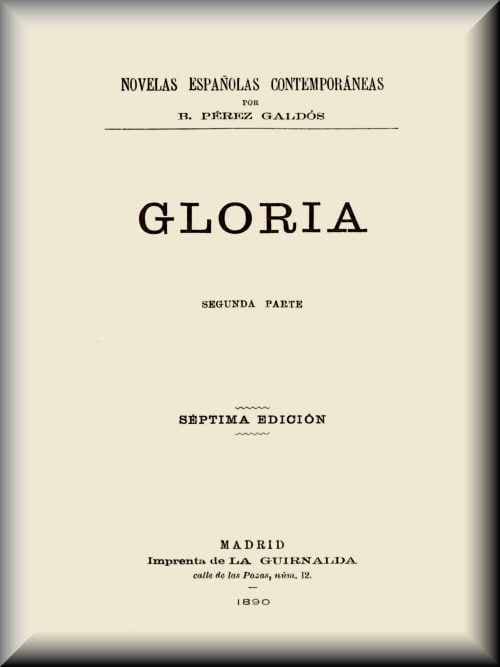
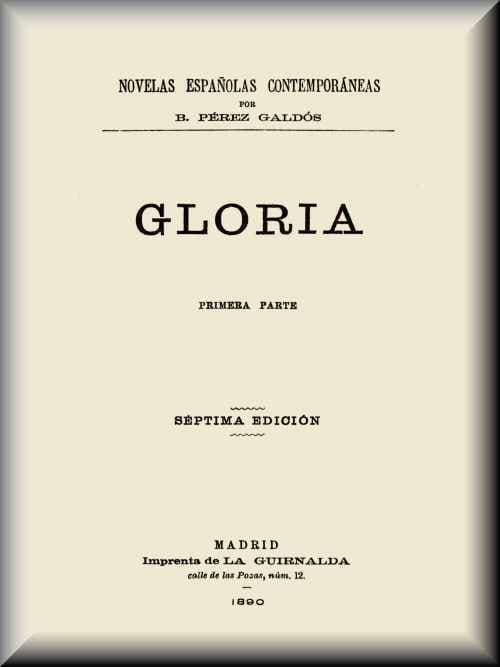
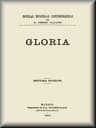
Gloria (novela Completa)
1876
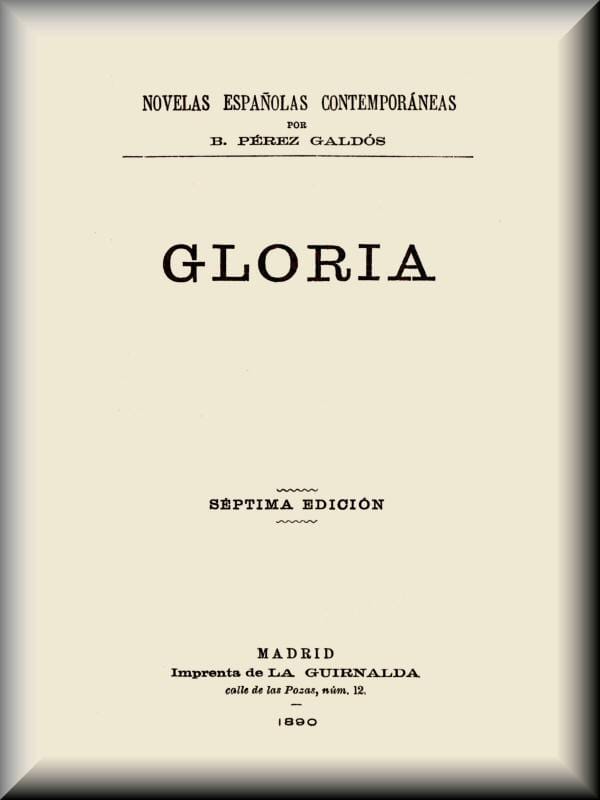
Set in the sixteenth century, nearly four hundred years after Spain expelled its Jewish population, Benito Pérez Galdós's masterpiece tells the story of Gloria, a devout Catholic woman in the fictional coastal village of Ficóbriga. When a shipwreck survivor named Daniel washes ashore, Gloria's father and her uncle the bishop welcome him into their home, unaware that their guest is Jewish, not the Protestant they presume. As her uncle devotes himself to converting the "heretic," Gloria and Daniel fall into an impossible love, one that places a faithful daughter against the very pillars of her family's faith and identity. Written in 1877, just before Spain would finally allow Jews to return to its shores, Galdós composed this novel without ever having met a Jewish person, a stunning act of imaginative empathy that reads like a desperate plea for tolerance cast backward through the centuries. The novel unfolds as both a passionate romance and a fierce argument against religious fanaticism, building toward a conclusion that remains devastating precisely because it is inevitable. For readers who believe literature can intervene in history, this is Galdós's proof.
Editions
Link to this book
Add a free, dofollow link to Lex on your blog, forum, syllabus, or reading list.

<a href="https://lex-books.com/book/gloria-novela-completa-3494a5b7-aced-4a26-b02a-0941bf508a0c"><img src="https://lex-books.com/badges/read-on-lex.svg" alt="Read Gloria (novela Completa) by Benito Pérez Galdós free on Lex" width="160" height="40"></a>[](https://lex-books.com/book/gloria-novela-completa-3494a5b7-aced-4a26-b02a-0941bf508a0c)[url=https://lex-books.com/book/gloria-novela-completa-3494a5b7-aced-4a26-b02a-0941bf508a0c][img]https://lex-books.com/badges/read-on-lex.svg[/img][/url]Read Gloria (novela Completa) by Benito Pérez Galdós free on Lex: https://lex-books.com/book/gloria-novela-completa-3494a5b7-aced-4a26-b02a-0941bf508a0cCite this book
Reading this edition for a paper or guide? Copy a citation.
Galdós, Benito Pérez. Gloria (novela Completa). Lex, lex-books.com/book/gloria-novela-completa-3494a5b7-aced-4a26-b02a-0941bf508a0c.Galdós, B. P. (1876). Gloria (novela Completa). Lex. https://lex-books.com/book/gloria-novela-completa-3494a5b7-aced-4a26-b02a-0941bf508a0cGaldós, Benito Pérez. Gloria (novela Completa). Lex. https://lex-books.com/book/gloria-novela-completa-3494a5b7-aced-4a26-b02a-0941bf508a0c.