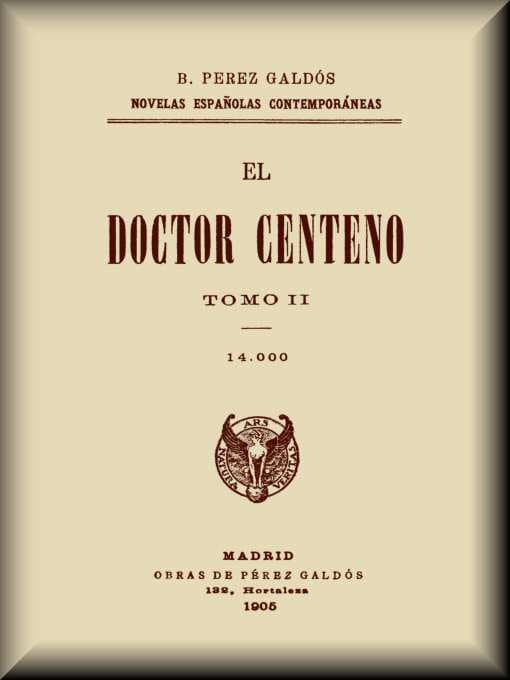
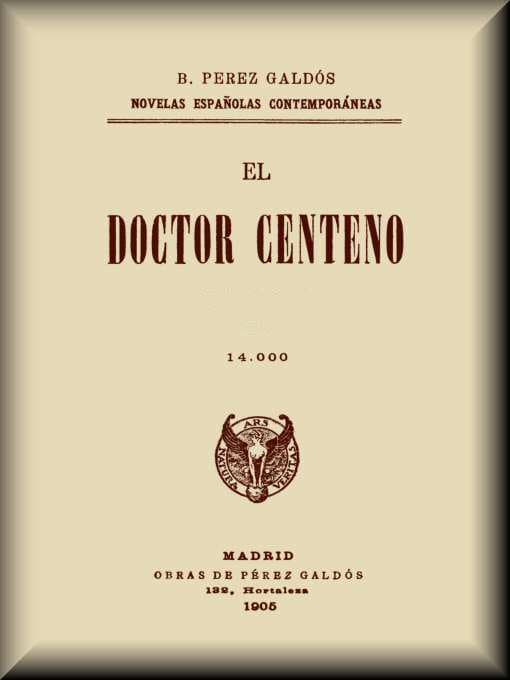
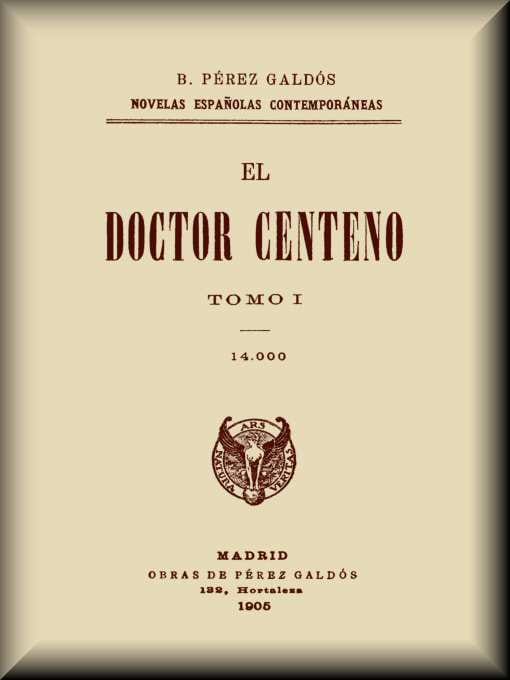
El Doctor Centeno (tomo I)
1905
The novel opens with one of the most striking images in Spanish literature: a ragged boy of fourteen, barely conscious in a Madrid gutter, undone by his first bad cigar. This is Felipe Centeno, and the two law students who stumble upon him Alejandro Miquis and Juan Antonio de Cienfuegos are about to learn that compassion has consequences in the Spain of 1863. What unfolds is not a single story but a living portrait of an era, where multiple destinies intersect on the streets of a city poised between old Spain and the modern age. We meet Pedro Polo, tracing his descent into the priesthood and his entanglement with the beautiful Amparo Sánchez Emperador; we encounter Ido del Sagrario, a humble clerk whose secret ambition to become a writer will echo through Galdós's later novels; and in a brief, chilling cameo, we glimpse the usurer Torquemada, that shadow who will later consume so many lives. Felipe himself, the would-be doctor, serves as something more than a protagonist: he is the eyes through which we witness a particular moment in Spanish history and the particular human creatures it produces. Galdós builds no neat plot but rather an intricate social architecture, each character a study in ambition, need, and the invisible forces that shape a life. This is realism at its most generous and unflinching, a novel that insists on the dignity of the poor and the complexity of the systems that keep them poor.
Editions
Link to this book
Add a free, dofollow link to Lex on your blog, forum, syllabus, or reading list.

<a href="https://lex-books.com/book/el-doctor-centeno-tomo-i-479d7a3a-5be6-4a21-9da2-47c693988048"><img src="https://lex-books.com/badges/read-on-lex.svg" alt="Read El Doctor Centeno (tomo I) by Benito Pérez Galdós free on Lex" width="160" height="40"></a>[](https://lex-books.com/book/el-doctor-centeno-tomo-i-479d7a3a-5be6-4a21-9da2-47c693988048)[url=https://lex-books.com/book/el-doctor-centeno-tomo-i-479d7a3a-5be6-4a21-9da2-47c693988048][img]https://lex-books.com/badges/read-on-lex.svg[/img][/url]Read El Doctor Centeno (tomo I) by Benito Pérez Galdós free on Lex: https://lex-books.com/book/el-doctor-centeno-tomo-i-479d7a3a-5be6-4a21-9da2-47c693988048Cite this book
Reading this edition for a paper or guide? Copy a citation.
Galdós, Benito Pérez. El Doctor Centeno (tomo I). Lex, lex-books.com/book/el-doctor-centeno-tomo-i-479d7a3a-5be6-4a21-9da2-47c693988048.Galdós, B. P. (1905). El Doctor Centeno (tomo I). Lex. https://lex-books.com/book/el-doctor-centeno-tomo-i-479d7a3a-5be6-4a21-9da2-47c693988048Galdós, Benito Pérez. El Doctor Centeno (tomo I). Lex. https://lex-books.com/book/el-doctor-centeno-tomo-i-479d7a3a-5be6-4a21-9da2-47c693988048.