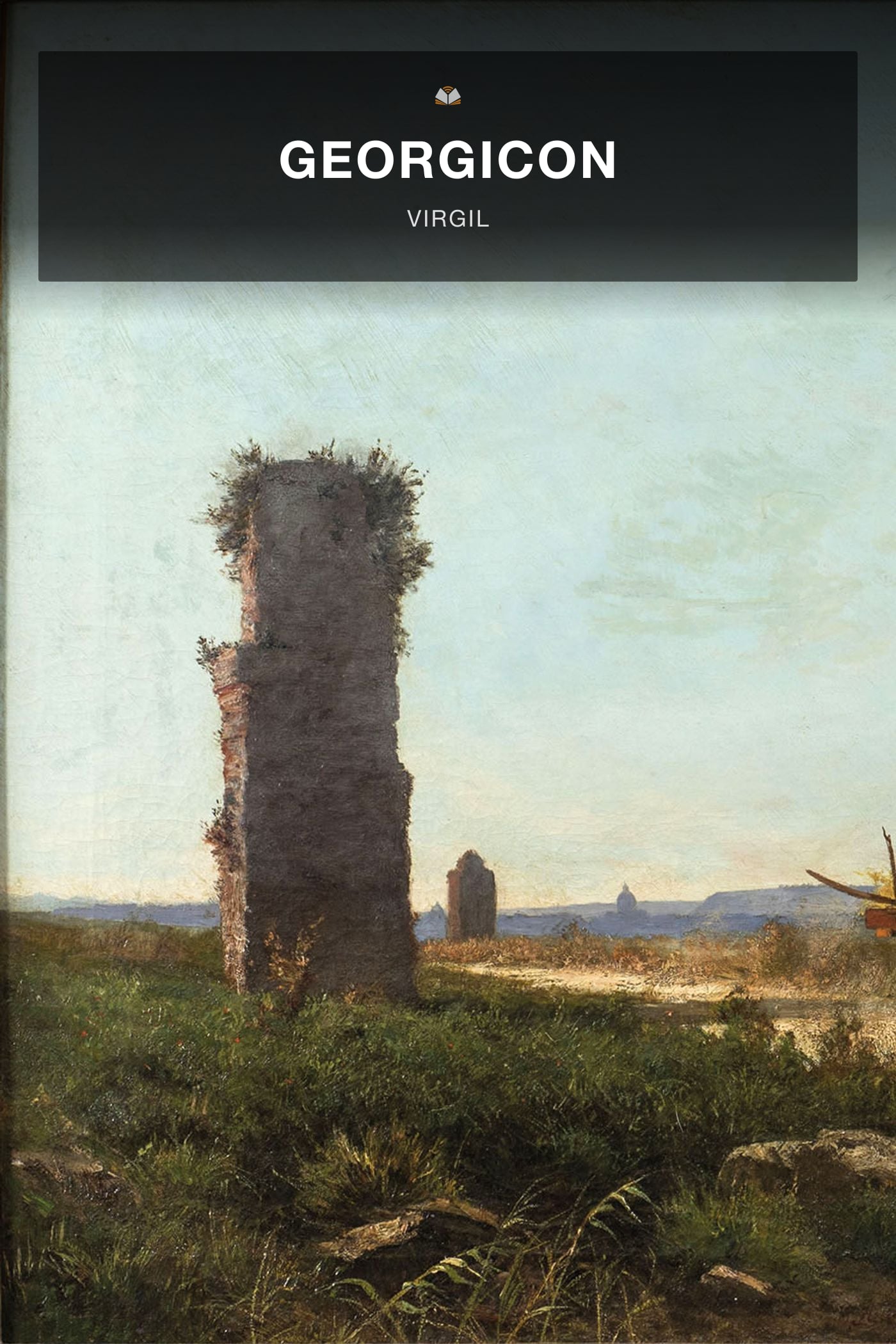
Georgicon
1988
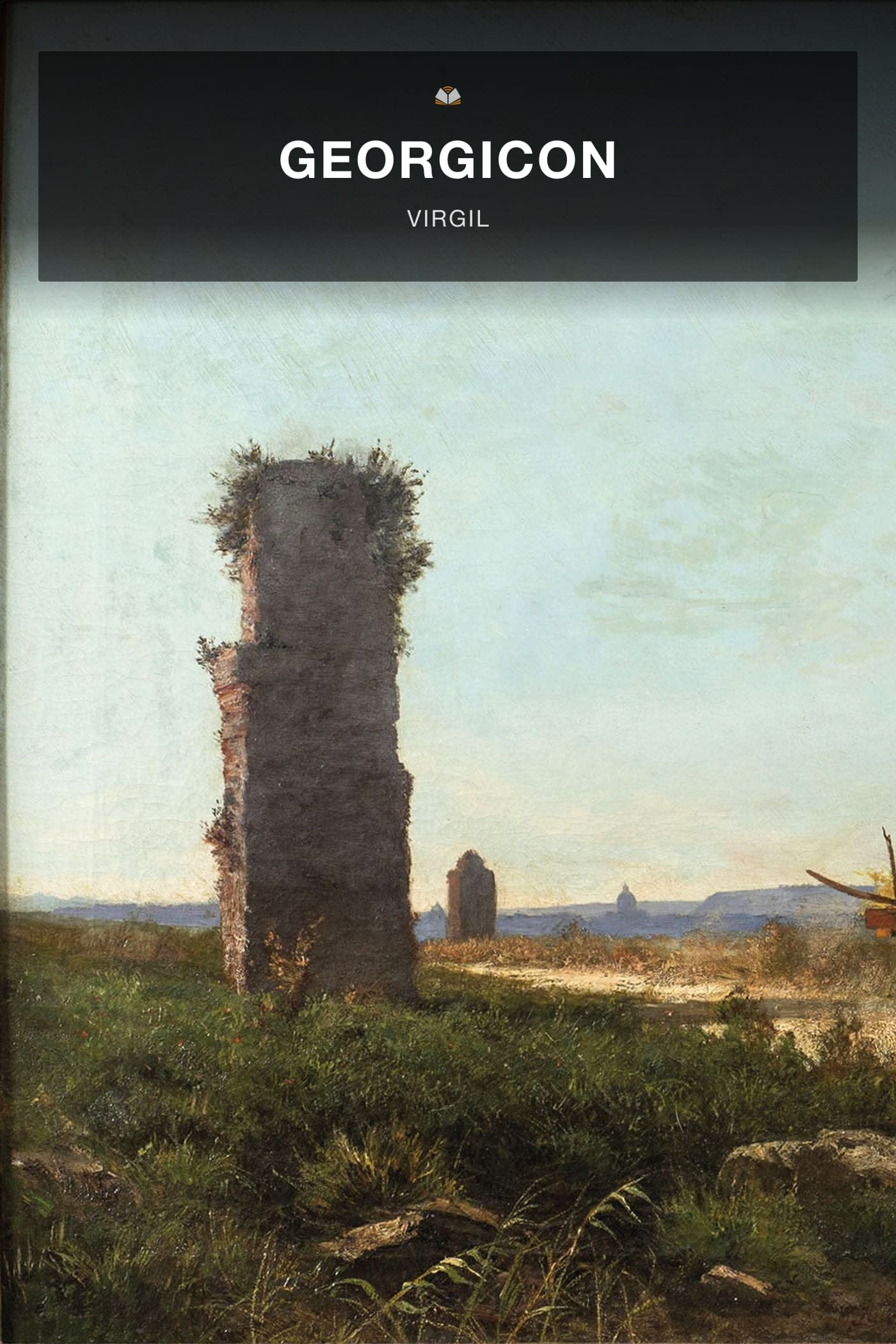
Written in 29 BCE, when Rome was still bleeding from civil war, Virgil composed this four-book ode to working the land as an act of faith in civilized life. The Georgics is less a farming manual than a meditation on what human beings owe to the earth and what the earth, in turn, gives back. Book One follows the grain crops through the seasons, the hard arithmetic of ploughing and harvest. Book Two turns to trees and vines, the slow patience of the olive and the grape. Book Three tending to cattle and horses, the beauty and terror of animal life. Book Four, most famously, celebrates the honeybee, that puzzling republic of the field, as Virgil meditates on the fragility of civilization itself. Throughout, the verse moves with an almost unbearable grace, each line a small miracle of sound. This is ancient wisdom that reads like poetry first and instruction second: that labor ennobles, that nature rewards patience, that rootedness in the soil is the only foundation for anything worth building. It influenced Dante, influenced Milton, influenced every poet who ever wrote about the country. It will make you want to put your hands in dirt.
Editions
X-Ray
“Happy the Man, who, studying Nature's Laws, Thro' known Effects can trace the secret Cause.””
— Virgil
“What madness destroyed me and you, Orpheus?””
— Virgil
“Fugit irreparabile tempus.””
— Virgil
“Ingentis animos angusto in pectore versant.””
— Virgil
“Felix qui potuit rerum cognoscere causas, atque metus omnis et inexorabile fatumsubiecit pedibus strepitumque Acherontis auari.Felix qui potuit rerum cognoscere causas, atque metus omnis et inexorabile fatumsubiecit pedibus strepitumque Acherontis auari.(on Lucretius)””
— Virgil
“Sed fugit interea fugit irreparabile tempus, singula dum capti circumvectamur amore””
— Virgil
“Αυτά γιά τ'όργωμα της γης καί γιά τήν επιμέλειαΤων ζωντανών εγώ έψαλλα, καί γιά τά δέντρα ακόμα,Όταν ο μέγας Καίσαρας τινάζει του πολέμουΤ'αστροπελέκι στό βαθύν Ευφράτη και χαρίζειΝόμους στούς πρόθυμους λαούς νικώντας, και το δρόμοΑρχίζει πρός τόν Όλυμπο. Καί τόν καιρόν εκείνονΕμένα τό Βεργίλιο, που εμέστωνα στές τέχνεςΆδοξης σκόλης η γλυκειά μ'εθρεφε Παρθενόπη,Εμέ που παιγνιδίζοντας των πιστικών τραγούδιαΕίχα τονίσει μία φορά καί τολμηρό κοπέλλι,Τίτυρε, κάτου απ'της οξιάς τή στέγη εσέ είχα ψάλει.””
— Virgil
“Γιά τούς θριάμβους των θνητών, που γιά κείνους το δίκηοΑλλάχτηκε καί τ'άδικο: κ' ήρθαν στόν κόσμο τόσοιΠολέμοι καί τά κρίματα τόσες μορφές ελάβαν.Ούτε ένας, καθώς πρέπεται, τ' αλέτρι δέν τιμάει,Στρατιώτες σέρνονται οι γεωργοί, χερσόνουν τά χωράφια,Και λυόνονται τά γυριστά δρεπάνια γιά νά γένουνΣκληρά σπαθιά. Από εδώ κινά τόν πόλεμον ο Ευφράτης,Η Γερμανία από τά εκεί και τ'άρματα σηκόνουνΟι χώρες οι γειτόνισσες χαλώντας τές συνθήκες.Καί ανεύλαβος λυσσομανά σ'όλον τόν κόσμο ο Άρης,Καθώς, όταν τά τέθριππα χυθούν από τό κλείσμα,Περσεύουν πάντα τήν ορμή, και τον αμαξολάτη,Όπου τού κάκου ανατραβά τά γκέμια, συνεπαίρνουνΤ'αλόγατα καί στά λουριά δέν πείθεται τ'αμάξι.(Μετάφραση: Κωνσταντίνος Θεοτόκης, 1909)””
— Virgil
Link to this book
Add a free, dofollow link to Lex on your blog, forum, syllabus, or reading list.

<a href="https://lex-books.com/book/georgicon-dca8b61b-3dde-420a-93cf-b7cd0d157982"><img src="https://lex-books.com/badges/read-on-lex.svg" alt="Read Georgicon by Virgil free on Lex" width="160" height="40"></a>[](https://lex-books.com/book/georgicon-dca8b61b-3dde-420a-93cf-b7cd0d157982)[url=https://lex-books.com/book/georgicon-dca8b61b-3dde-420a-93cf-b7cd0d157982][img]https://lex-books.com/badges/read-on-lex.svg[/img][/url]Read Georgicon by Virgil free on Lex: https://lex-books.com/book/georgicon-dca8b61b-3dde-420a-93cf-b7cd0d157982Cite this book
Reading this edition for a paper or guide? Copy a citation.
Virgil. Georgicon. Lex, lex-books.com/book/georgicon-dca8b61b-3dde-420a-93cf-b7cd0d157982.Virgil (1988). Georgicon. Lex. https://lex-books.com/book/georgicon-dca8b61b-3dde-420a-93cf-b7cd0d157982Virgil. Georgicon. Lex. https://lex-books.com/book/georgicon-dca8b61b-3dde-420a-93cf-b7cd0d157982.