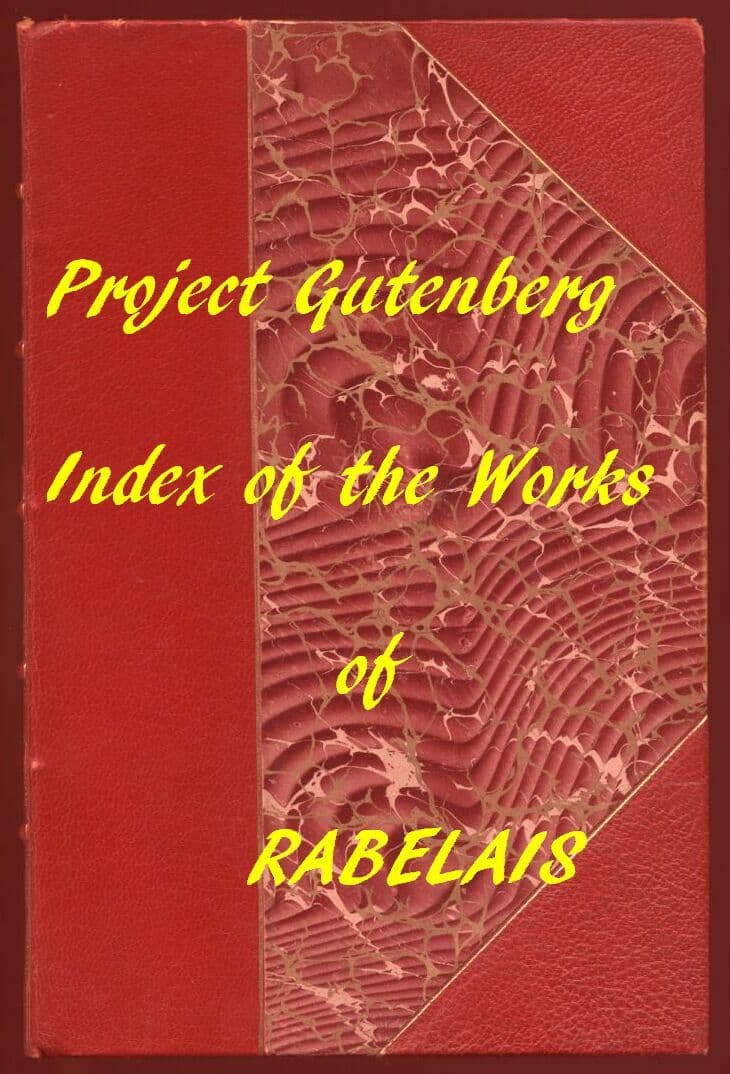
Gargantua and Pantagruel
1611
Gargantua and Pantagruel
1611
Translated by Peter Anthony Motteux
Rabelais wrote a book so obscene, so erudite, so relentlessly inventive that the Sorbonne banned it, and it became one of the founding texts of the modern novel. Here, giants devour entire abbeys in a single meal, philosophers debate with breathtaking learning, and language itself seems to be invented as you read. The humor is filthy, the stakes are profound, and the wit cuts like a blade through the pretensions of church, state, and academy. The narrative follows Gargantua and his son Pantagruel across five books of increasingly wild adventure. Gargantua begins as a dirty young giant before transforming into an enlightened prince; Pantagruel journeys with his companion Panurge, a mad, word-spinning rogue whose endless questions about marriage, debt, and honor spiral into some of the funniest and most profound passages in Western literature. Together they satirize lawyers, theologians, generals, and kings with a gleeful cruelty that still lands today. This is Renaissance humanism as dirty joke, philosophy as drinking song. The book gave English 'gargantuan' and 'pantagruelism':buffoonery with a serious purpose. It endures because Rabelais proved that laughter could be sacred and profane at once, that the body and mind were not enemies, and that the greatest rebellion is often simply to make the reader laugh until they choke.
Editions
X-Ray
“Seeing how sorrow eats you, defeats you.I'd rather write about laughing than crying,For laughter makes men human, and courageous.””
— François Rabelais
“Readers, friends, if you turn these pagesPut your prejudice aside,For, really, there's nothing here that's outrageous,Nothing sick, or bad”
— François Rabelais
“the wise may be instructed by a fool””
— François Rabelais
“it behoves you to develop a sagacious flair for sniffing and smelling out and appreciating such fair and fatted books, to be swiff: in pursuit and bold in the attack, and then, by careful reading and frequent meditation, to crack open the bone and seek out the substantificial marrow – that is to say, what I mean by such Pythagorean symbols – sure in the hope that you will be made witty and wise by that reading; for you will discover therein a very different savour and a more hidden instruction which will reveal to you the highest hidden truths and the most awesome mysteries””
— François Rabelais
“This is the true nature of gratitude. Time gnaws and diminishes all things, but it increases and adds to our good deeds: anytime we have extended a generous hand to a rational human being, that goodness keeps growing and glowing in the man's heart, forever remembered, constantly contemplated.””
— François Rabelais
“Do What Thou Wilt;because men that are free, well-born, well-bred, and conversant in honest companies, have naturally an instinct and spur that prompteth them unto virtuous actions, and withdraws them from vice, which is called honour. Those same men, when by base subjection and constraint they are brought under and kept down, turn aside from that noble disposition by which they formerly were inclined to virtue, to shake off and break that bond of servitude wherein they are so tyrannously enslaved; for it is agreeable with the nature of man to long after things forbidden and to desire what is denied us.””
— François Rabelais
“there are more fools than wise men in all societies, and the larger party always gains the upper hand””
— François Rabelais
“This year there will be an eclipse of the Moon on the fourth day of August.9 Saturn will be retrograde; Venus, direct; Mercury, variable. And a mass of other planets will not proceed as they used to.10 As a result, crabs this year will walk sideways, rope-makers work backwards, stools end up on benches, and pillows be found at the foot of the bed;11 many men’s bollocks will hang down for lack of a game-bag;12 the belly will go in front and the bum be the first to sit down; nobody will find the bean in their Twelfth Night cake; not one ace will turn up in a flush; the dice will never do what you want, however much you may flatter them;13 and the beasts will talk in sundry places.””
— François Rabelais
“Advice to ReadersGood friends who come to read this book, Strip yourselves first of affectation; Do not assume a pained, shocked look, For it contains no foul infection, Yet teaches you no great perfection, But lessons in the mirthful art, The only subject for my heart. When I see grief consume and rotYou, mirth's my theme and tears are not, For laughter is man's proper lot.””
— François Rabelais
Link to this book
Add a free, dofollow link to Lex on your blog, forum, syllabus, or reading list.

<a href="https://lex-books.com/book/gargantua-and-pantagruel-4a5d37d3-8d5b-4f17-a100-308d4e539a12"><img src="https://lex-books.com/badges/read-on-lex.svg" alt="Read Gargantua and Pantagruel by François Rabelais free on Lex" width="160" height="40"></a>[](https://lex-books.com/book/gargantua-and-pantagruel-4a5d37d3-8d5b-4f17-a100-308d4e539a12)[url=https://lex-books.com/book/gargantua-and-pantagruel-4a5d37d3-8d5b-4f17-a100-308d4e539a12][img]https://lex-books.com/badges/read-on-lex.svg[/img][/url]Read Gargantua and Pantagruel by François Rabelais free on Lex: https://lex-books.com/book/gargantua-and-pantagruel-4a5d37d3-8d5b-4f17-a100-308d4e539a12Cite this book
Reading this edition for a paper or guide? Copy a citation.
Rabelais, François. Gargantua and Pantagruel. Lex, lex-books.com/book/gargantua-and-pantagruel-4a5d37d3-8d5b-4f17-a100-308d4e539a12.Rabelais, F. (1611). Gargantua and Pantagruel. Lex. https://lex-books.com/book/gargantua-and-pantagruel-4a5d37d3-8d5b-4f17-a100-308d4e539a12Rabelais, François. Gargantua and Pantagruel. Lex. https://lex-books.com/book/gargantua-and-pantagruel-4a5d37d3-8d5b-4f17-a100-308d4e539a12.