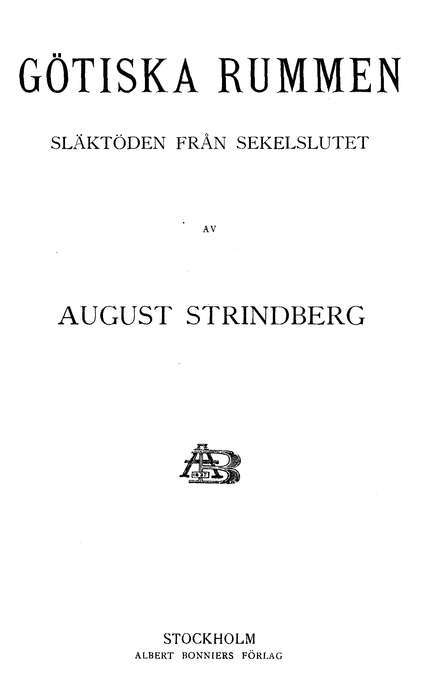
Götiska Rummen: Släktöden Från Sekelslutet
1904
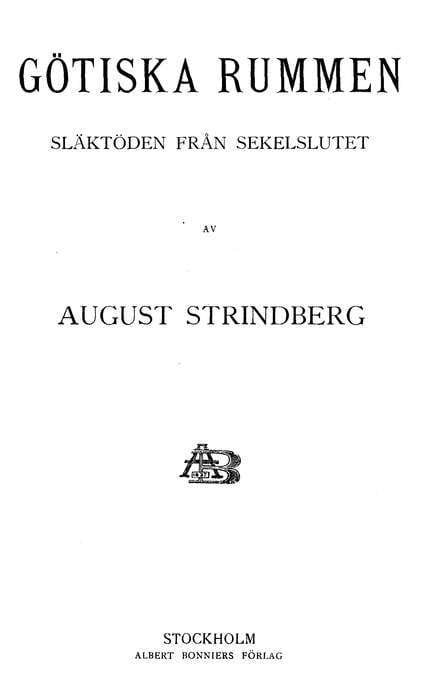
In the autumn of 1904, a gathering unfolds in the dark, ornate chambers of the 'Götiska rummen', a private club where Stockholm's artists and intellectuals have long convened. Architect Kurt Borg and painter Sellén arrive carrying years of grievance and quiet resentment. As the evening deepens, conversation turns confrontational: the recent political landscape, the perceived decay of Swedish art, the wound of Norway's secession. Strindberg dissects his contemporaries with surgical precision, exposing the petty rivalries and grand ideals that coexist uneasily in any artistic circle. This is not merely a novel of ideas but a psychologically charged excavation of male vanity, fading influence, and the terror of becoming irrelevant. Written in Strindberg's final creative decade, it captures a moment when old certainties, about art, nation, and self, were crumbling. For readers who relish the claustrophobic intensity of Ibsen meets late Victorian exhaustion.
Editions
Link to this book
Add a free, dofollow link to Lex on your blog, forum, syllabus, or reading list.

<a href="https://lex-books.com/book/g-tiska-rummen-sl-kt-den-fr-n-sekelslutet-3b74e67b-132b-42d8-9df5-97641fd4c58f"><img src="https://lex-books.com/badges/read-on-lex.svg" alt="Read Götiska Rummen: Släktöden Från Sekelslutet by August Strindberg free on Lex" width="160" height="40"></a>[](https://lex-books.com/book/g-tiska-rummen-sl-kt-den-fr-n-sekelslutet-3b74e67b-132b-42d8-9df5-97641fd4c58f)[url=https://lex-books.com/book/g-tiska-rummen-sl-kt-den-fr-n-sekelslutet-3b74e67b-132b-42d8-9df5-97641fd4c58f][img]https://lex-books.com/badges/read-on-lex.svg[/img][/url]Read Götiska Rummen: Släktöden Från Sekelslutet by August Strindberg free on Lex: https://lex-books.com/book/g-tiska-rummen-sl-kt-den-fr-n-sekelslutet-3b74e67b-132b-42d8-9df5-97641fd4c58fCite this book
Reading this edition for a paper or guide? Copy a citation.
Strindberg, August. Götiska Rummen: Släktöden Från Sekelslutet. Lex, lex-books.com/book/g-tiska-rummen-sl-kt-den-fr-n-sekelslutet-3b74e67b-132b-42d8-9df5-97641fd4c58f.Strindberg, A. (1904). Götiska Rummen: Släktöden Från Sekelslutet. Lex. https://lex-books.com/book/g-tiska-rummen-sl-kt-den-fr-n-sekelslutet-3b74e67b-132b-42d8-9df5-97641fd4c58fStrindberg, August. Götiska Rummen: Släktöden Från Sekelslutet. Lex. https://lex-books.com/book/g-tiska-rummen-sl-kt-den-fr-n-sekelslutet-3b74e67b-132b-42d8-9df5-97641fd4c58f.