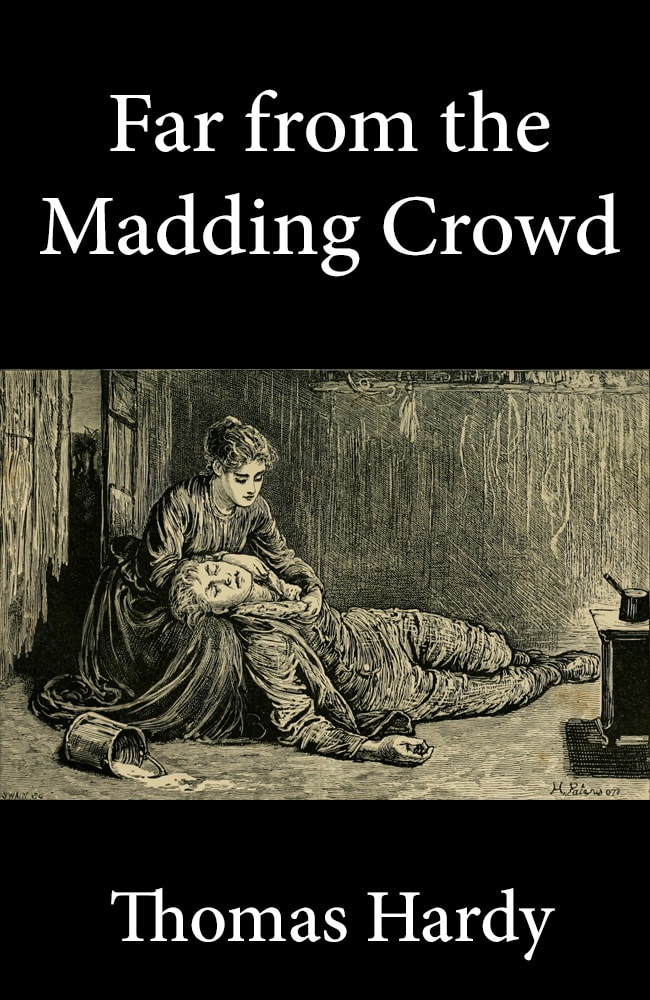
Far from the Madding Crowd
1874
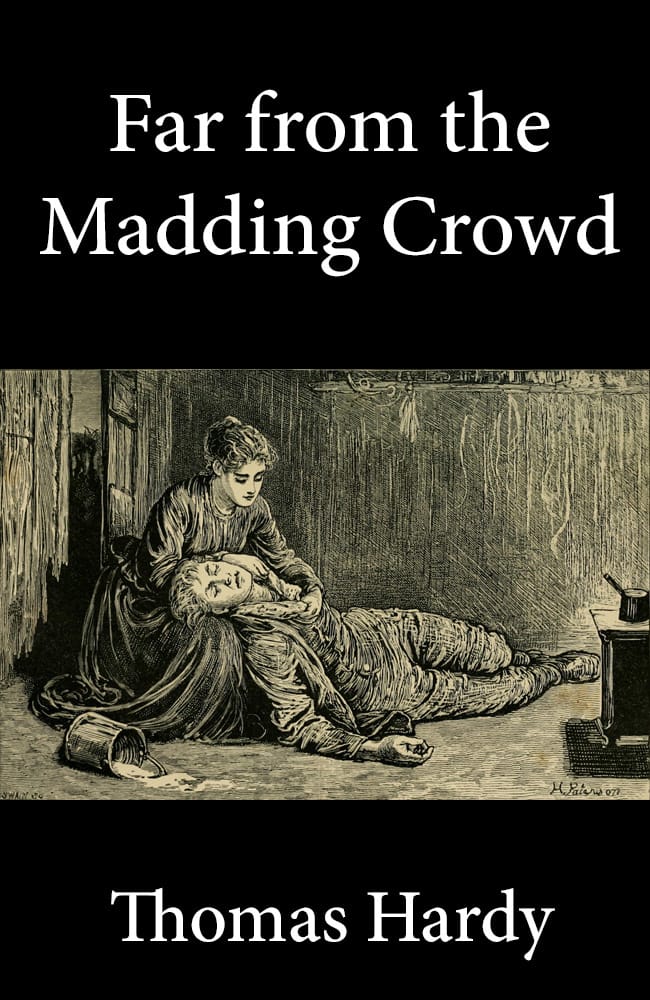
Bathsheba Everdene inherits a farm and arrives in Weatherbury with two things no Victorian woman should possess: money and autonomy. She runs the largest estate in the county with fierce competence, refusing every proposal that would make her property of a husband. But her beauty and boldness draw three very different men into her orbit: Gabriel Oak, the shepherd whose patient devotion goes unrewarded for years; William Boldwood, a wealthy neighbor whose loneliness curdles into obsession; and Sergeant Troy, a charming soldier whose passion conceals something ruthless. Hardy constructs his Wessex with photographic precision, rendering the rhythms of lambing season and harvest festivals as vividly as his characters' interior lives. The novel builds toward a catastrophe that feels both shocking and inevitable, a consequence of social codes that reward women's submission and punish their independence. This was Hardy's first major success, and it announced his gift for making the English countryside itself a character, beautiful and indifferent, where human dramas unfold against the slow passage of seasons.
Editions

X-Ray
“They spoke very little of their mutual feeling; pretty phrases and warm expressions being probably unnecessary between such tried friends.””
— Thomas Hardy
“It is difficult for a woman to define her feelings in language which is chiefly made by men to express theirs.””
— Thomas Hardy
“Love is a possible strength in an actual weakness.””
— Thomas Hardy
“I shall do one thing in this life - one thing certain - that is, love you, and long for you, and keep wanting you till I die.””
— Thomas Hardy
“And at home by the fire, whenever you look up there I shall be”
— Thomas Hardy
“Sometimes I shrink from your knowing what I have felt for you, and sometimes I am distressed that all of it you will never know.””
— Thomas Hardy
“Well, what I mean is that I shouldn't mind being a bride at a wedding, if I could be one without having a husband.””
— Thomas Hardy
“She was of the stuff of which great men's mothers are made. She was indispensable to high generation, feared at tea-parties, hated in shops, and loved at crises.””
— Thomas Hardy
“Bathsheba loved Troy in the way that only self-reliant women love when they abandon their self-reliance. When a strong woman recklessly throws away her strength she is worse than a weak woman who has never any strength to throw away. One source of her inadequacy is the novelty of the occasion. She has never had practice in making the best of such a condition. Weakness is doubly weak by being new.””
— Thomas Hardy
Link to this book
Add a free, dofollow link to Lex on your blog, forum, syllabus, or reading list.

<a href="https://lex-books.com/book/far-from-the-madding-crowd-9bd21b92-2124-4b51-b771-4760510b7a12"><img src="https://lex-books.com/badges/read-on-lex.svg" alt="Read Far from the Madding Crowd by Thomas Hardy free on Lex" width="160" height="40"></a>[](https://lex-books.com/book/far-from-the-madding-crowd-9bd21b92-2124-4b51-b771-4760510b7a12)[url=https://lex-books.com/book/far-from-the-madding-crowd-9bd21b92-2124-4b51-b771-4760510b7a12][img]https://lex-books.com/badges/read-on-lex.svg[/img][/url]Read Far from the Madding Crowd by Thomas Hardy free on Lex: https://lex-books.com/book/far-from-the-madding-crowd-9bd21b92-2124-4b51-b771-4760510b7a12Cite this book
Reading this edition for a paper or guide? Copy a citation.
Hardy, Thomas. Far from the Madding Crowd. Lex, lex-books.com/book/far-from-the-madding-crowd-9bd21b92-2124-4b51-b771-4760510b7a12.Hardy, T. (1874). Far from the Madding Crowd. Lex. https://lex-books.com/book/far-from-the-madding-crowd-9bd21b92-2124-4b51-b771-4760510b7a12Hardy, Thomas. Far from the Madding Crowd. Lex. https://lex-books.com/book/far-from-the-madding-crowd-9bd21b92-2124-4b51-b771-4760510b7a12.