Childe Harold's Pilgrimage
1812
Childe Harold's Pilgrimage
George Gordon Byron, Baron Byron
1812
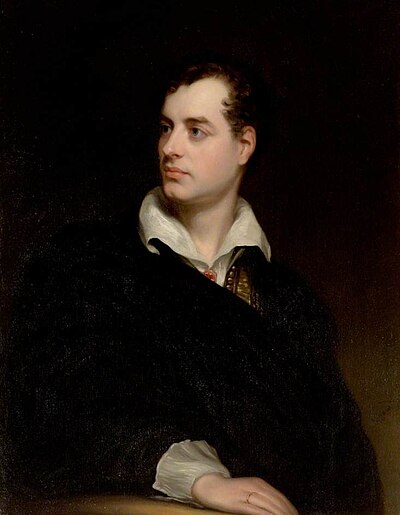
Lord Byron accidentally invented the most seductive literary archetype in Western fiction, then disguised it as a travel poem. Written by a young lord who had already grown weary of London's glittering vice, Childe Harold's Pilgrimage follows a disillusioned nobleman as he flees England for the sun-baked landscapes of Southern Europe, seeking in foreign mountains and ruins what his cushioned life cannot provide. The poem reads like a confession dressed as adventure: Byron poured his own restlessness, his failed loves, his aching dissatisfaction into Harold's bones, creating a hero so poignantly hollow that readers across Europe wept with recognition. Here is the original wounded wanderer, the man who stands on ancient battlefields and feels his own insignificance, who finds in nature's sublime grandeur both salvation and despair. It captured something exact about post-Napoleonic exhaustion: a generation that had seen empires crumble and idealism curdle into war. The poem made Byron an overnight celebrity and launched a thousand imitators. If you've ever felt the pull of somewhere else to escape yourself, if you've stood somewhere beautiful and felt unbearably sad, you are reading Byron's descendant.
Editions
X-Ray
“There is a pleasure in the pathless woods,There is a rapture on the lonely shore,There is society, where none intrudes,By the deep Sea, and music in its roar:I love not Man the less, but Nature more,From these our interviews, in which I stealFrom all I may be, or have been before,To mingle with the Universe, and feelWhat I can ne’er express, yet cannot all conceal.””
— George Gordon Byron, Baron Byron
“Then stirs the feeling infinite, so feltIn solitude, where we are alone.””
— George Gordon Byron, Baron Byron
“I live not in myself, but I becomePortion of that around me: and to meHigh mountains are a feeling, but the humof human cities torture.””
— George Gordon Byron, Baron Byron
“On with the dance! let joy be unconfin'd””
— George Gordon Byron, Baron Byron
“On with the dance! let joy be unconfin'd;No sleep till morn, when Youth and Pleasure meetTo chase the Glowing Hours with Flying feet.””
— George Gordon Byron, Baron Byron
“There is a pleasure in the pathless woods, There is a rapture on the lonely shore.””
— George Gordon Byron, Baron Byron
“Can tyrants but by tyrants conquered be””
— George Gordon Byron, Baron Byron
“Ye stars! which are the poetry of heaven!If in your bright leaves we would read the fateOf men and empires,-'tis to be forgiven,That in our aspirations to be great,Our destinies o'erleap their mortal state,And claim a kindred with you; for ye areA beauty and a mystery, and createIn us such love and reverence from afar,That fortune, fame, power, life, have named themselves a star.””
— George Gordon Byron, Baron Byron
“and what is writ, is writ,Would it were worthier! but I am not nowThat which I have been””
— George Gordon Byron, Baron Byron
Link to this book
Add a free, dofollow link to Lex on your blog, forum, syllabus, or reading list.

<a href="https://lex-books.com/book/childe-harold-s-pilgrimage-fd59eff4-ab7b-4af3-adbe-02e735d06044"><img src="https://lex-books.com/badges/read-on-lex.svg" alt="Read Childe Harold's Pilgrimage by George Gordon Byron, Baron Byron free on Lex" width="160" height="40"></a>[](https://lex-books.com/book/childe-harold-s-pilgrimage-fd59eff4-ab7b-4af3-adbe-02e735d06044)[url=https://lex-books.com/book/childe-harold-s-pilgrimage-fd59eff4-ab7b-4af3-adbe-02e735d06044][img]https://lex-books.com/badges/read-on-lex.svg[/img][/url]Read Childe Harold's Pilgrimage by George Gordon Byron, Baron Byron free on Lex: https://lex-books.com/book/childe-harold-s-pilgrimage-fd59eff4-ab7b-4af3-adbe-02e735d06044Cite this book
Reading this edition for a paper or guide? Copy a citation.
George Gordon Byron, Baron Byron. Childe Harold's Pilgrimage. Lex, lex-books.com/book/childe-harold-s-pilgrimage-fd59eff4-ab7b-4af3-adbe-02e735d06044.George Gordon Byron, B. B. (1812). Childe Harold's Pilgrimage. Lex. https://lex-books.com/book/childe-harold-s-pilgrimage-fd59eff4-ab7b-4af3-adbe-02e735d06044George Gordon Byron, Baron Byron. Childe Harold's Pilgrimage. Lex. https://lex-books.com/book/childe-harold-s-pilgrimage-fd59eff4-ab7b-4af3-adbe-02e735d06044.