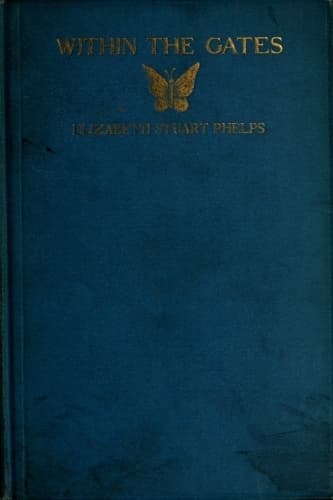
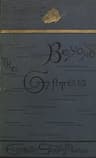
Beyond the Gates
1883
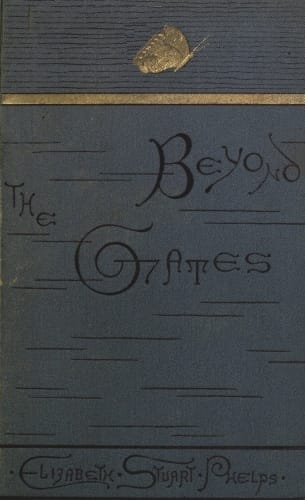
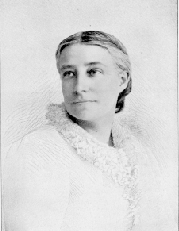
In 1883, Elizabeth Stuart Phelps wrote a novel that dared to imagine death not as an ending, but as a door. A middle-aged woman in Massachusetts succumbs to brain fever and finds herself hovering at the threshold between life and whatever lies beyond. When her deceased father appears to guide her, she musters the faith to step through. What awaits is neither hellfire nor simple paradise, but something stranger and more human: a luminous exploration of love that persists past the grave, of debts unpaid and truths unspoken, of what we carry with us when we finally let go. Phelps was writing at the height of American spiritualism, when seances and visions offered comfort to a nation still raw from civil war and loss. Yet this is no mere period piece. It is a daughter's intimate conversation with death, rendered in language that aches with longing and wonder. The woman revisits her past, her fractured faith, her brother Tom still alive in the world she is leaving behind. She learns that the afterlife is not a reward but a continuation, where growth and reckoning await. It is a book that asks: what would it feel like to be unafraid? More than a century later, the question still resonates. Phelps offers no easy answers, only the courage to look beyond the gates.
Editions
Link to this book
Add a free, dofollow link to Lex on your blog, forum, syllabus, or reading list.

<a href="https://lex-books.com/book/beyond-the-gates-20840030-cab0-4ee8-97cc-f1fbee0b562a"><img src="https://lex-books.com/badges/read-on-lex.svg" alt="Read Beyond the Gates by Elizabeth Stuart Phelps free on Lex" width="160" height="40"></a>[](https://lex-books.com/book/beyond-the-gates-20840030-cab0-4ee8-97cc-f1fbee0b562a)[url=https://lex-books.com/book/beyond-the-gates-20840030-cab0-4ee8-97cc-f1fbee0b562a][img]https://lex-books.com/badges/read-on-lex.svg[/img][/url]Read Beyond the Gates by Elizabeth Stuart Phelps free on Lex: https://lex-books.com/book/beyond-the-gates-20840030-cab0-4ee8-97cc-f1fbee0b562aCite this book
Reading this edition for a paper or guide? Copy a citation.
Phelps, Elizabeth Stuart. Beyond the Gates. Lex, lex-books.com/book/beyond-the-gates-20840030-cab0-4ee8-97cc-f1fbee0b562a.Phelps, E. S. (1883). Beyond the Gates. Lex. https://lex-books.com/book/beyond-the-gates-20840030-cab0-4ee8-97cc-f1fbee0b562aPhelps, Elizabeth Stuart. Beyond the Gates. Lex. https://lex-books.com/book/beyond-the-gates-20840030-cab0-4ee8-97cc-f1fbee0b562a.