Within the Gates
1901

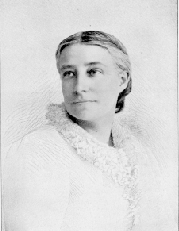
Helen Thorne waits in anxious solitude for her husband to return from tending to the city's suffering, their sick child Laddie sleeping upstairs while she wrestles with the quiet devastation of being married to a man who gives everything to his patients and nothing to her. Dr. Esmerald Thorne is a physician of immense dedication, yet his moral obligations to the sick have exacted a devastating toll on his family, leaving Helen to navigate grief and loneliness while he moves through a revolving door of other people's emergencies. When tragedy strikes Esmerald himself, the play pivots into extraordinary territory, introducing Mrs. Fayth and supernatural elements that probe the boundary between the living and whatever lies beyond. Elizabeth Stuart Phelps, writing after her own profound losses and embracing the spiritualist movement sweeping through Victorian America, crafted something daring: a drama that interrogates what we owe the dying, what we owe the living, and whether the dead are truly beyond reach. The play pulses with the particular anguish of a woman who has lost her husband to his own goodness, and it asks whether love can survive its own sacrifice.
Editions

Link to this book
Add a free, dofollow link to Lex on your blog, forum, syllabus, or reading list.

<a href="https://lex-books.com/book/within-the-gates-18807239-b86c-4c1b-bf58-ed8474aa3b9d"><img src="https://lex-books.com/badges/read-on-lex.svg" alt="Read Within the Gates by Elizabeth Stuart Phelps free on Lex" width="160" height="40"></a>[](https://lex-books.com/book/within-the-gates-18807239-b86c-4c1b-bf58-ed8474aa3b9d)[url=https://lex-books.com/book/within-the-gates-18807239-b86c-4c1b-bf58-ed8474aa3b9d][img]https://lex-books.com/badges/read-on-lex.svg[/img][/url]Read Within the Gates by Elizabeth Stuart Phelps free on Lex: https://lex-books.com/book/within-the-gates-18807239-b86c-4c1b-bf58-ed8474aa3b9dCite this book
Reading this edition for a paper or guide? Copy a citation.
Phelps, Elizabeth Stuart. Within the Gates. Lex, lex-books.com/book/within-the-gates-18807239-b86c-4c1b-bf58-ed8474aa3b9d.Phelps, E. S. (1901). Within the Gates. Lex. https://lex-books.com/book/within-the-gates-18807239-b86c-4c1b-bf58-ed8474aa3b9dPhelps, Elizabeth Stuart. Within the Gates. Lex. https://lex-books.com/book/within-the-gates-18807239-b86c-4c1b-bf58-ed8474aa3b9d.