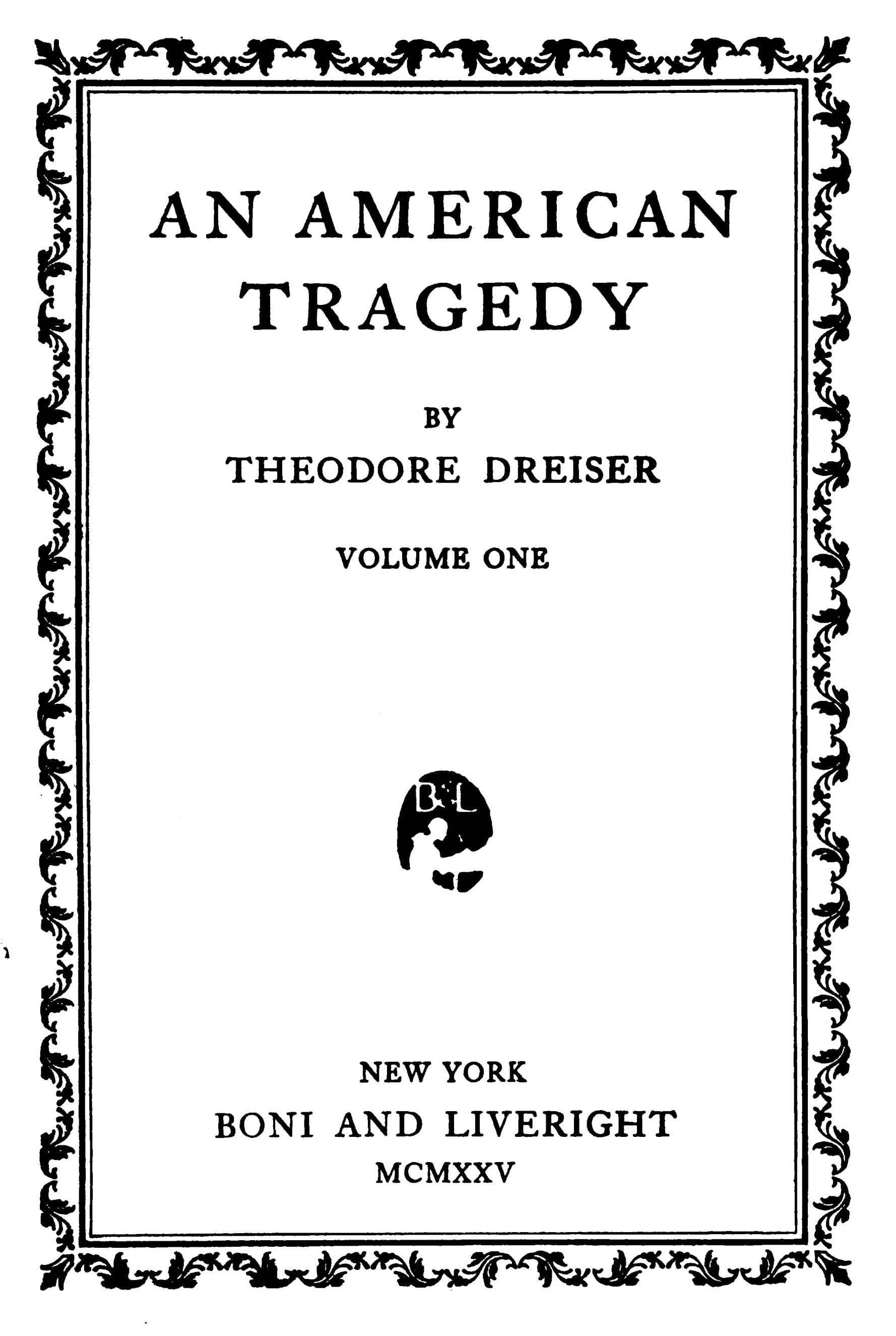
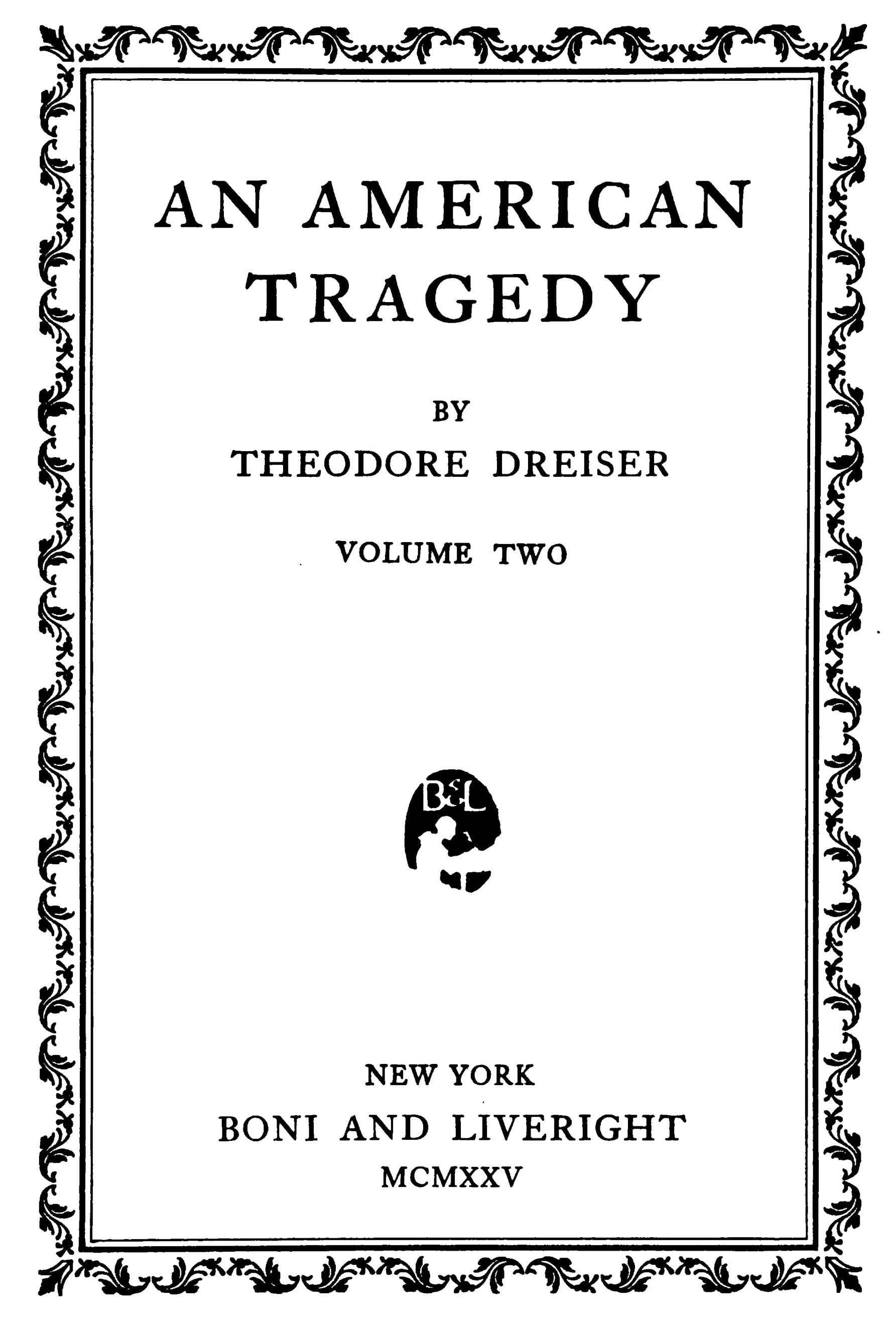
An American Tragedy, V. 2
1925
Clyde Griffiths has clawed his way toward respectability, but respectability demands a price he cannot pay. In this second volume of Dreiser's masterwork, Clyde stands at the precipice of ruin: Roberta, the woman he seduced and abandoned, carries his child and demands marriage, while Sondra Finchley represents the glittering world he has always craved. The machinery of American ambition, which has driven him from a poverty-stricken childhood to the fringes of wealth, now threatens to crush him entirely. Dreiser traces the harrowing psychology of a man who sees only one way out. The novel's genius lies in its refusal to offer easy answers or clear villains - Clyde is neither monster nor victim, but a product of a society that equates worth with wealth and happiness with consumption. Every gesture toward refinement, every desperate lie, every calculated retreat pulls him deeper into a trap of his own making. This is American tragedy at its most devastating: not the downfall of a villain, but the slow crushing of a man who learned too well what this country promises and what it demands.
Editions

X-Ray
“what matter it if a man gaineth the whole world and loseth his own soul?””
— Theodore Dreiser
“Who were these people with money, and what had they done that they should enjoy so much luxury, where others as good seemingly as themselves had nothing? And wherein did these latter differ so greatly from the successful?””
— Theodore Dreiser
“She turned; she bruised under her heel the scaly head of this dark suspicion-as terrifying to her as his guilt was to him. 'O Absalom, my Absalom! Come, come, we will not entertain such a thought. God himself would not urge it upon a mother.””
— Theodore Dreiser
“She merely beamed a fatty beam. She was almost ponderous, and pink, with a tendency to a double chin.””
— Theodore Dreiser
“...the past was so painful at any point. It seared and burned.””
— Theodore Dreiser
“What a wretched thing it was to be born poor and not to have any one to do anything for you and not to be able to do so very much for yourself!””
— Theodore Dreiser
“For these local families of distinction were convinced that not only one's family but one's wealth was the be-all and end-all of every happy union meant to include social security. And in consequence, while considering Clyde as one who was unquestionably eligible socially, still, because it had been whispered about that his means were very slender, they were not inclined to look upon him as one who might aspire to marriage with any of their daughters.””
— Theodore Dreiser
“It was that old mass yearning for a likeness in all things that troubled them, and him.””
— Theodore Dreiser
“And they were always testifying as to how God or Christ or Divine Grace had rescued them from this or that predicament”
— Theodore Dreiser
Link to this book
Add a free, dofollow link to Lex on your blog, forum, syllabus, or reading list.

<a href="https://lex-books.com/book/an-american-tragedy-v-2-4f7a7664-571a-428b-b2f7-3c4c1bf35656"><img src="https://lex-books.com/badges/read-on-lex.svg" alt="Read An American Tragedy, V. 2 by Theodore Dreiser free on Lex" width="160" height="40"></a>[](https://lex-books.com/book/an-american-tragedy-v-2-4f7a7664-571a-428b-b2f7-3c4c1bf35656)[url=https://lex-books.com/book/an-american-tragedy-v-2-4f7a7664-571a-428b-b2f7-3c4c1bf35656][img]https://lex-books.com/badges/read-on-lex.svg[/img][/url]Read An American Tragedy, V. 2 by Theodore Dreiser free on Lex: https://lex-books.com/book/an-american-tragedy-v-2-4f7a7664-571a-428b-b2f7-3c4c1bf35656Cite this book
Reading this edition for a paper or guide? Copy a citation.
Dreiser, Theodore. An American Tragedy, V. 2. Lex, lex-books.com/book/an-american-tragedy-v-2-4f7a7664-571a-428b-b2f7-3c4c1bf35656.Dreiser, T. (1925). An American Tragedy, V. 2. Lex. https://lex-books.com/book/an-american-tragedy-v-2-4f7a7664-571a-428b-b2f7-3c4c1bf35656Dreiser, Theodore. An American Tragedy, V. 2. Lex. https://lex-books.com/book/an-american-tragedy-v-2-4f7a7664-571a-428b-b2f7-3c4c1bf35656.