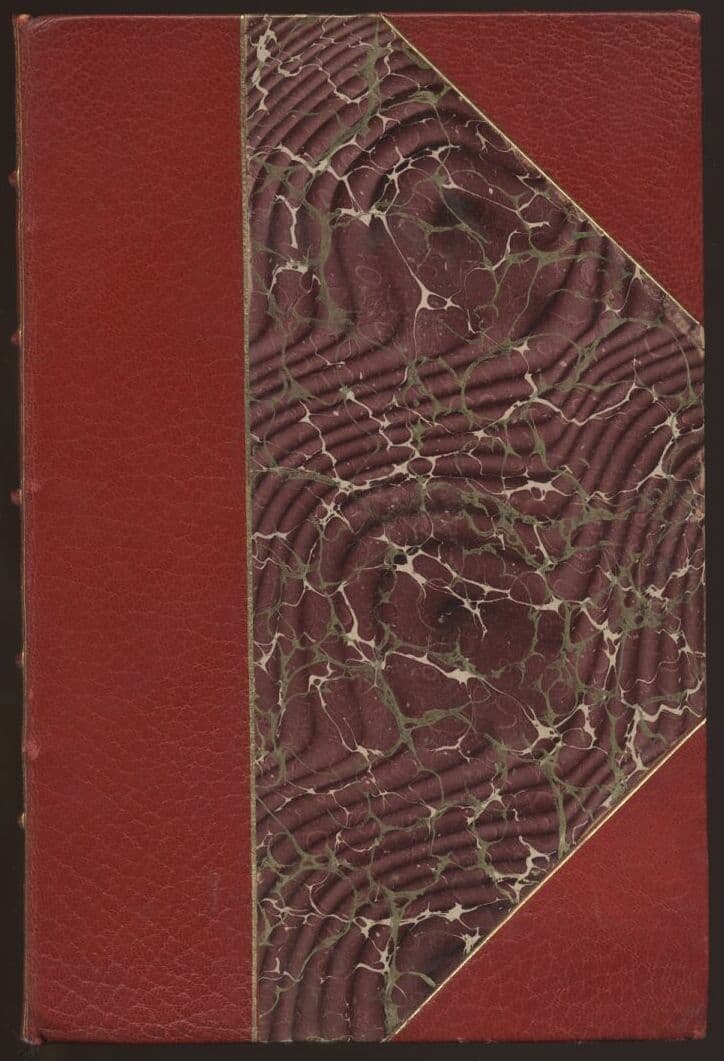
Amelia — Volume 3
1926
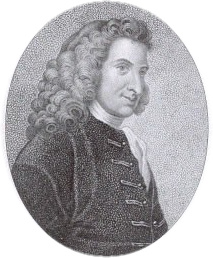
Henry Fielding's final novel (1751) is his most quietly devastating: a portrait of a good marriage under siege. Captain Booth, a gentleman ruined by gambling debts, and his radiant wife Amelia struggle to maintain their dignity in Georgian London. What makes this volume matter is Fielding's radical compassion. Amelia is no passive angel but a woman of fierce intelligence and spirit, navigating a world where poverty transforms virtue into vulnerability. The misunderstandings that unfold between Booth, the principled Dr. Harrison, and the various parasites circling their household aren't mere plot mechanics but examinations of how easily good people misread each other. Fielding, writing after his own wife's death, poured something personal into Amelia's quiet heroism. This is domestic realism before the term existed, a novel that proves the deepest adventures happen not on battlefields but in the daily negotiations of love and survival.
Editions
X-Ray
“Life may as properly be called an art as any other; and the great incidents in it are no more to be considered as mere accidents than the several members of a fine statue or a noble poem. The critics in all these are not content with seeing anything to be great without knowing why and how it came to be so. By examining carefully the several gradations which conduce to bring every model to perfection, we learn truly to know that science in which the model is formed: as histories of this kind, therefore, may properly be called models of human life, so, by observing minutely the several incidents which tend to the catastrophe or completion of the whole, and the minute causes whence those incidents are produced, we shall best be instructed in this most useful of all arts, which I call the art of life.””
— Henry Fielding
“Such indeed was her image, that neither could Shakespeare describe, nor Hogarth paint, nor Clive act, a fury in higher perfection.””
— Henry Fielding
“So inconsiderable an object is misery to light minds when it is at any distance.””
— Henry Fielding
“To confess the truth, I am afraid we often compliment what we call upper life, with too much injustice, at the expense of the lower. As it is no rare thing to see instances which degrade human nature in persons of the highest birth and education, so I apprehend that examples of whatever is really great and good have been sometimes found amongst those who have wanted all such advantages. In reality, palaces, I make no doubt, do sometimes contain nothing but dreariness and darkness, and the sun of righteousness hath shone forth with all its glory in a cottage.””
— Henry Fielding
Link to this book
Add a free, dofollow link to Lex on your blog, forum, syllabus, or reading list.

<a href="https://lex-books.com/book/amelia-volume-3-366ba41a-9763-428a-83c6-ce106edc7ae1"><img src="https://lex-books.com/badges/read-on-lex.svg" alt="Read Amelia — Volume 3 by Henry Fielding free on Lex" width="160" height="40"></a>[](https://lex-books.com/book/amelia-volume-3-366ba41a-9763-428a-83c6-ce106edc7ae1)[url=https://lex-books.com/book/amelia-volume-3-366ba41a-9763-428a-83c6-ce106edc7ae1][img]https://lex-books.com/badges/read-on-lex.svg[/img][/url]Read Amelia — Volume 3 by Henry Fielding free on Lex: https://lex-books.com/book/amelia-volume-3-366ba41a-9763-428a-83c6-ce106edc7ae1Cite this book
Reading this edition for a paper or guide? Copy a citation.
Fielding, Henry. Amelia — Volume 3. Lex, lex-books.com/book/amelia-volume-3-366ba41a-9763-428a-83c6-ce106edc7ae1.Fielding, H. (1926). Amelia — Volume 3. Lex. https://lex-books.com/book/amelia-volume-3-366ba41a-9763-428a-83c6-ce106edc7ae1Fielding, Henry. Amelia — Volume 3. Lex. https://lex-books.com/book/amelia-volume-3-366ba41a-9763-428a-83c6-ce106edc7ae1.