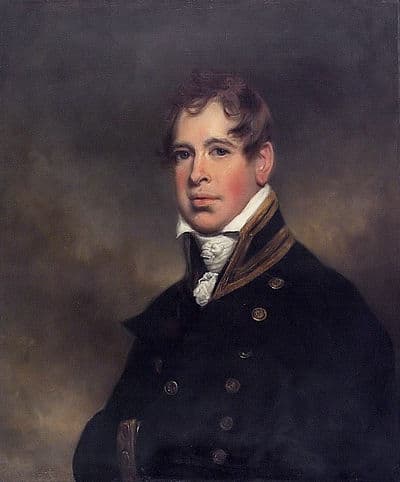
William Beatty
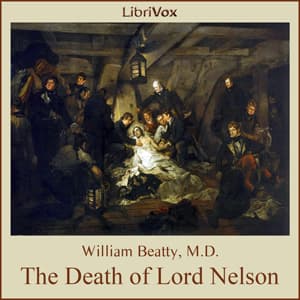
William Beatty was a British naval surgeon and author, best known for his detailed accounts of the death of Admiral Lord Nelson, a pivotal figure in British naval history. Beatty served as the surgeon on board the HMS Victory during the Battle of Trafalgar in 1805, where Nelson was mortally wounded. His firsthand experience and medical expertise allowed him to provide a unique perspective on the events surrounding Nelson's death, which he chronicled in his works, including the 'Authentic Narrative of the Death of Lord Nelson' and 'Death of Lord Nelson'. These writings not only document the final moments of one of Britain's most celebrated heroes but also reflect the broader themes of heroism and sacrifice in the context of naval warfare. Beatty's narratives are significant for their vivid detail and emotional depth, offering readers insight into both the historical event and the personal toll of war. His accounts contributed to the mythologizing of Nelson as a national hero and have been referenced in various historical analyses and literary works. Through his writings, Beatty left a lasting legacy that continues to influence the portrayal of naval history and the complexities of human experience in times of conflict.
Famous Quotes
View all 2 quotes“Witnesses to his whoppers realized that Reagan was not lying but had persuaded himself of the validity of his tales. “He finds it next to impossible to say anything that is not in some crucial way untrue,” wrote the journalist Jack Beatty. “It’s not a credibility gap, for there is no evidence of cynical or even conscious duplicity. The President is so far out of touch that it amounts to a reality gap.” Still, listeners were often dumbfounded. His daughter Patti said, “He has the ability to make statements that are so far outside the parameters of logic that they leave you speechless.” John Sloan, author of The Reagan Effect, has written: “In Reagan’s mind, unpleasant facts could be avoided; contradictions could be denied; anecdotes could overcome facts; movie illusions could substitute for history; unpleasant realities could be blamed on a hostile press.” His fictions mattered little, though, for after a generation of assassination and scoundrelry the media decided”
“We had for our chaplain a zealous Presbyterian minister, Mr. Beatty, who complained to me that the men did not generally attend his prayers and exhortations. When they enlisted, they were promised, besides pay and provisions, a gill of rum a day, which was punctually serv'd out to them, half in the morning, and the other half in the evening; and I observ'd they were as punctual in attending to receive it; upon which I said to Mr. Beatty, "It is, perhaps, below the dignity of your profession to act as steward of the rum, but if you were to deal it out and only just after prayers, you would have them all about you." He liked the tho't, undertook the office, and, with the help of a few hands to measure out the liquor, executed it to satisfaction, and never were prayers more generally and more punctually attended;””
Books from the author









Link to this page
Add a free, dofollow link to Lex on your blog, forum, syllabus, or reading list.

<a href="https://lex-books.com/author/william-beatty"><img src="https://lex-books.com/badges/read-on-lex.svg" alt="William Beatty on Lex" width="160" height="40"></a>[](https://lex-books.com/author/william-beatty)[url=https://lex-books.com/author/william-beatty][img]https://lex-books.com/badges/read-on-lex.svg[/img][/url]William Beatty on Lex: https://lex-books.com/author/william-beatty