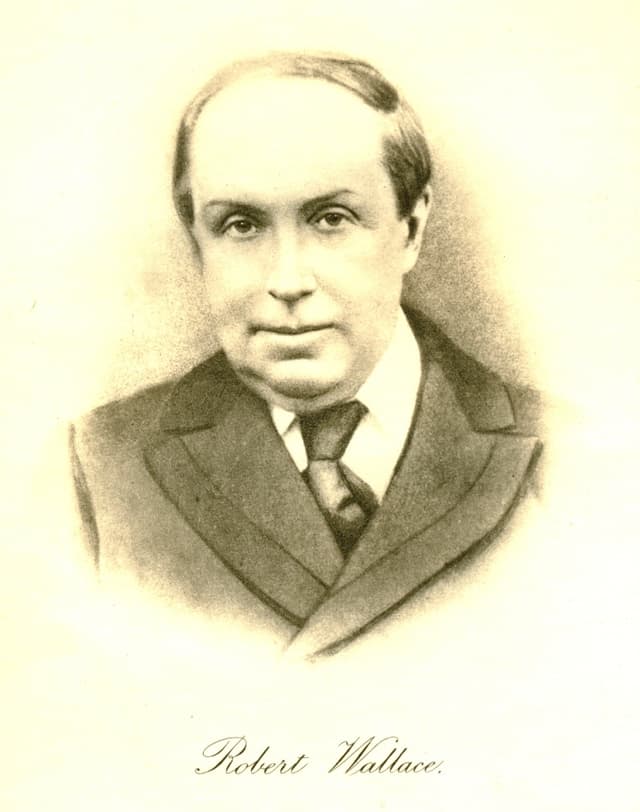
Robert Wallace
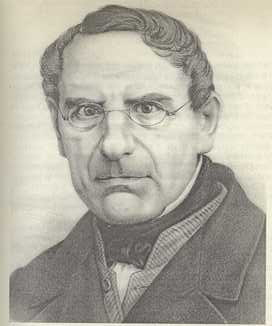
Robert Wallace was a Scottish author and theologian known for his contributions to religious literature and education in the 18th and early 19th centuries. His works often explored complex theological concepts, particularly those related to predestination and election, as seen in his notable titles such as 'The Doctrines of Predestination, Reprobation, and Election' and 'A Plain Statement and Scriptural Defence of the Leading Doctrines of ...'. Wallace's writings reflect a deep engagement with the theological debates of his time, particularly within the context of the Reformed tradition, and he sought to clarify and defend these doctrines for a broader audience. In addition to his theological works, Wallace made significant contributions to the field of mathematics with 'Elements of Algebra: Or a Short and Practical Introduction to that Science, on a New Plan'. This text aimed to make algebra more accessible to learners, showcasing his commitment to education and the dissemination of knowledge. His sermon, 'A Voice from the Fire', further illustrates his role as a religious leader and thinker, addressing contemporary issues through a theological lens. Wallace's legacy lies in his ability to bridge the gap between complex theological ideas and practical understanding, influencing both religious thought and educational practices in his era.
Famous Quotes
View all 8 quotes“What has our culture lost in 1980 that the avant-garde had in 1890? Ebullience, idealism, confidence, the belief that there was plenty of territory to explore, and above all the sense that art, in the most disinterested and noble way, could find the necessary metaphors by which a radically changing culture could be explained to its inhabitants.””
“I. Scots, wha hae wi' Wallace bled, Scots, wham Bruce has aften led; Welcome to your gory bed, Or to victorie!II. Now's the day, and now's the hour; See the front o' battle lour: See approach proud Edward's pow'r-- Chains and slaverie!III. Wha will be a traitor-knave? Wha can fill a coward's grave? Wha sae base as be a slave! Let him turn and flee!IV. Wha for Scotland's king and law Freedom's sword will strongly draw, Freeman stand, or freeman fa', Let him follow me!V. By oppression's woes and pains! By our sons in servile chains! We will drain our dearest veins, But they shall be free!VI. Lay the proud usurpers low! Tyrants fall in every foe! Liberty's in every blow!-- Let us do or die!””
“From my heel to my toe is a measured space of 29.7 centimetres or 11.7 inches. This is a unit of progress and it is also a unit of thought. 'I can only meditate when I am walking,' wrote Jean-Jacques Rousseau in the fourth book of his 'Confessions', 'when I stop I cease to think; my mind only works with my legs.' Søren Kierkegaard speculated that the mind might function optimally at the pedestrian pace of three miles per hour, and in a journal entry describes going out for a wander and finding himself 'so overwhelmed with ideas' that he 'could scarcely walk'. Christopher Morley wrote of Wordsworth as 'employ[ing] his legs as an instrument of philosophy' and Wordsworth of his own 'feeling intellect'. Nietzsche was typically absolute on the subject - 'Only those thoughts which come from 'walking' have a value' - and Wallace Stevens typically tentative: 'Perhaps / The truth depends on a walk around the lake.' In all of these accounts, walking is not the action by which one arrives at knowledge; it is itself the means of knowing.””
Books from the author
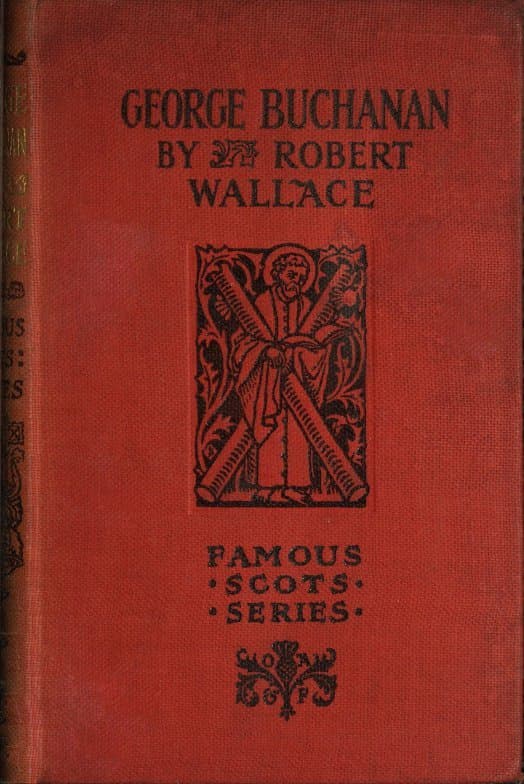
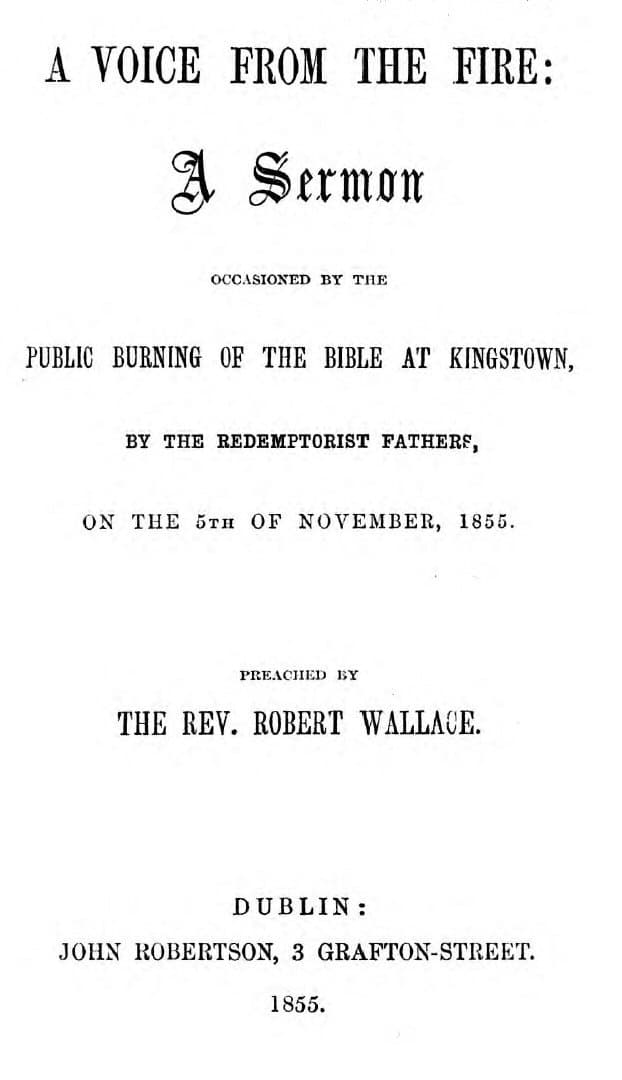




Link to this page
Add a free, dofollow link to Lex on your blog, forum, syllabus, or reading list.

<a href="https://lex-books.com/author/robert-wallace"><img src="https://lex-books.com/badges/read-on-lex.svg" alt="Robert Wallace on Lex" width="160" height="40"></a>[](https://lex-books.com/author/robert-wallace)[url=https://lex-books.com/author/robert-wallace][img]https://lex-books.com/badges/read-on-lex.svg[/img][/url]Robert Wallace on Lex: https://lex-books.com/author/robert-wallace