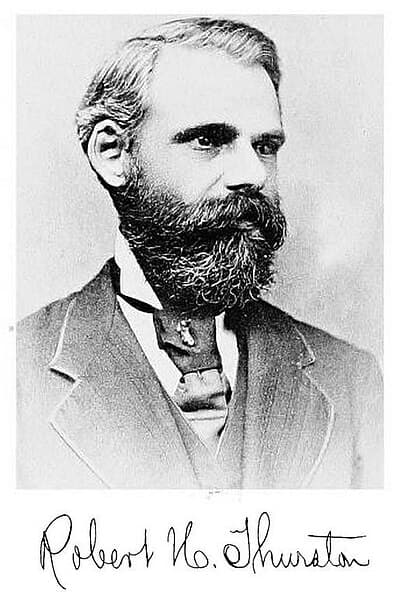
Robert Henry Thurston
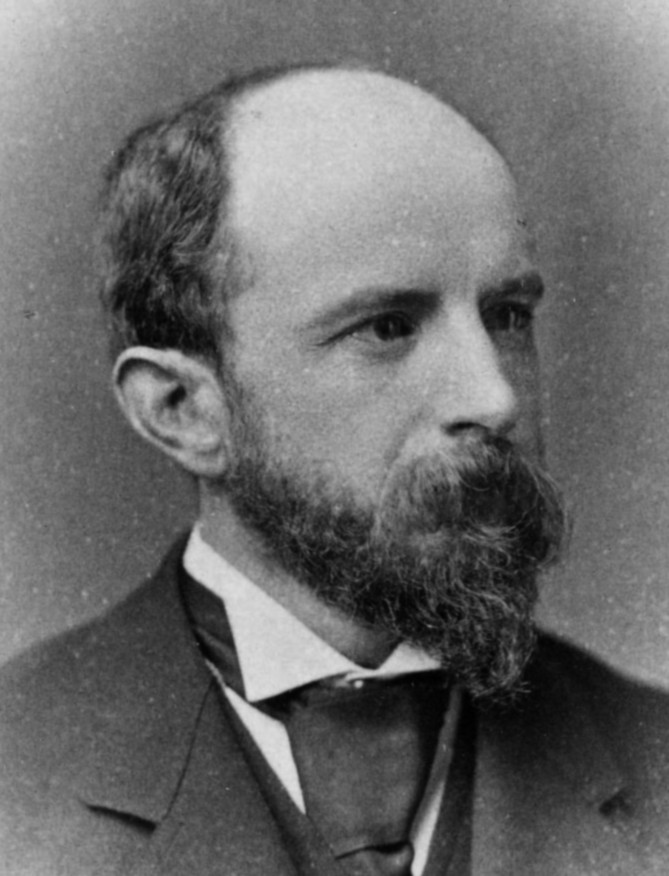
Robert Henry Thurston was a pioneering American engineer who played a crucial role in the development of mechanical engineering education in the United States. He began his career as an assistant professor at the U.S. Naval Academy, where he specialized in iron, steel, and steam engines. In 1871, he was invited by Henry Morton, the president of Stevens Institute of Technology, to establish and lead the mechanical engineering department, making him the first professor of mechanical engineering at the institution. His leadership helped shape the curriculum and standards for engineering education during a transformative period in American industrialization. Thurston's contributions extended beyond academia; he was a prolific author and a respected authority in his field, publishing numerous works that advanced the understanding of mechanical principles and practices. His notable publications include texts on steam engines and materials science, which were instrumental in educating future generations of engineers. Thurston's legacy is marked by his commitment to engineering education and his influence on the profession, as he laid the groundwork for modern mechanical engineering programs across the country.
Famous Quotes
View all 1 quotes“Great inventions are never, and great discoveries are seldom, the work of any one mind. Every great invention is really an aggregation of minor inventions, or the final step of a progression. It is not usually a creation, but a growth, as truly so as is the growth of the trees in the forest.”
Books from the author





Link to this page
Add a free, dofollow link to Lex on your blog, forum, syllabus, or reading list.

<a href="https://lex-books.com/author/robert-henry-thurston"><img src="https://lex-books.com/badges/read-on-lex.svg" alt="Robert Henry Thurston on Lex" width="160" height="40"></a>[](https://lex-books.com/author/robert-henry-thurston)[url=https://lex-books.com/author/robert-henry-thurston][img]https://lex-books.com/badges/read-on-lex.svg[/img][/url]Robert Henry Thurston on Lex: https://lex-books.com/author/robert-henry-thurston