Paul T. Gilbert
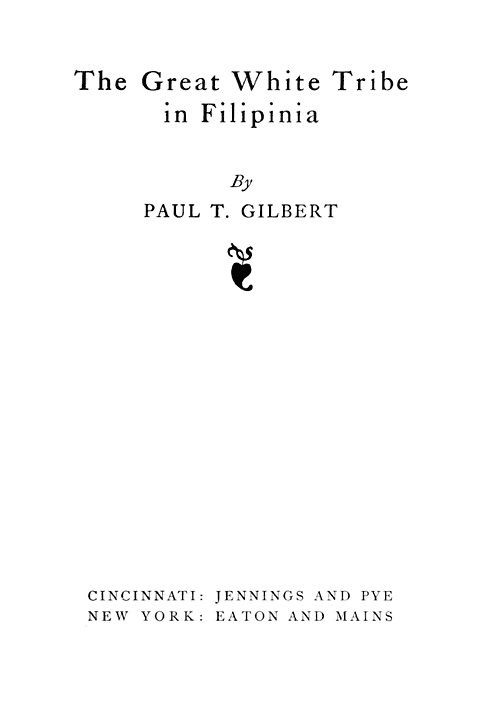
Paul T. Gilbert was an American author and anthropologist known for his exploration of cultural dynamics in the Philippines during the early 20th century. His notable work, 'The Great White Tribe in Filipinia,' published in 1908, provides a critical examination of the interactions between American colonizers and the indigenous populations of the Philippines. Gilbert's writing reflects the complexities of colonialism, highlighting both the cultural misunderstandings and the social hierarchies that emerged during this period of American imperial expansion. In addition to his literary contributions, Gilbert's work is significant for its anthropological insights, as he sought to document and analyze the effects of colonial rule on local societies. His observations and critiques of American attitudes towards the Filipino people reveal the tensions inherent in the colonial experience. Through his narratives, Gilbert not only contributed to the understanding of Philippine culture but also engaged with broader themes of race, identity, and power dynamics that resonate in discussions of colonial history today. His legacy endures as a reflection of the complexities of cultural exchange and the impact of imperialism on both colonizers and the colonized.
Famous Quotes
View all 14 quotes“We need to recognize, however, that when we accept ourselves as we are, and life as it is, we may find it easier to find peace and contentment within ourselves. This is absolutely not a position of passive, defeated resignation but rather it is about looking around to see what we can do now with what we’ve got. It’s about ‘being in the moment’ as opposed to living in regret and with ‘if onlys’ or ‘isn’t it unfair’ or ‘I could have been . . .””
“The passions, motives, wants, lusts, fears and vengeances of our ‘old brain/mind’ can hijack the capabilities of our ‘new brain/mind’. When it does that, we simply find ways to satisfy those desires or find reasons for feeling what we feel, supporting our prejudices. Emotions can suggest their own self-justifying reasons. ‘I feel it, so it must be true,’ we say. ‘I feel anxious, so this must be dangerous and I should avoid it.’ ‘I feel disgusted, so this means it’s bad.’ ‘I feel that this is wrong; therefore it is.’ ‘I feel that I can’t trust you; therefore you are dangerous to me.’ We don’t question what we feel or do because we have ‘gut feelings’ and urges that we’re right.””
“It’s compassionate because, although taking what might seem an easier path in the short term (e.g. avoiding doing anything) might give us temporary relief, it doesn’t take us anywhere””
Books from the author








Link to this page
Add a free, dofollow link to Lex on your blog, forum, syllabus, or reading list.

<a href="https://lex-books.com/author/paul-t-gilbert"><img src="https://lex-books.com/badges/read-on-lex.svg" alt="Paul T. Gilbert on Lex" width="160" height="40"></a>[](https://lex-books.com/author/paul-t-gilbert)[url=https://lex-books.com/author/paul-t-gilbert][img]https://lex-books.com/badges/read-on-lex.svg[/img][/url]Paul T. Gilbert on Lex: https://lex-books.com/author/paul-t-gilbert