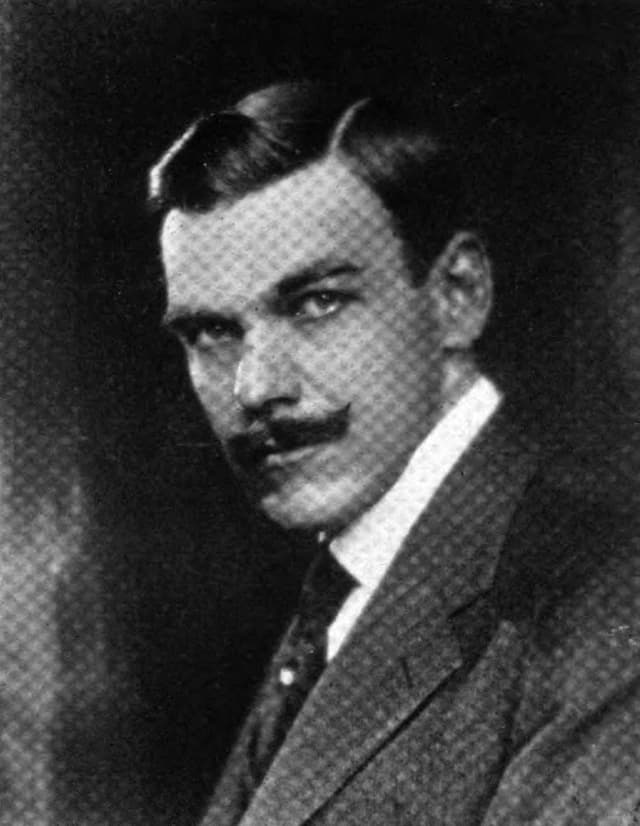
Lothrop Stoddard
Theodore Lothrop Stoddard was an American historian, journalist, and political scientist known for his controversial views on race and eugenics. He gained notoriety for his works that promoted white supremacy and scientific racism, most notably in his book, The Rising Tide of Color Against White World-Supremacy (1920). Stoddard's writings advocated for a racial hierarchy, supporting anti-miscegenation laws and aligning himself with groups such as the Ku Klux Klan and the American Eugenics Society. His ideas were widely disseminated and influenced both American and European thought during the early 20th century. Stoddard's impact extended beyond the United States, as his work resonated with the Nazi regime in Germany. His book, The Revolt Against Civilization: The Menace of the Under-man (1922), is believed to have introduced the term Untermensch into Nazi ideology, reflecting his deep engagement with racial theories that justified discrimination and violence. Stoddard's journalistic endeavors included traveling to Germany at the onset of World War II, where he received preferential treatment from Nazi officials and had a brief encounter with Adolf Hitler. However, following the war, his writings fell out of favor, and he became a less prominent figure in public discourse, leaving behind a legacy that is both significant and deeply controversial.
Famous Quotes
View all 3 quotes“Throughout history there has been no single instance where a people, once become Moslem, has ever abandoned the faith.”
“because eugenics can “deliver the goods”
“a better reading of history must bring home the truth that the basic factor in human affairs is not politics, but race.”
Books from the author











Link to this page
Add a free, dofollow link to Lex on your blog, forum, syllabus, or reading list.

<a href="https://lex-books.com/author/lothrop-stoddard"><img src="https://lex-books.com/badges/read-on-lex.svg" alt="Lothrop Stoddard on Lex" width="160" height="40"></a>[](https://lex-books.com/author/lothrop-stoddard)[url=https://lex-books.com/author/lothrop-stoddard][img]https://lex-books.com/badges/read-on-lex.svg[/img][/url]Lothrop Stoddard on Lex: https://lex-books.com/author/lothrop-stoddard