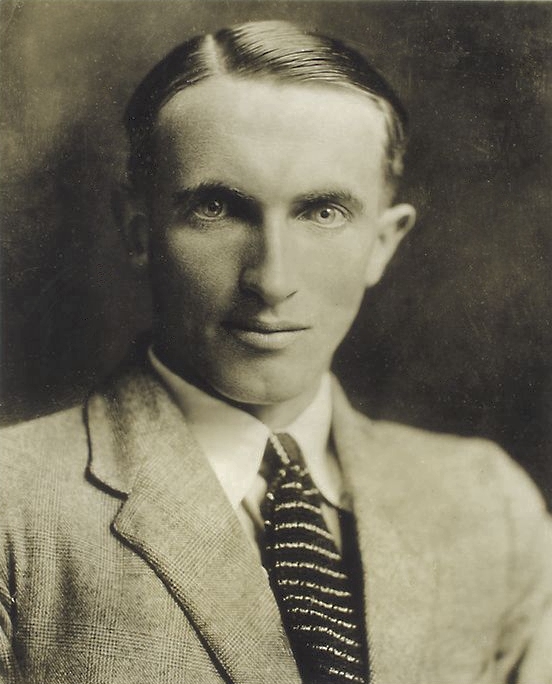
Liam O'Flaherty
Liam O'Flaherty was an influential Irish novelist and short-story writer, recognized as one of the leading socialist voices of the early 20th century. Born into a politically active family, he served in the British army's Irish Guards during World War I, where he was severely injured. This experience profoundly shaped his worldview and literary themes, which often centered on the struggles and perspectives of the common people. O'Flaherty was also a founding member of the Communist Party of Ireland, reflecting his commitment to social justice and political activism. His notable works include the novel 'The Informer,' which explores themes of betrayal and moral conflict, and the collection 'The Collected Stories of Liam O'Flaherty,' showcasing his mastery of short fiction. O'Flaherty's writing is characterized by its vivid portrayal of life in rural Ireland and its exploration of the human condition, making significant contributions to Irish literature. His legacy endures as a voice for the marginalized and a critical observer of society, influencing subsequent generations of writers and thinkers in Ireland and beyond.
Famous Quotes
View all 3 quotes“It's impossible for a creative artist to be either a Puritan or a Fascist, because both are a negation of the creative urge. The only things a creative artist can be opposed to are ugliness and injustice.”
“I was born on a storm-swept rock and hate the soft growth of sun-baked lands where there is no frost in men's bones.”
“...we have seen that the priests regard the state as an enemy to be exploited, it is only natural that our politicians do likewise. Thus, although patriotism is held in greater esteem in this country than in any other country in the world, there is no other country in the world where patriotism is less in evidence among politicians and among the general mass of the community. For patriotism and the state are so closely allied that love of one is necessarily love of the other. And if any man considers the state an enemy and an institution to be exploited, it follows naturally that he is no patriot. Thus the amazed tourist will see that it is very fashionable for Irish politicians who are not in the government to denounce the government and then when they get into the government it is equally fashionable for them to use the powers of government for the purpose of robbing the country.”
Books from the author


Link to this page
Add a free, dofollow link to Lex on your blog, forum, syllabus, or reading list.

<a href="https://lex-books.com/author/liam-oflaherty"><img src="https://lex-books.com/badges/read-on-lex.svg" alt="Liam O'Flaherty on Lex" width="160" height="40"></a>[](https://lex-books.com/author/liam-oflaherty)[url=https://lex-books.com/author/liam-oflaherty][img]https://lex-books.com/badges/read-on-lex.svg[/img][/url]Liam O'Flaherty on Lex: https://lex-books.com/author/liam-oflaherty