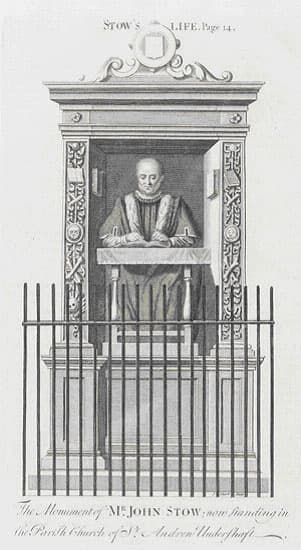
John Stow
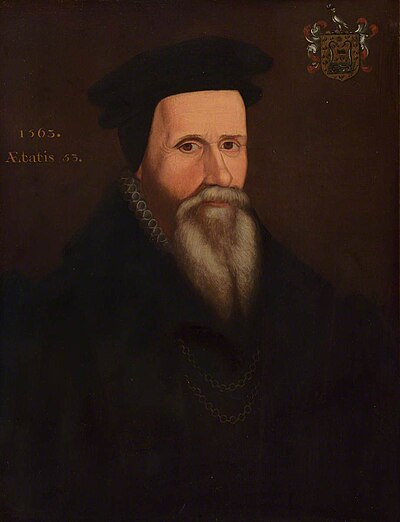
John Stow was an influential English historian and antiquarian, renowned for his meticulous chronicles of English history. His works, including 'The Summarie of Englyshe Chronicles', 'The Chronicles of England', and 'The Annales of England', published from 1565 onwards, provided a comprehensive narrative of England's past, reflecting his dedication to accuracy and truth. Stow's commitment to historical detail and his thorough research earned him recognition as one of the foremost historians of his time, with A. L. Rowse praising his indefatigable efforts and conscientious approach to history. In addition to his historical chronicles, Stow is perhaps best known for 'A Survey of London', first published in 1598, which offered an in-depth examination of the city’s geography, culture, and society. This work not only served as a vital resource for understanding London during the late 16th century but also laid the groundwork for future urban studies. Stow's legacy endures through his contributions to the field of history and antiquarian studies, as he set a standard for rigorous historical documentation that influenced generations of historians to come.
Famous Quotes
View all 3 quotes“Piers is always going on about how he hated Stowe. As if that solves everything, as if to hate something means it can't have affected you. ””
“I decided to use my freedom from the time clock to see the world. I had ideas of stowing away to Japan. I was forty-seven years old and might not get another chance to be irresponsible.””
“From the perspective of the late twentieth century, there seems to be only one possible view of the Highland clearances, as they are called, but contemporary writers often showed different attitudes. Harriet Beecher Stowe went to Scotland and returned to the United States to write something called Sunny Memories of Foreign Lands, in which she defended what the lairds were doing. And Robert Chambers, in his Picture of Scotland, published in 1827, wrote, “The landlords have very properly done all they could to substitute a population of sheep for innumerable hordes of””
Books from the author
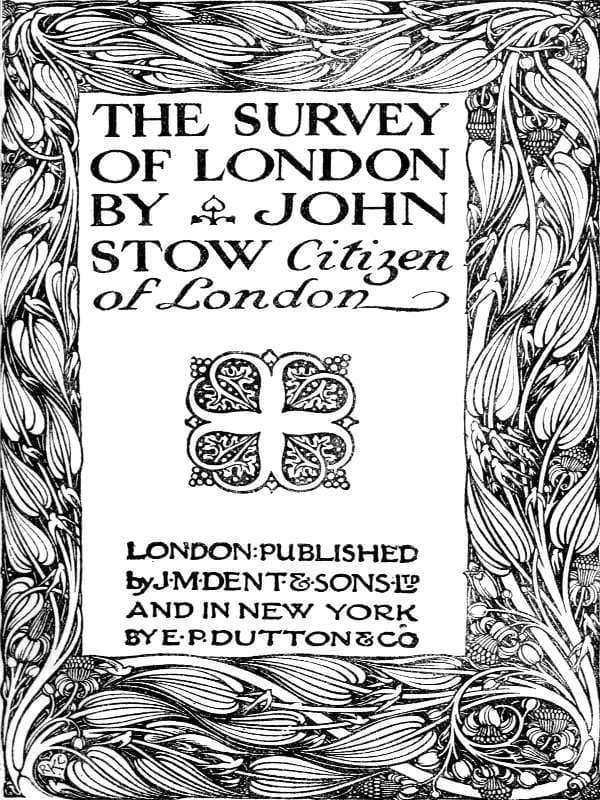



Link to this page
Add a free, dofollow link to Lex on your blog, forum, syllabus, or reading list.

<a href="https://lex-books.com/author/john-stow"><img src="https://lex-books.com/badges/read-on-lex.svg" alt="John Stow on Lex" width="160" height="40"></a>[](https://lex-books.com/author/john-stow)[url=https://lex-books.com/author/john-stow][img]https://lex-books.com/badges/read-on-lex.svg[/img][/url]John Stow on Lex: https://lex-books.com/author/john-stow