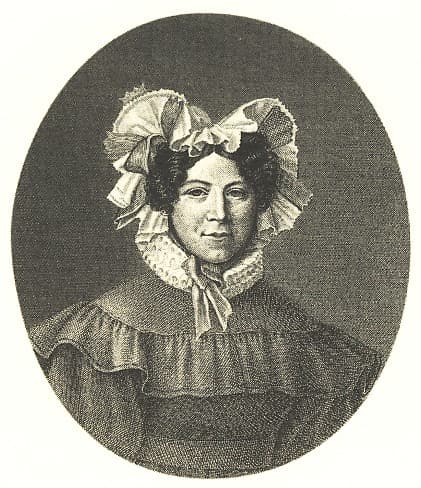
Johanna Schopenhauer
Johanna Schopenhauer was a prominent German writer and influential salonnière, known for her literary contributions and her role in the intellectual circles of her time. Born Johanna Trosiener, she cultivated a vibrant literary salon in Weimar, where she engaged with notable figures of the Romantic movement, including Goethe and the Schlegel brothers. Her writings, which included essays, novels, and travelogues, often explored themes of individuality and the human experience, reflecting the philosophical currents of her era. Notable works such as 'Die Geschlechter' and 'Die Schwestern' showcased her keen insights into gender dynamics and social issues, making her a significant voice in early 19th-century literature. As the mother of the renowned philosopher Arthur Schopenhauer, Johanna's influence extended beyond her own literary achievements. Her intellectual legacy is intertwined with her son's philosophical explorations, particularly in the realm of pessimism and the nature of human desire. Despite the overshadowing fame of her son, Johanna Schopenhauer's contributions to literature and her role as a cultural figure in her own right have garnered increasing recognition, solidifying her place in the history of German literature and thought.
Famous Quotes
View all 1 quotes“All of your good qualities become obscured by your super-cleverness and are made useless to the world merely because of your rage at wanting to know everything better than others; of wanting to improve and master what you cannot command … If you were less like you, you would only be ridiculous, but thus as you are, you are highly annoying.” (Johanna Schopenhauer, writing to her son, Arthur Schopenhauer)”
Books from the author





Link to this page
Add a free, dofollow link to Lex on your blog, forum, syllabus, or reading list.

<a href="https://lex-books.com/author/johanna-schopenhauer"><img src="https://lex-books.com/badges/read-on-lex.svg" alt="Johanna Schopenhauer on Lex" width="160" height="40"></a>[](https://lex-books.com/author/johanna-schopenhauer)[url=https://lex-books.com/author/johanna-schopenhauer][img]https://lex-books.com/badges/read-on-lex.svg[/img][/url]Johanna Schopenhauer on Lex: https://lex-books.com/author/johanna-schopenhauer