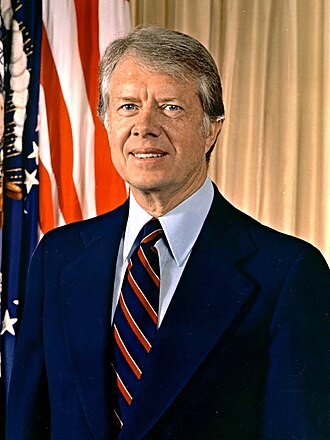
Jimmy Carter
James Earl Carter Jr. (October 1, 1924 – December 29, 2024) was an American politician and humanitarian who served as the 39th president of the United States from 1977 to 1981, and also a Nobel Peace Prize laureate in 2002 for his yearlong efforts for peace and human rights.
Famous Quotes
View all 3 quotes“We should live our lives as though Christ was coming this afternoon.”
“Like music and art, love of nature is a common language that can transcend political or social boundaries.”
“Penalties against possession of a drug should not be more damaging to an individual than the use of the drug itself; and where they are, they should be changed. Nowhere is this more clear than in the laws against possession of marijuana in private for personal use... Therefore, I support legislation amending Federal law to eliminate all Federal criminal penalties for the possession of up to one ounce [28g] of marijuana.”
Books from the author


Link to this page
Add a free, dofollow link to Lex on your blog, forum, syllabus, or reading list.

<a href="https://lex-books.com/author/jimmy-carter"><img src="https://lex-books.com/badges/read-on-lex.svg" alt="Jimmy Carter on Lex" width="160" height="40"></a>[](https://lex-books.com/author/jimmy-carter)[url=https://lex-books.com/author/jimmy-carter][img]https://lex-books.com/badges/read-on-lex.svg[/img][/url]Jimmy Carter on Lex: https://lex-books.com/author/jimmy-carter