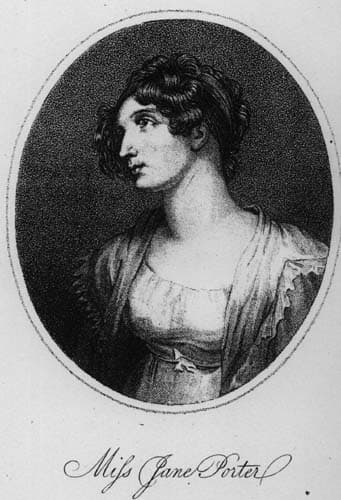
Jane Porter
Jane Porter was an influential English historical novelist and dramatist, recognized for her pioneering contributions to the genre. Born in 1776, she gained widespread acclaim with her bestselling novels, notably 'Thaddeus of Warsaw' (1803) and 'The Scottish Chiefs' (1810). These works are considered among the earliest historical novels in a modern style, blending fact with fiction in a way that captivated readers of her time. Porter's narratives often explored themes of heroism and national identity, resonating with the Romantic ideals of her era. Porter's impact extended beyond her own lifetime, as her novels were abridged for younger audiences and remained popular well into the twentieth century. Her ability to weave engaging stories with historical context helped to lay the groundwork for future historical fiction. As a literary figure, she not only contributed to the evolution of the novel but also inspired subsequent generations of writers, solidifying her legacy as a key figure in the development of the genre.
Famous Quotes
View all 4 quotes“Yet happiness isn't something you chase, it's something you are. It's something you think, it's something you believe.”
“All warfare that is not defensive is criminal.”
“God forgive her, but underneath the smiles and the good job and the great family, she was tired. Desperately tired. Tired to the point of breaking. In the last few years the exhaustion had grown, rising up like a specter to knock on her door. No one knew, she hadn't told even Kit, but in the past year she'd begun to question her entire existence. Why was she even here? What was life? Was she even necessary? Maybe all women had these thoughts. Maybe all women felt tired. But the thoughts confused her. Good women weren't supposed to have doubts. Good women were supposed to be strong and selfless. Instead Meg felt needy and afraid. What if there was no reward for all the hard work? What if life was just one sacrifice after another?”
Books from the author






Link to this page
Add a free, dofollow link to Lex on your blog, forum, syllabus, or reading list.

<a href="https://lex-books.com/author/jane-porter"><img src="https://lex-books.com/badges/read-on-lex.svg" alt="Jane Porter on Lex" width="160" height="40"></a>[](https://lex-books.com/author/jane-porter)[url=https://lex-books.com/author/jane-porter][img]https://lex-books.com/badges/read-on-lex.svg[/img][/url]Jane Porter on Lex: https://lex-books.com/author/jane-porter