
J. D. Beresford
J. D. Beresford was an English novelist and playwright, known for his contributions to early 20th-century speculative fiction and social commentary. His works often explored themes of human potential and the intersection of science and society, reflecting the intellectual currents of his time. Beresford's notable novel, 'The Hampdenshire Wonder,' published in 1911, tells the story of a boy with extraordinary mental abilities, raising questions about the nature of genius and the responsibilities that accompany it. This work, along with 'The Wonder' and 'The Jervaise Comedy,' showcases his ability to blend fantastical elements with sharp social critique, a hallmark of his literary style. In addition to his fiction, Beresford was an avid commentator on contemporary literature, evidenced by his work 'H. G. Wells,' which reflects his engagement with the ideas of one of his contemporaries. His exploration of psychical phenomena in 'The Psychical Researcher's Tale - the Sceptical Poltergeist' further illustrates his interest in the boundaries of reality and the supernatural. Beresford's legacy lies in his innovative approach to storytelling and his ability to provoke thought on the complexities of human existence, making him a significant figure in the landscape of early science fiction and social literature.
Famous Quotes
View all 3 quotes“Surely we should all perish through sheer inanity, or die desperately by suicide if no mystery remained in the world.””
“The higher ordinances of the universe are commonly referred to some superior lawgiver, under such names as God and physico-chemical action; names which appear mutually subversive only to the bigot, whether theologian or biologist.””
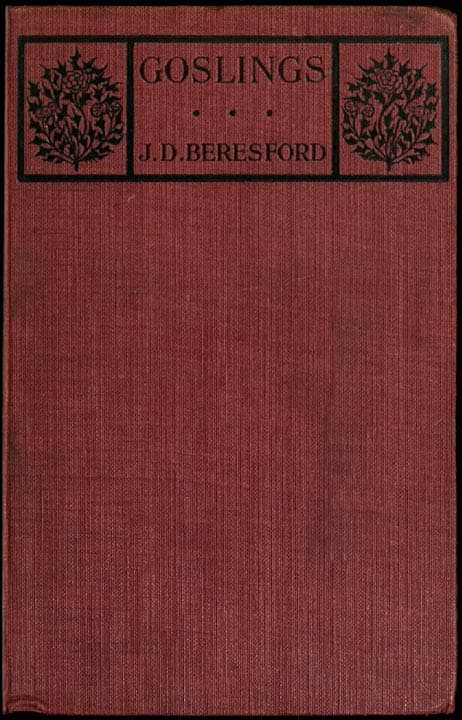
Books from the author












Link to this page
Add a free, dofollow link to Lex on your blog, forum, syllabus, or reading list.

<a href="https://lex-books.com/author/j-d-beresford"><img src="https://lex-books.com/badges/read-on-lex.svg" alt="J. D. Beresford on Lex" width="160" height="40"></a>[](https://lex-books.com/author/j-d-beresford)[url=https://lex-books.com/author/j-d-beresford][img]https://lex-books.com/badges/read-on-lex.svg[/img][/url]J. D. Beresford on Lex: https://lex-books.com/author/j-d-beresford