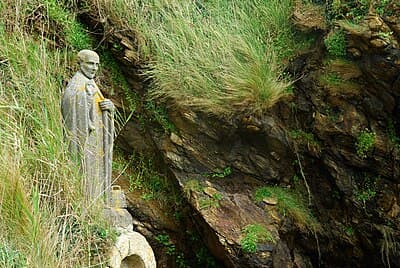
Gildas
Gildas was a sixth-century British monk and historian, best known for his work "De Excidio et Conquestu Britanniae" (On the Ruin and Conquest of Britain). This significant text provides one of the earliest accounts of post-Roman Britain, detailing the decline of Roman influence and the subsequent invasions by the Saxons. Gildas's writing is notable for its moralistic tone and its blend of history with theological reflection, making it a crucial source for understanding the socio-political landscape of early medieval Britain. His critique of the British rulers of his time, whom he accused of moral decay and failure to protect their people, adds a unique perspective to the historical narrative of the period. Gildas's influence extends beyond his own time, as his work has been referenced by later historians and writers, including Bede in the eighth century. His insights into the struggles faced by Britain during the early medieval period have made him a key figure in the study of British history. The legacy of Gildas lies not only in his historical accounts but also in his role as a moral commentator, reflecting the challenges of leadership and the responsibilities of rulers in times of crisis.
Books from the author








Link to this page
Add a free, dofollow link to Lex on your blog, forum, syllabus, or reading list.

<a href="https://lex-books.com/author/gildas"><img src="https://lex-books.com/badges/read-on-lex.svg" alt="Gildas on Lex" width="160" height="40"></a>[](https://lex-books.com/author/gildas)[url=https://lex-books.com/author/gildas][img]https://lex-books.com/badges/read-on-lex.svg[/img][/url]Gildas on Lex: https://lex-books.com/author/gildas