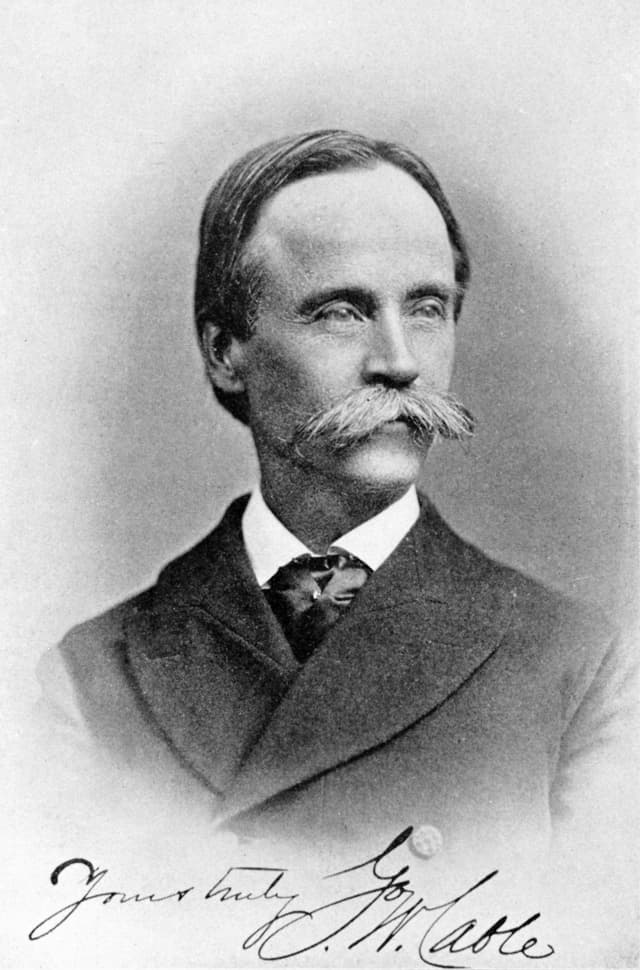
George Washington Cable
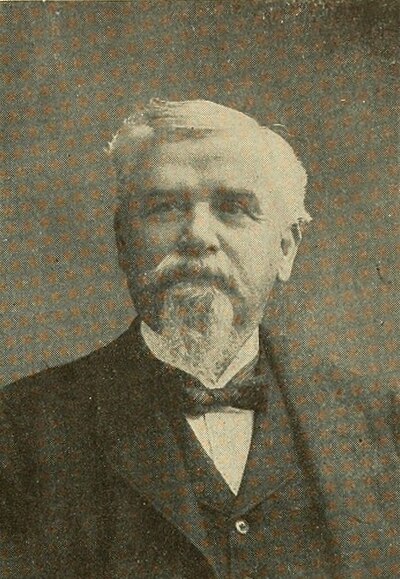
George Washington Cable was an influential American novelist recognized for his realistic depictions of Creole life in New Orleans, Louisiana. His works, including 'The Grandissimes' and 'Madame Delphine', explored themes of race, mixed-race families, and the complexities of miscegenation, positioning him as a precursor to later Southern writers such as William Faulkner. Cable's keen observations of societal issues and his advocacy for racial equality were evident in his essays, which ultimately led to significant backlash in the South, prompting his relocation to Northampton, Massachusetts, where he continued to write for three decades before moving to Florida. Cable's literary significance lies in his pioneering approach to Southern realism and his candid treatment of race relations during a tumultuous period in American history. His works not only captured the intricacies of Creole culture but also challenged prevailing societal norms, making him a crucial figure in the evolution of Southern literature. His legacy endures as a testament to the power of literature to confront and critique social injustices, marking him as one of the foremost Southern artists of the late 19th century.
Famous Quotes
View all 3 quotes“The necessities of national authority tipped the scale, and the powers of legislation and government and the spoils of office tumbled, all together, into the freedman's ragged lap. Thereupon there fell upon New Orleans, never well governed at the best, a volcanic shower of corruption and misrule.”
“Thus we swallow politics with every meal. We take a mouthful and read a telegram, one eye on table, the other on the paper. One must be made of cool stuff to keep calm and collected, but I say but little.”
“militia. As they passed a field of broom-corn several men suddenly disappeared, their swift course through the cane being easily followed by the swaying of the tassels. The militia were met by rumors that the village was in ashes. Morgan did not set fire to the village, but his men found time to explore the village store, and to search the Fisher house, in the second story of which they found a flag. Morgan's men were hardly out of sight on the Richmond road when Colonel Collier and the militia appeared. They formed line of battle on a”
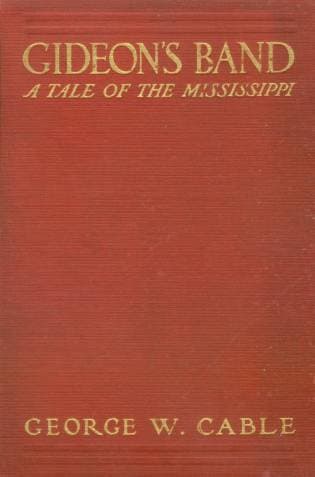
Books from the author



Link to this page
Add a free, dofollow link to Lex on your blog, forum, syllabus, or reading list.

<a href="https://lex-books.com/author/george-washington-cable"><img src="https://lex-books.com/badges/read-on-lex.svg" alt="George Washington Cable on Lex" width="160" height="40"></a>[](https://lex-books.com/author/george-washington-cable)[url=https://lex-books.com/author/george-washington-cable][img]https://lex-books.com/badges/read-on-lex.svg[/img][/url]George Washington Cable on Lex: https://lex-books.com/author/george-washington-cable