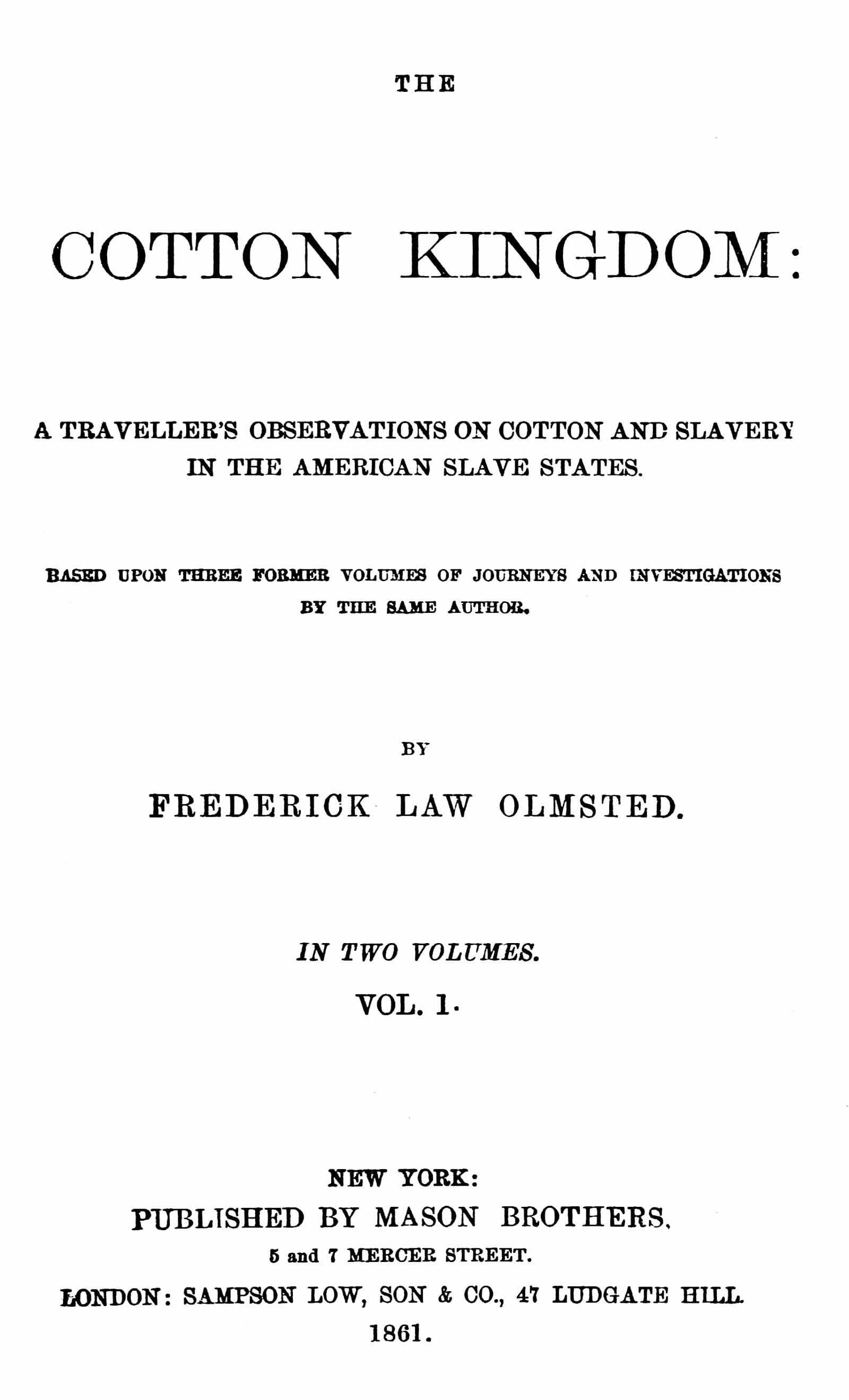
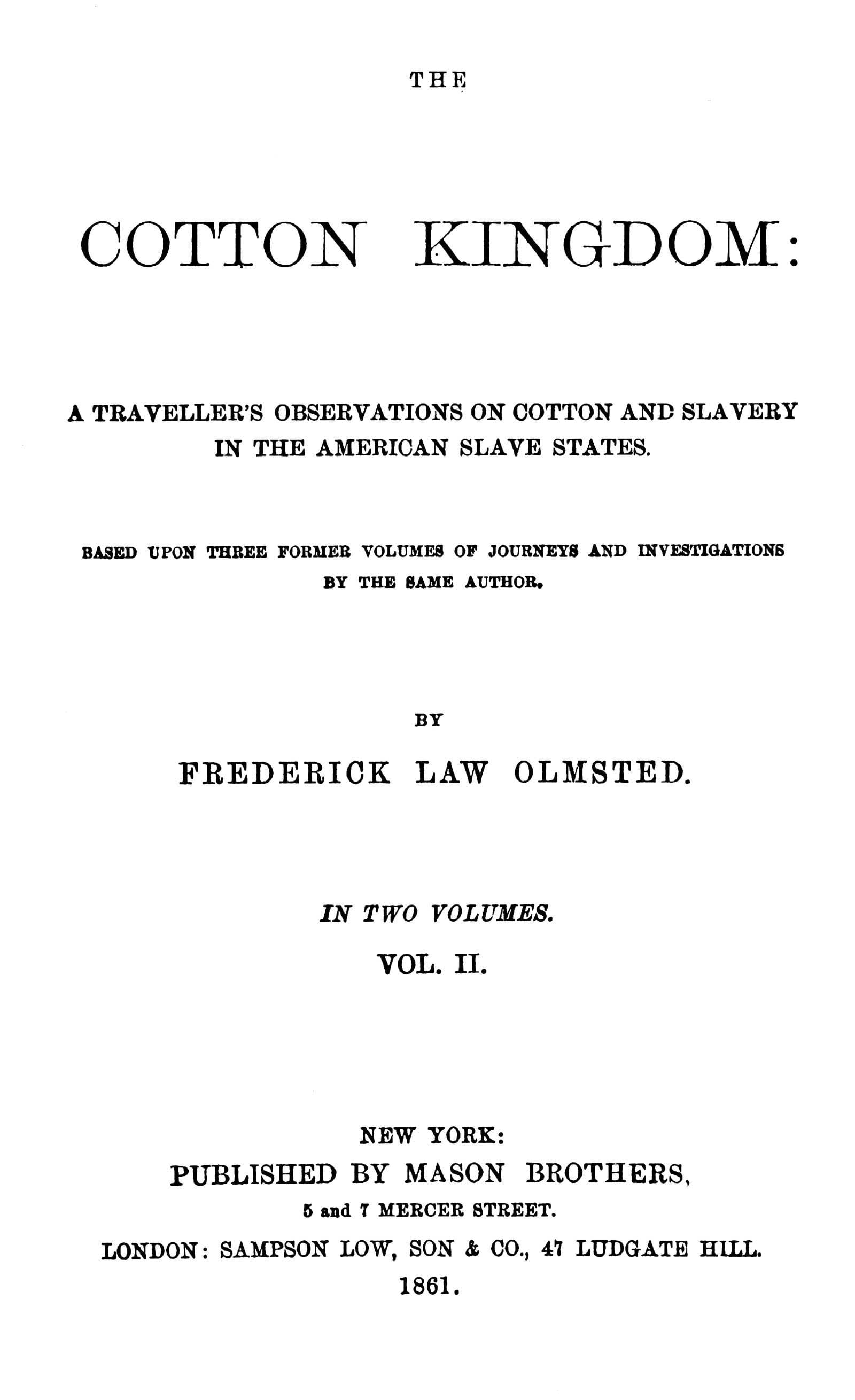
The Cotton Kingdom, Volume 2 (of 2): A Traveller's Observations on Cotton and Slavery in the American Slave States
1861
The Cotton Kingdom, Volume 2 (of 2): A Traveller's Observations on Cotton and Slavery in the American Slave States
1861
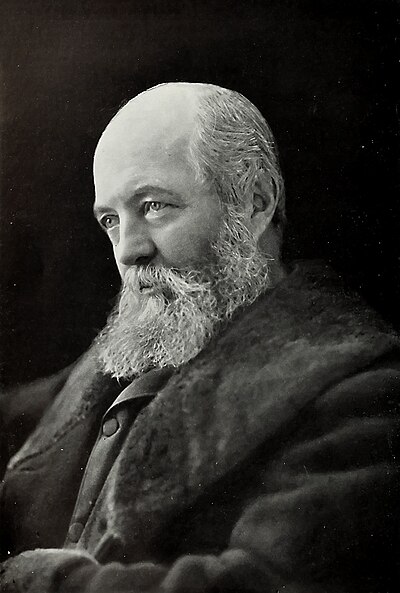
Frederick Law Olmsted travelled through the American South in the 1850s not as a journalist but as a Southern planter. This disguise allowed him to witness what few Northern eyes could see: the daily machinery of slavery operating in real time. The result is a book that reads like detective fiction, except the mystery being solved is how an entire civilization rationalizes human bondage. Volume Two carries readers into Southwestern Louisiana and Eastern Texas, where the cotton frontier was still expanding and the brutalities of slavery took on new dimensions. Olmsted catalogs everything: the skeletal ribs of abandoned plantations, the hollow commerce of frontier towns, the conversations he overhears in steamboat sheds and dusty crossroads. His prose is deceptively calm, which makes the horror more unbearable. He does not editorialize much. He simply presents, and the reader is left to reckon with what they've seen. This book matters because it was one of the most widely read abolitionist texts in antebellum America, shaping Northern public opinion on the eve of the Civil War. It remains essential reading for anyone seeking to understand the economics of slavery, the texture of daily life in the slave South, and the moral vision of one of America's greatest landscape architects.
Editions
Link to this book
Add a free, dofollow link to Lex on your blog, forum, syllabus, or reading list.

<a href="https://lex-books.com/book/the-cotton-kingdom-volume-2-of-2-a-traveller-s-observations-on-cotton-and-slaver-cb581f4a-8337-44ec-85cd-02ff23ff184d"><img src="https://lex-books.com/badges/read-on-lex.svg" alt="Read The Cotton Kingdom, Volume 2 (of 2): A Traveller's Observations on Cotton and Slavery in the American Slave States by Frederick Law Olmsted free on Lex" width="160" height="40"></a>[](https://lex-books.com/book/the-cotton-kingdom-volume-2-of-2-a-traveller-s-observations-on-cotton-and-slaver-cb581f4a-8337-44ec-85cd-02ff23ff184d)[url=https://lex-books.com/book/the-cotton-kingdom-volume-2-of-2-a-traveller-s-observations-on-cotton-and-slaver-cb581f4a-8337-44ec-85cd-02ff23ff184d][img]https://lex-books.com/badges/read-on-lex.svg[/img][/url]Read The Cotton Kingdom, Volume 2 (of 2): A Traveller's Observations on Cotton and Slavery in the American Slave States by Frederick Law Olmsted free on Lex: https://lex-books.com/book/the-cotton-kingdom-volume-2-of-2-a-traveller-s-observations-on-cotton-and-slaver-cb581f4a-8337-44ec-85cd-02ff23ff184dCite this book
Reading this edition for a paper or guide? Copy a citation.
Olmsted, Frederick Law. The Cotton Kingdom, Volume 2 (of 2): A Traveller's Observations on Cotton and Slavery in the American Slave States. Lex, lex-books.com/book/the-cotton-kingdom-volume-2-of-2-a-traveller-s-observations-on-cotton-and-slaver-cb581f4a-8337-44ec-85cd-02ff23ff184d.Olmsted, F. L. (1861). The Cotton Kingdom, Volume 2 (of 2): A Traveller's Observations on Cotton and Slavery in the American Slave States. Lex. https://lex-books.com/book/the-cotton-kingdom-volume-2-of-2-a-traveller-s-observations-on-cotton-and-slaver-cb581f4a-8337-44ec-85cd-02ff23ff184dOlmsted, Frederick Law. The Cotton Kingdom, Volume 2 (of 2): A Traveller's Observations on Cotton and Slavery in the American Slave States. Lex. https://lex-books.com/book/the-cotton-kingdom-volume-2-of-2-a-traveller-s-observations-on-cotton-and-slaver-cb581f4a-8337-44ec-85cd-02ff23ff184d.