
Frank Overton
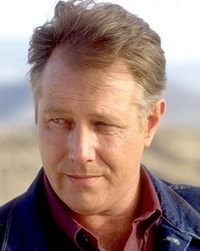
Frank Emmons Overton was an American actor. He was best known for the roles of Major Harvey Stovall in 12 O'Clock High (1964–1967), Sheriff Heck Tate in To Kill a Mockingbird (1962), and General Bogan in Fail Safe (1964).
Famous Quotes
View all 1 quotes“here is one other element of the apocalyptic tradition to be considered, namely transition. I said a minute ago that one of the assumptions prevalent in sophisticated apocalyptism was what Yeats called 'antithetical multiform influx'--the forms assumed by the inrushing gyre as the old one reaches its term. The dialectic of Yeats's gyres is simple enough in essence; they are a figure for the co-existence of the past and future at the time of transition. The old narrows to its apex, the new broadens towards its base, and the old and new interpenetrate. Where apex and base come together you have an age of very rapid transition. Actually, on Yeats's view of the historical cycle, there were transient moments of perfection, or what he called Unity of Being; but there was no way of making these permanent, and his philosophy of history is throughout transitional. In this he is not, of course, original; but his emphasis on the traditional character of our own pre-apocalyptic moment, in contrast with those exquisite points of time when life was like the water brimming beautifully but unstably over the rim of a fountain, seems, for all the privacy of the expression, characteristically modern.It is commonplace that our times do in fact suffer a more rapid rate of change technologically, and consequently in the increase of social mobility, than any before us. There is nothing fictive about that, and its implications are clear in our own day-to-day lives. What is interesting, though, is the way in which this knowledge is related to apocalypse, so that a mere celebratory figure for social mobility, like On the Road, acquires apocalyptic overtones and establishes the language of an elect; and the way in which writers, that is to say, clerks, are willing to go along, arguing that the rate of change implies revolution or schism, and that this is a perpetual requirement; that the stage of transition, like the whole of time in an earlier revolution, has become endless.””
Books from the author


Link to this page
Add a free, dofollow link to Lex on your blog, forum, syllabus, or reading list.

<a href="https://lex-books.com/author/frank-overton"><img src="https://lex-books.com/badges/read-on-lex.svg" alt="Frank Overton on Lex" width="160" height="40"></a>[](https://lex-books.com/author/frank-overton)[url=https://lex-books.com/author/frank-overton][img]https://lex-books.com/badges/read-on-lex.svg[/img][/url]Frank Overton on Lex: https://lex-books.com/author/frank-overton