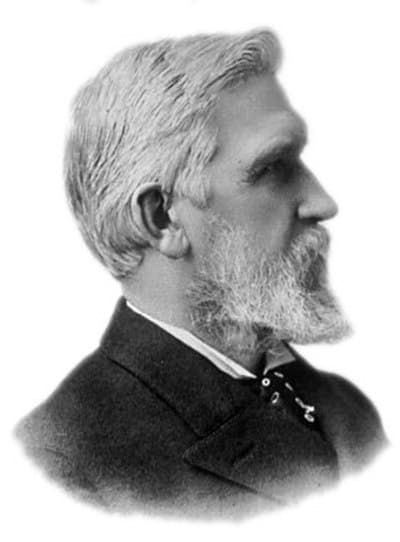
Elisha Gray
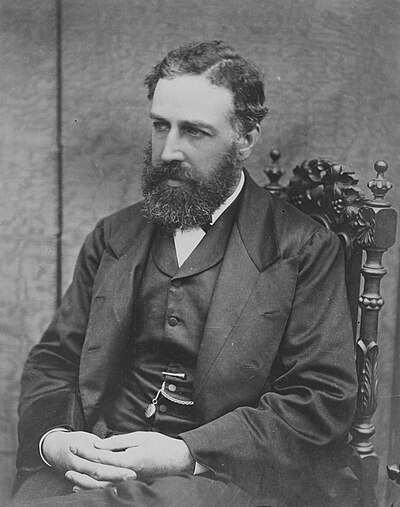
Elisha Gray was an influential American electrical engineer, best known for his pivotal role in the development of the telephone. In 1876, he created a telephone prototype in Highland Park, Illinois, utilizing a liquid transmitter, a technology he had been experimenting with for over two years. This innovation led to a contentious legal battle with Alexander Graham Bell, who was awarded the patent for the telephone. Despite Gray's claims and the arguments of some historians that he was the true inventor, Bell's patent was upheld in court, solidifying his place in history. Gray's contributions to telecommunications extended beyond the telephone; he co-founded the Western Electric Manufacturing Company and was instrumental in the founding of Graybar, a company that remains significant in the electrical supply industry today. In addition to his work on the telephone, Gray is recognized as a pioneer in the field of music synthesis, laying the groundwork for modern synthesizers. Throughout his career, he was granted over 70 patents, reflecting his innovative spirit and technical expertise. Gray's legacy is marked by his contributions to electrical engineering and telecommunications, and while he may not have received the same recognition as some of his contemporaries, his inventions and ideas have had a lasting impact on the industry.
Famous Quotes
View all 3 quotes“As to Bell 's talking telegraph, it only creates interest in scientific circles, and, as a toy it is beautiful; but ... its commercial value will be limited.”
“Every man has within him a latent power that needs only to be aroused and directed in the right way to make his influence felt upon his fellows. Like the magnet, the man who uses his power to help his fellows up to the measure of his limitations not only has been a benefactor to his race, but is himself a stronger and better man for having done so. But, again, like the magnet, if he allows these God-given powers to lie still and rust for want of legitimate use he gradually loses the power he had and becomes simply a moving thing without influence or use in a world in which he vegetates.”
“Alessandro Volta, a professor of natural philosophy at Pavia, Italy, was, it must be said, the founder of the science of galvanic or voltaic electricity. Stimulated by the discovery of Galvani he attributed the action of the frog's muscles, not to animal electricity, but to some chemical action between the metals that touched it. To prove his theory, he constructed a pile made of alternate layers of zinc, copper, and a cloth or pasteboard saturated in some saline solution. By repeating these trios—copper, zinc, and the saturated cloth—he attained a pile that would give a powerful shock. It is called the Voltaic Pile.”
Books from the author





Link to this page
Add a free, dofollow link to Lex on your blog, forum, syllabus, or reading list.

<a href="https://lex-books.com/author/elisha-gray"><img src="https://lex-books.com/badges/read-on-lex.svg" alt="Elisha Gray on Lex" width="160" height="40"></a>[](https://lex-books.com/author/elisha-gray)[url=https://lex-books.com/author/elisha-gray][img]https://lex-books.com/badges/read-on-lex.svg[/img][/url]Elisha Gray on Lex: https://lex-books.com/author/elisha-gray