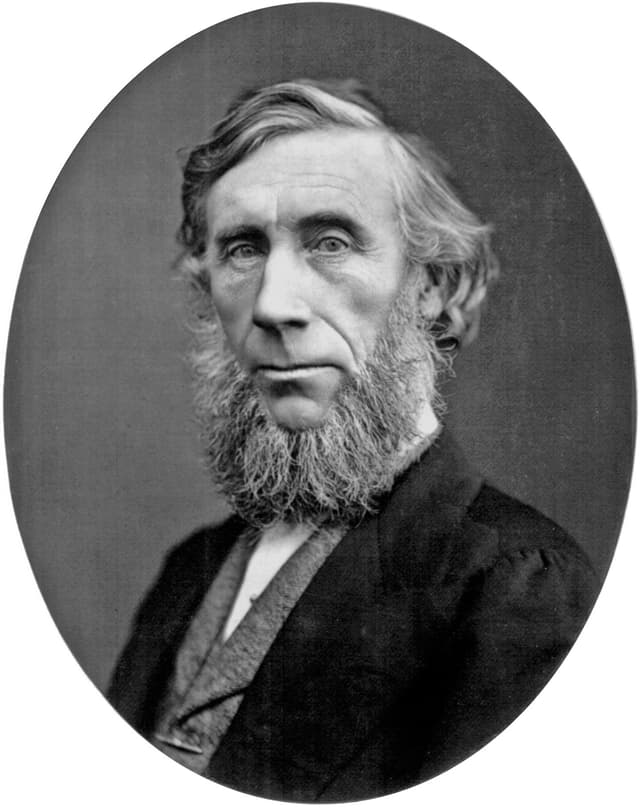
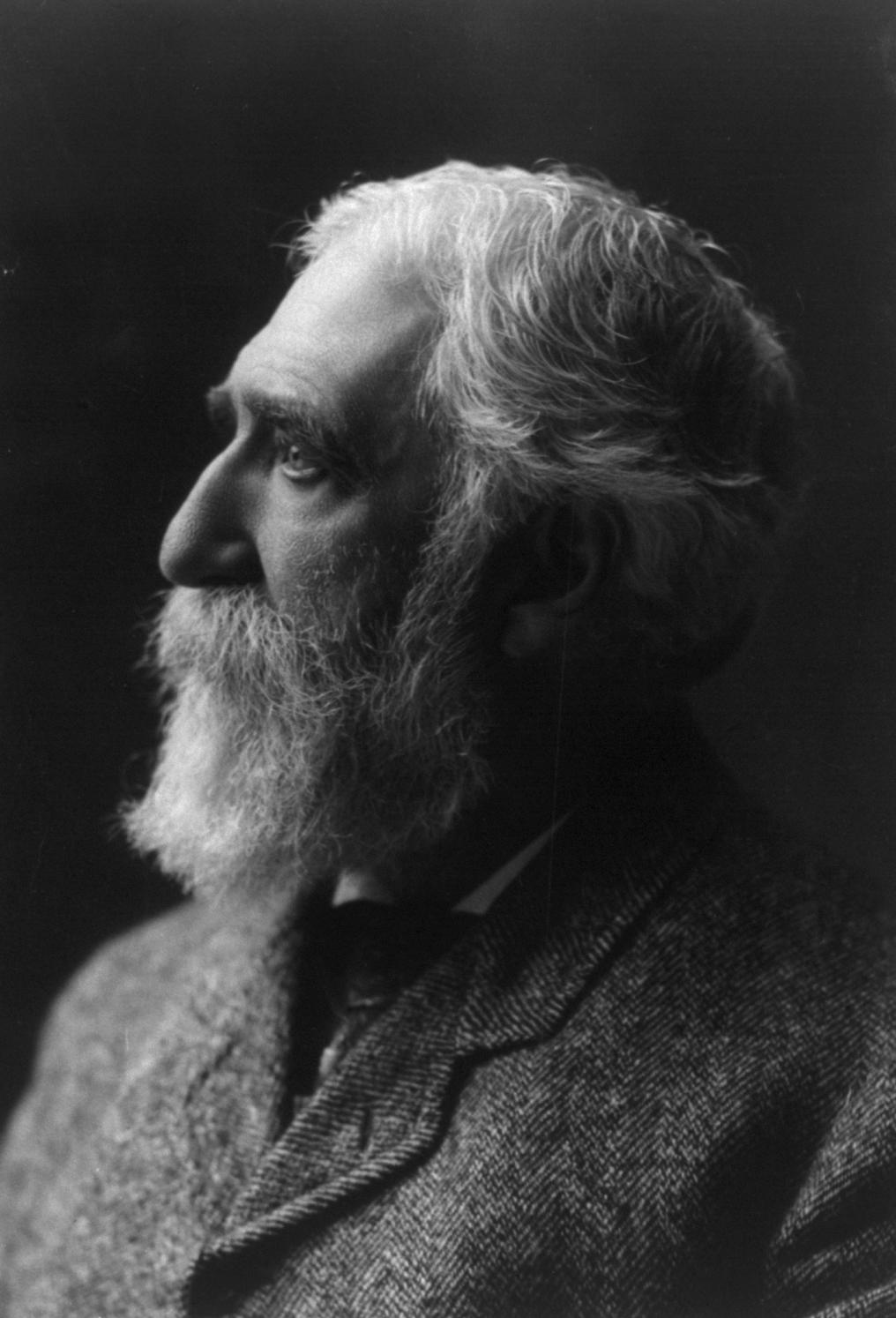
John Tyndall
John Tyndall was an influential Irish physicist renowned for his groundbreaking work in the fields of diamagnetism and infrared radiation. His significant contributions to science began in the 1850s, particularly with his research that established the relationship between atmospheric carbon dioxide and the greenhouse effect, a concept that would later become crucial in understanding climate change. Tyndall's experiments and findings not only advanced the field of physics but also provided a scientific basis for environmental discussions that are still relevant today. As a prolific author, Tyndall published over a dozen books that made complex scientific concepts accessible to the general public, effectively bridging the gap between advanced experimental physics and lay understanding. His tenure as a professor of physics at the Royal Institution of Great Britain from 1853 to 1887 solidified his role as a key figure in the scientific community, where he influenced both students and fellow scientists. Tyndall's legacy endures through his contributions to physics and environmental science, marking him as a pivotal figure in the 19th century scientific landscape.
Famous Quotes
View all 3 quotes“His [Faraday's] third great discovery is the Magnetization of Light, which I should liken to the Weisshorn among mountains-high, beautiful, and alone.”
“Underneath his sweetness and gentleness was the heat of a volcano. [Michael Faraday] was a man of excitable and fiery nature; but through high self-discipline he had converted the fire into a central glow and motive power of life, instead of permitting it to waste itself in useless passion.”
“To Nature nothing can be added; from Nature nothing can be taken away; the sum of her energies is constant, and the utmost man can do in the pursuit of physical truth, or in the applications of physical knowledge, is to shift the constituents of the never-varying total. The law of conservation rigidly excludes both creation and annihilation. Waves may change to ripples, and ripples to waves; magnitude may be substituted for number, and number for magnitude; asteroids may aggregate to suns, suns may resolve themselves into florae and faunae, and floras and faunas melt in air: the flux of power is eternally the same. It rolls in music through the ages, and all terrestrial energy—the manifestations of life as well as the display of phenomena—are but the modulations of its rhythm.”
Books from the author


Link to this page
Add a free, dofollow link to Lex on your blog, forum, syllabus, or reading list.

<a href="https://lex-books.com/author/john-tyndall"><img src="https://lex-books.com/badges/read-on-lex.svg" alt="John Tyndall on Lex" width="160" height="40"></a>[](https://lex-books.com/author/john-tyndall)[url=https://lex-books.com/author/john-tyndall][img]https://lex-books.com/badges/read-on-lex.svg[/img][/url]John Tyndall on Lex: https://lex-books.com/author/john-tyndall