Electricity and Magnetism
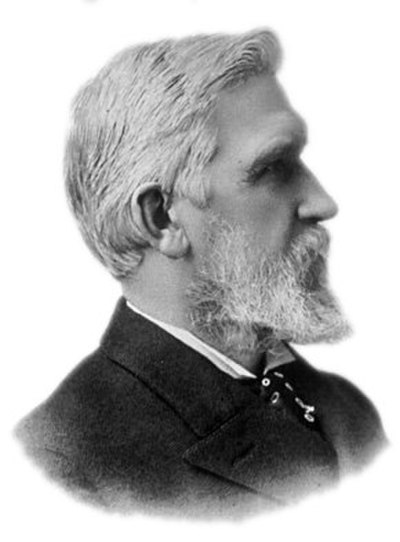
Before electricity lit up the world, there were pioneers who wrestled with invisible forces in their laboratories and imagination. Elisha Gray, the inventor who narrowly lost the telephone patent to Alexander Graham Bell, wrote this book to share what he had learned after years of intimate study with these phenomena. He wanted to demystify electricity and magnetism for everyday readers, to show that these forces which seemed miraculous were in fact comprehensible to patient minds. Beginning with the historic breakthroughs of Benjamin Franklin's kite experiment and Alessandro Volta's galvanic battery, Gray traces the intellectual journey that transformed mysterious "electric fire" into something that could be measured, harnessed, and understood. This is a window into a pivotal era when electricity was transitioning from parlor trick to industrial power, told by a man who helped build that future. For readers curious about the origins of the technological world, or anyone who wants to feel the excitement of discovery before it became textbook certainty.
Editions
X-Ray
“Every man has within him a latent power that needs only to be aroused and directed in the right way to make his influence felt upon his fellows. Like the magnet, the man who uses his power to help his fellows up to the measure of his limitations not only has been a benefactor to his race, but is himself a stronger and better man for having done so. But, again, like the magnet, if he allows these God-given powers to lie still and rust for want of legitimate use he gradually loses the power he had and becomes simply a moving thing without influence or use in a world in which he vegetates.””
— Elisha Gray
“Alessandro Volta, a professor of natural philosophy at Pavia, Italy, was, it must be said, the founder of the science of galvanic or voltaic electricity. Stimulated by the discovery of Galvani he attributed the action of the frog's muscles, not to animal electricity, but to some chemical action between the metals that touched it. To prove his theory, he constructed a pile made of alternate layers of zinc, copper, and a cloth or pasteboard saturated in some saline solution. By repeating these trios”
— Elisha Gray
“A little learning is a dangerous thing"”
— Elisha Gray
Link to this book
Add a free, dofollow link to Lex on your blog, forum, syllabus, or reading list.

<a href="https://lex-books.com/book/electricity-and-magnetism-3dd25286-d052-4e3e-9a09-fddb28a5a0dc"><img src="https://lex-books.com/badges/read-on-lex.svg" alt="Read Electricity and Magnetism by Elisha Gray free on Lex" width="160" height="40"></a>[](https://lex-books.com/book/electricity-and-magnetism-3dd25286-d052-4e3e-9a09-fddb28a5a0dc)[url=https://lex-books.com/book/electricity-and-magnetism-3dd25286-d052-4e3e-9a09-fddb28a5a0dc][img]https://lex-books.com/badges/read-on-lex.svg[/img][/url]Read Electricity and Magnetism by Elisha Gray free on Lex: https://lex-books.com/book/electricity-and-magnetism-3dd25286-d052-4e3e-9a09-fddb28a5a0dcCite this book
Reading this edition for a paper or guide? Copy a citation.
Gray, Elisha. Electricity and Magnetism. Lex, lex-books.com/book/electricity-and-magnetism-3dd25286-d052-4e3e-9a09-fddb28a5a0dc.Gray, E. (n.d.). Electricity and Magnetism. Lex. https://lex-books.com/book/electricity-and-magnetism-3dd25286-d052-4e3e-9a09-fddb28a5a0dcGray, Elisha. Electricity and Magnetism. Lex. https://lex-books.com/book/electricity-and-magnetism-3dd25286-d052-4e3e-9a09-fddb28a5a0dc.