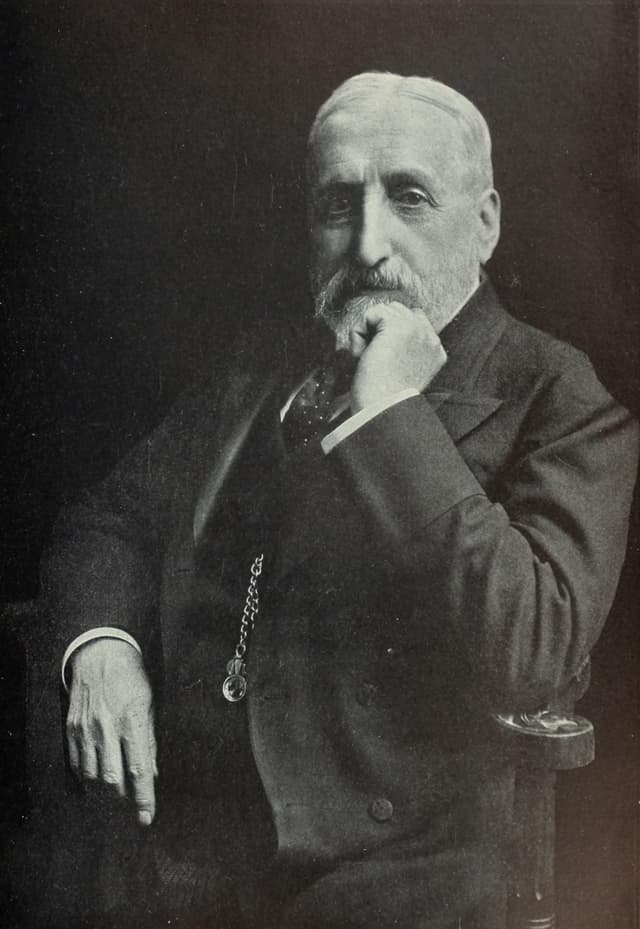
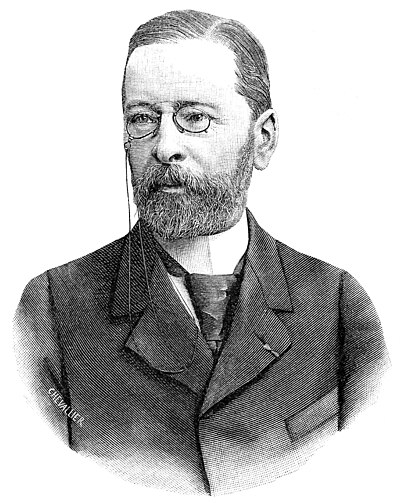
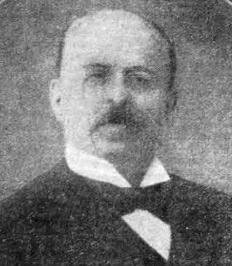
Donald Mackenzie Wallace
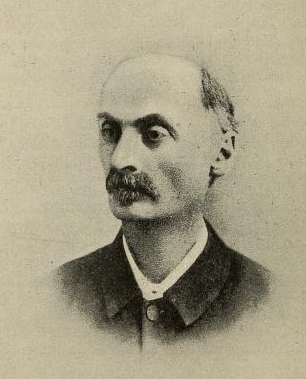
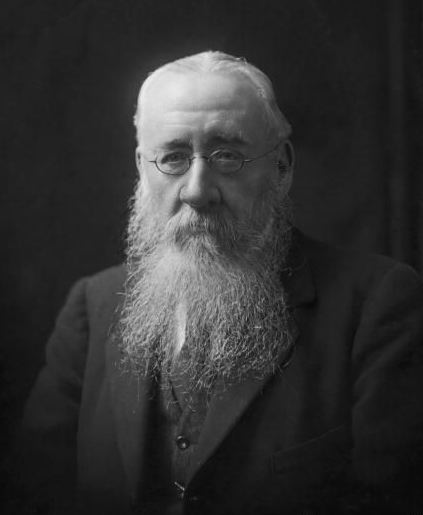
Donald Mackenzie Wallace was a prominent Scottish public servant, writer, and foreign correspondent known for his insightful contributions to journalism and literature. He served as a foreign correspondent for The Times of London, where his reports from various parts of the world showcased his keen observations and understanding of international affairs. Wallace's writings often reflected his deep interest in the socio-political dynamics of the regions he covered, particularly in India, where he spent a significant portion of his career. His experiences in the British Raj informed much of his work, allowing him to provide a unique perspective on colonial issues and the complexities of governance. In addition to his journalistic endeavors, Wallace authored several notable works, including 'The Life of Sir William Wallace' and 'The Land of the Veda,' which explored themes of nationalism and cultural identity. His literary contributions were significant in shaping public discourse around imperialism and the British Empire's role in the world. Wallace's legacy endures through his writings, which continue to be referenced for their historical insight and analytical depth, reflecting the challenges and contradictions of his time as a public servant and observer of global events.
Famous Quotes
View all 3 quotes“So long as you are in Russia, you had much better let yourself be quietly robbed than use any violence against the robber. It is less trouble, and it is cheaper in the long run. If you do not, you may unexpectedly find yourself some fine morning in prison! You must know that many of the young justices belong to the new school of morals." "What is that? I have not heard of any new discoveries lately in the sphere of speculative ethics." "Well, to tell you the truth, I am not one of the initiated, and I can only tell you what I hear. So far as I have noticed, the representatives of the new doctrine talk chiefly about Gumannost' and Tchelovetcheskoe dostoinstvo. You know what these words mean?" "Humanity, or rather humanitarianism and human dignity," I replied, not sorry to give a proof that I was advancing in my studies. "There, again, you allow your dictionary and your priest to mislead you. These terms, when used by a Russian, cover much more than we understand by them, and those who use them most frequently have generally a special tenderness for all kinds of malefactors. In the old times, malefactors were popularly believed to be bad, dangerous people; but it has been lately discovered that this is a delusion. A young proprietor who lives not far off assures me that they are the true Protestants, and the most powerful social reformers! They protest practically against those imperfections of social organisation of which they are the involuntary victims. The feeble, characterless man quietly submits to his chains; the bold, generous, strong man breaks his fetters, and helps others to do the same. A very ingenious defence of all kinds of rascality, isn't it?”
“Every married peasant strives to have a house of his own, and many of them, in order to defray the necessary expenses, have been obliged to contract debts. This is a very serious matter. Even if the peasants could obtain money at five or six per cent., the position of the debtors would be bad enough, but it is in reality much worse, for the village usurers consider twenty or twenty-five per cent. a by no means exorbitant rate of interest. A laudable attempt has been made to remedy this state of things by village banks, but these have proved successful only in certain exceptional localities. As a rule the peasant who contracts debts has a hard struggle to pay the interest in ordinary times, and when some misfortune overtakes him—when, for instance, the harvest is bad or his horse is stolen—he probably falls hopelessly into pecuniary embarrassments.”
“Besides this, the grammatical forms and constructions in Russian are very peculiar, and present a great many strange irregularities. As an illustration of this we may take the future tense. The Russian verb has commonly a simple and a frequentative future. The latter is always regularly formed by means of an auxiliary with the infinitive, as in English, but the former is constructed in a variety of ways, for which no rule can be given, so that the simple future of each individual verb must be learned by a pure effort of memory. In many verbs it is formed by prefixing a preposition, but it is impossible to determine by rule which preposition should be used. Thus idu (I go) becomes poidu; pishu (I write) becomes napishu; pyu (I drink) becomes vuipyu, and so on.”
Books from the author


Link to this page
Add a free, dofollow link to Lex on your blog, forum, syllabus, or reading list.

<a href="https://lex-books.com/author/donald-mackenzie-wallace"><img src="https://lex-books.com/badges/read-on-lex.svg" alt="Donald Mackenzie Wallace on Lex" width="160" height="40"></a>[](https://lex-books.com/author/donald-mackenzie-wallace)[url=https://lex-books.com/author/donald-mackenzie-wallace][img]https://lex-books.com/badges/read-on-lex.svg[/img][/url]Donald Mackenzie Wallace on Lex: https://lex-books.com/author/donald-mackenzie-wallace